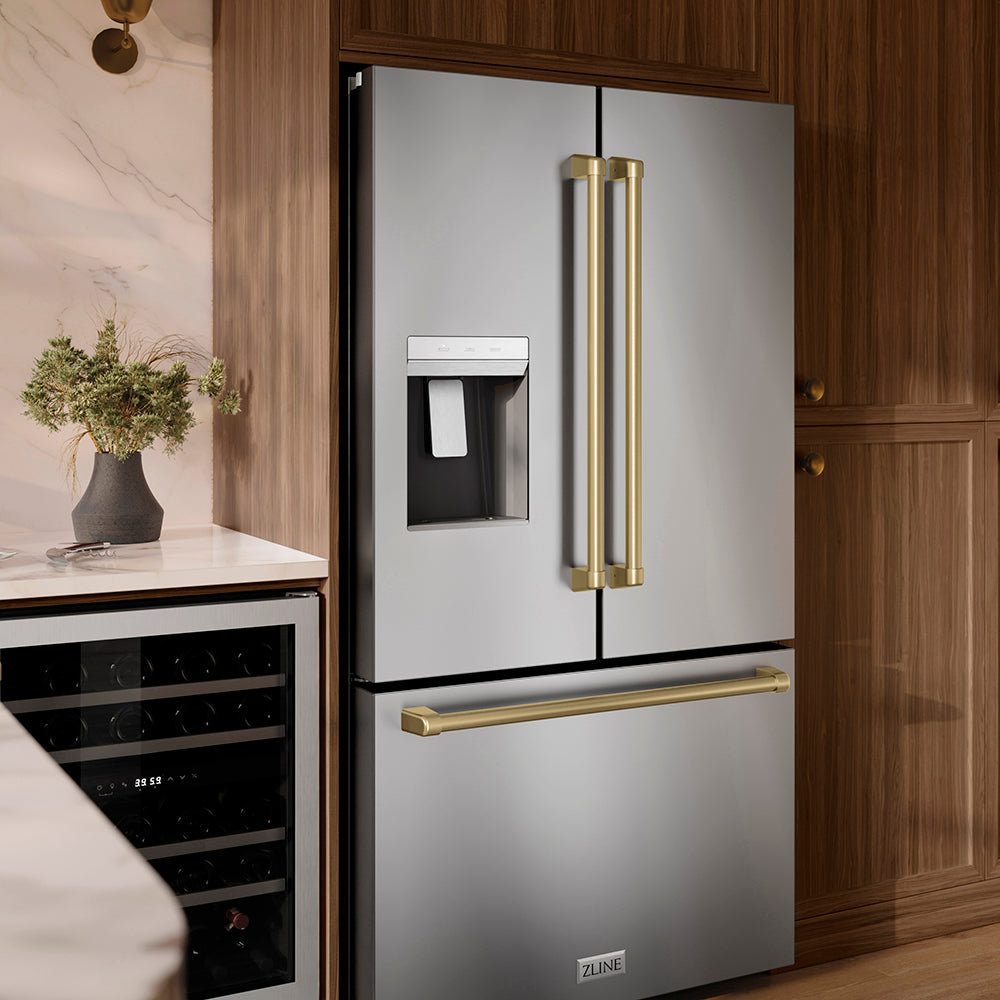
The refrigerator is the appliance that most defines how a kitchen looks. Your range can be hidden in a corner. Your dishwasher can disappear into cabinetry. But the refrigerator is almost always a major visible element of the kitchen — often the largest single appliance in the room — and the depth, finish, and configuration choices have significant downstream effects on how the kitchen reads.
There are three major depth categories: standard depth, counter depth, and built-in. Within each, you have configuration choices (French door, side-by-side, bottom freezer, columns). And the price spread between the three categories is dramatic — a difference that can run from a few thousand dollars at the entry level to tens of thousands at the high end.
This guide walks through each type honestly: what you actually get, what it actually costs, and how to decide.
What's in this article
A Quick Note on Depth Terminology
This terminology gets thrown around inconsistently, so let's nail it down:
- Standard depth (sometimes called "free-standing" or "full-depth"): Roughly 30–34 inches deep. The refrigerator protrudes 6–8 inches past surrounding base cabinets.
- Counter depth: Roughly 24–27 inches deep. Designed to sit nearly flush with surrounding cabinetry. The doors and handles still protrude, but the body of the refrigerator aligns with the counter.
- Built-in: Roughly 24 inches deep, designed to be fully integrated into a cabinet enclosure. Often includes a custom panel front that matches the cabinetry. True built-ins are flush with the cabinets and look like part of the millwork.
The price tiers correspond roughly to this depth progression: standard depth is the most affordable category, counter depth sits in the middle, and built-in is the premium tier.

Standard Depth Refrigerators
Standard depth refrigerators are what most homeowners grew up with. They're the deepest of the three categories — and that depth gives you the most interior storage volume per dollar.
What You Get
- More interior volume — typically 22–30 cubic feet for the same width, vs. 18–23 cu ft for counter depth
- Lower price — the most affordable category for any given width
- Wider model selection — almost every brand makes standard depth options
- Easier replacement — fits standard cabinet alcoves without modifications
What You Give Up
- Visual depth — the refrigerator sticks out past your cabinets, which can look bulky in modern or transitional kitchens
- Walking clearance — in narrower kitchens, the protrusion can affect traffic flow
- Designer aesthetic — kitchens with standard-depth refrigerators read as more utilitarian than custom
Typical Configurations
- Top freezer — Most affordable. Limited features. Mostly used in rentals, basements, garages.
- Bottom freezer — Better ergonomics (fresh food at eye level).
- Side-by-side — Vertical split, fresh food and freezer side by side. Good for tall items but narrow shelves.
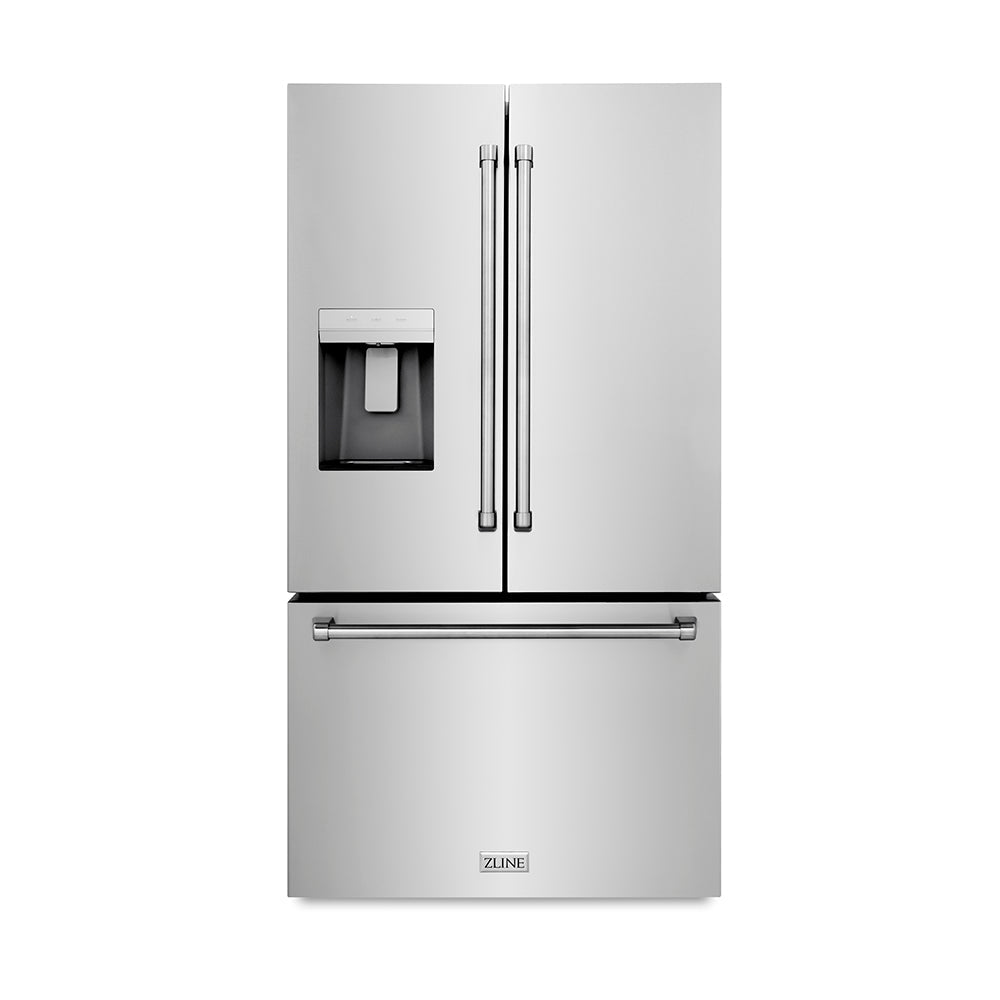
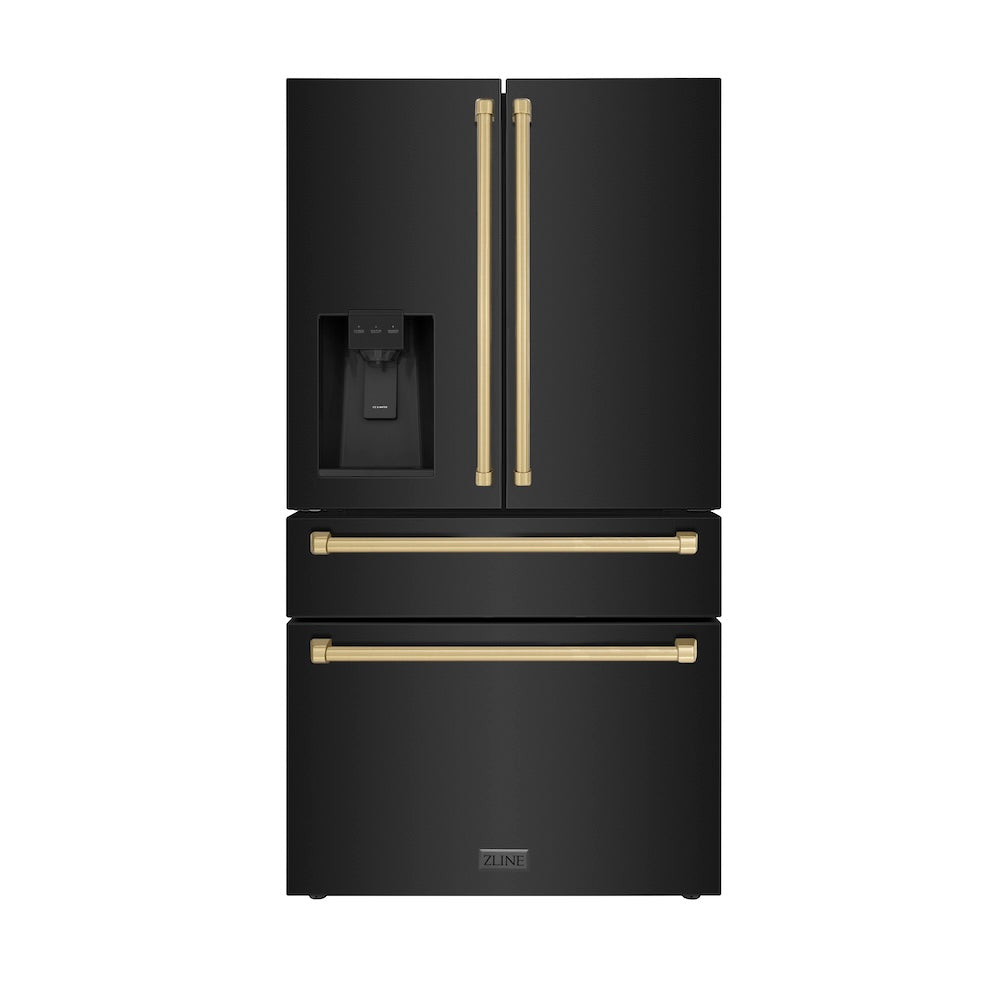
- French door — Two doors on top opening to fresh food, drawer freezer below. The most popular configuration in residential kitchens today.
Price Range
Standard depth refrigerators typically span the widest price range of any category — from very affordable basic models to feature-loaded premium versions. As a general guide, expect entry-level standard depth refrigerators to start at the lower end of the appliance budget, with feature-rich premium models running considerably higher. Specific pricing varies by brand, configuration, and features — our specialists can walk through current pricing for any specific model you're considering.
Where Standard Depth Makes Sense
- Budget-conscious kitchens where storage volume is the priority
- Homes with deeper kitchen alcoves where the extra protrusion isn't an issue
- Larger families needing maximum interior capacity
- Replacement projects in existing kitchens designed around standard depth
Counter Depth Refrigerators
Counter depth has become the dominant choice in design-conscious residential kitchens over the past decade. It captures most of the visual benefit of built-in at a fraction of the price.
What You Get
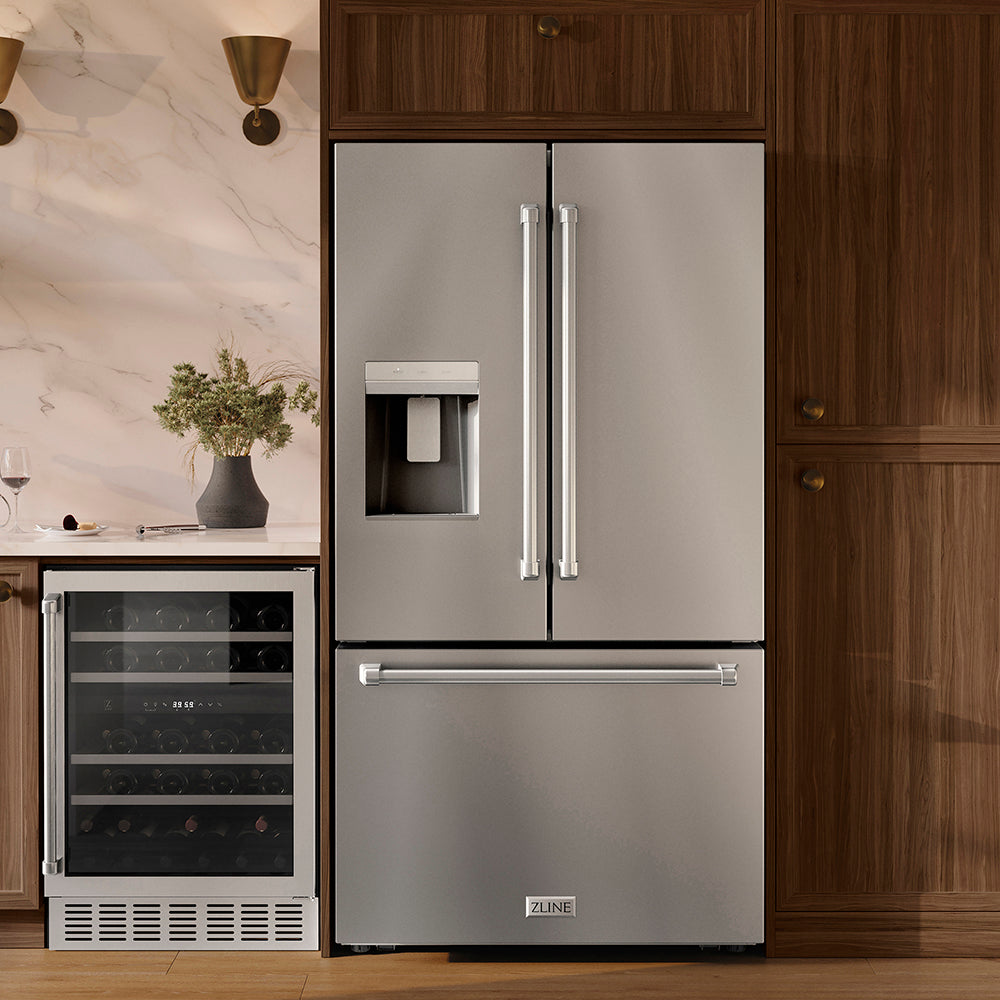
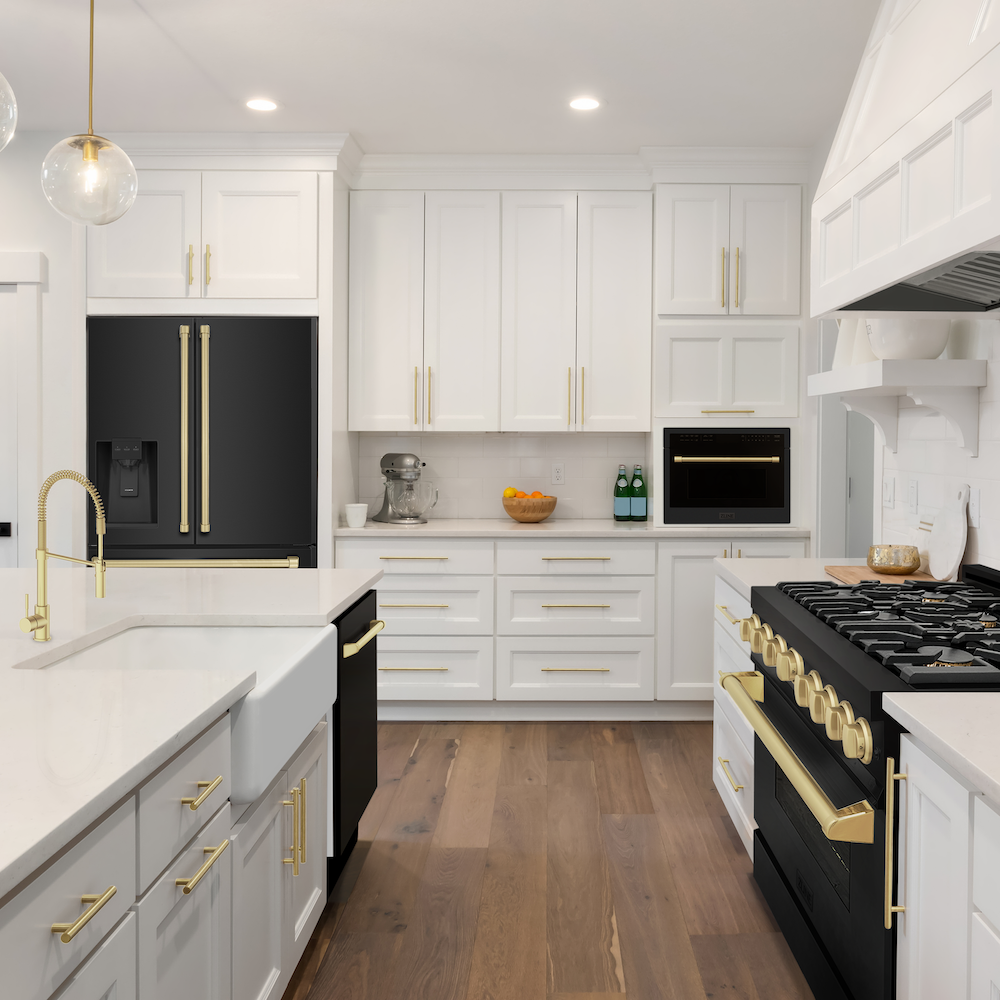
- Designer kitchen aesthetic — the refrigerator sits flush (or nearly flush) with surrounding cabinets
- Better traffic flow — no protrusion into walkways
- Cleaner lines — the kitchen reads as integrated rather than appliance-dominated
- Significant price savings vs. true built-in (often less than half the cost)
- Wide configuration options — French door, side-by-side, and bottom freezer all available
What You Give Up
- Interior volume — typically 4–7 cubic feet less storage than a standard depth at the same width
- Some narrow-deep storage configurations — large pizza boxes and certain casserole dishes that fit a standard depth may not fit a counter depth
Typical Configurations
- French door counter depth — by far the most popular. Wide top doors, drawer freezer.
- Side-by-side counter depth — better for tall items, less common.
- Bottom freezer counter depth — clean, classic, often paired with column-style designs.
Price Range
Counter depth refrigerators typically run higher than equivalent standard depth models due to the more complex engineering required to maintain capacity in a shallower footprint. Premium counter depth models with advanced features can climb significantly. ZLINE counter depth options sit favorably in this market, offering the design benefit at competitive pricing.
Where Counter Depth Makes Sense
- Most modern, transitional, and contemporary kitchen designs
- Kitchens where the refrigerator is visible from a living space and aesthetics matter
- Homeowners who want the built-in look without the built-in price
- Open-concept floor plans where the refrigerator is part of the visible kitchen
For most homeowners doing a serious kitchen remodel, counter depth is the right answer.

True Built-In Refrigerators
Built-in refrigerators are the premium category. They're designed to integrate fully into the cabinetry — flush, paneled (if specified), and visually indistinguishable from the surrounding millwork.
What You Get
- Fully integrated kitchen design — the refrigerator becomes part of the cabinetry
- Panel-ready options — custom door panels matching your cabinet doors mean the refrigerator literally disappears
- Architectural cohesion — kitchens with paneled built-ins read as fully custom millwork
- Column flexibility — separate refrigerator and freezer columns can be configured almost anywhere in the kitchen
- Premium build quality and longevity — built-ins are engineered for 15–20+ year service lives
What You Give Up
- Significantly higher price — true built-ins typically cost 2–4x what counter depth costs at equivalent width
- More complex installation — requires precise cabinet construction and skilled installation
- Reduced flexibility for future replacement — built-ins are sized to specific cabinet dimensions
- Some interior volume — built-ins maximize the cabinet footprint but can have less raw cubic footage than standard depth
Built-In Configurations
- Built-in French door (36", 42", 48" wide) — single-unit fridges that mount flush with cabinets. The most accessible built-in entry point.
- Built-in side-by-side — same width range, vertical split.
- Refrigerator column + freezer column — separate units, often 24", 30", or 36" each, that can be placed independently. Maximum design flexibility.
- Refrigerator drawer units — undercounter built-in refrigeration, often used as supplementary storage in islands or butler's pantries.
- Panel-ready vs. stainless front — both are typically available; panel-ready disappears into cabinetry while stainless front displays the appliance.
Price Range
True built-in refrigerators are the premium tier of residential refrigeration. Expect a substantial price step up from counter depth. Column configurations (separate refrigerator and freezer units) typically run higher than single built-in French door units. Top-end built-in brands (Sub-Zero, Thermador) sit at the very top of the price range; ZLINE built-in options offer the integrated aesthetic at meaningfully more accessible pricing.
Where Built-In Makes Sense
- High-end custom kitchens where design integration is the priority
- New construction with cabinetry being designed around the refrigeration
- Kitchens where the refrigerator is a major visible element and you want it to disappear
- Larger budgets where the appliance package is part of a broader investment in the home
Standard vs. Counter Depth vs. Built-In, Side by Side
Here's how the three categories stack up on the criteria that usually matter:
| Criterion | Standard Depth | Counter Depth | Built-In |
|---|---|---|---|
| Depth | ~30–34" (protrudes 6–8") | ~24–27" (near-flush) | ~24" (fully integrated) |
| Interior volume | Most — ~22–30 cu ft | ~18–23 cu ft | Maximized to cabinet; often less raw volume |
| Aesthetic integration | Utilitarian | Designer look, near-flush | Fully integrated/paneled |
| Price tier | Most affordable | Middle | Premium — ~2–4x counter depth |
| Installation | Easiest — standard alcove | Moderate | Most demanding — precise cabinetry |
| Replaceability | Easiest to swap | Easy | Committed — sized to cabinets |
| Configuration flexibility | Standard configs | Standard configs | Most — separate fridge/freezer columns |
| Width options | 36", 42", 48" | 36", 42", 48" | 36", 42", 48" + columns |
Configurations: French Door vs. Side-by-Side vs. Columns
Beyond depth category, you'll pick a configuration. Here's the quick version before the detail:
| Configuration | What It Is | Best For |
|---|---|---|
| French door | Two top doors + drawer freezer | Most kitchens; wide items, eye-level fresh food |
| Side-by-side | Vertical split, fridge beside freezer | Tall items; eye-level freezer access |
| Bottom freezer | Single top door + drawer freezer | Simple, budget-friendly, smaller widths |
| Columns | Separate fridge & freezer units | Custom kitchens; maximum design flexibility |
French Door
Two doors on top open to a wide fresh food compartment; freezer is a drawer below. Pros: wide shelves accommodate large items, fresh food at eye level, the most popular configuration for residential kitchens. Cons: can be slightly noisier with two compressor cycles, drawer freezers can be less convenient than door freezers for some users.
Side-by-Side
Vertical split, fresh food and freezer alongside each other. Pros: tall items fit on either side, freezer is at eye level. Cons: narrow shelves can struggle with wide items (large pizza boxes, big platters), less popular in design-forward kitchens.
Bottom Freezer (Single Door)
Single-door fresh food on top, drawer freezer below. Pros: simple, clean, often more affordable than French door at similar capacity. Cons: only one fresh-food door, narrower than French door equivalents.
Refrigerator Columns
Separate refrigerator and freezer units, typically 24–36" each, installed wherever you want them. Pros: maximum design flexibility, dedicated cooling for each function, premium look. Cons: most expensive option, requires careful cabinet planning.
How to Decide
A few decision filters:
Filter 1: How does the refrigerator look in your kitchen layout?
Is it tucked into an alcove, or visible from a living room? If it's a major visible element, the depth category matters more.
Filter 2: What's your storage need?
How big is your household? How often do you grocery shop? If you store large quantities, standard depth's extra capacity is meaningful.
Filter 3: What's your overall kitchen budget?
Built-in refrigeration is a significant line item. If it pushes you to compromise elsewhere in the kitchen, counter depth gives you 80% of the look at a fraction of the cost.
Filter 4: Are you remodeling or replacing?
New cabinetry can be designed around any depth. Existing cabinetry constrains your options. Either way, confirm the manufacturer's cutout spec and the delivery path before you order — getting the size or the path wrong is one of the most expensive mistakes people make buying appliances online, and built-ins and large French door units are the least forgiving.

ZLINE Refrigeration at Smart Home Luxury
Smart Home Luxury carries ZLINE refrigeration across all three categories — standard depth French door, counter depth French door, built-in French door, and built-in column refrigerators and freezers. Many models are available with panel-ready fronts for full cabinet integration, and the standard finish options (classic stainless, DuraSnow, black stainless) coordinate with the rest of the ZLINE suite.
Pricing across these tiers reflects the underlying engineering, but ZLINE's positioning means each tier comes in below comparable pricing from designer-only refrigeration brands — which is part of what makes the brand a genuine value play in this category.
Need Help Picking the Right Refrigerator Type for Your Kitchen?
Our specialists can walk through your kitchen layout, design goals, and budget to recommend the right depth and configuration. We'll provide current pricing on any specific model and can build a coordinated suite quote across your full appliance package. No call centers. No bots. Just real experts helping you choose right.
Shop Freestanding Fridges Shop Built-In Fridges Build a Coordinated Suite
Talk to a kitchen specialist: (888) 977-8994 | Mon–Fri 9–5 MST
Visit our showroom: 4375 W 1980 S, Salt Lake City, UT 84104
Smart Home Luxury is an authorized ZLINE and Proline dealer based in Salt Lake City, Utah. We serve the entire Wasatch Front — from Ogden to Provo — with nationwide shipping on every order.