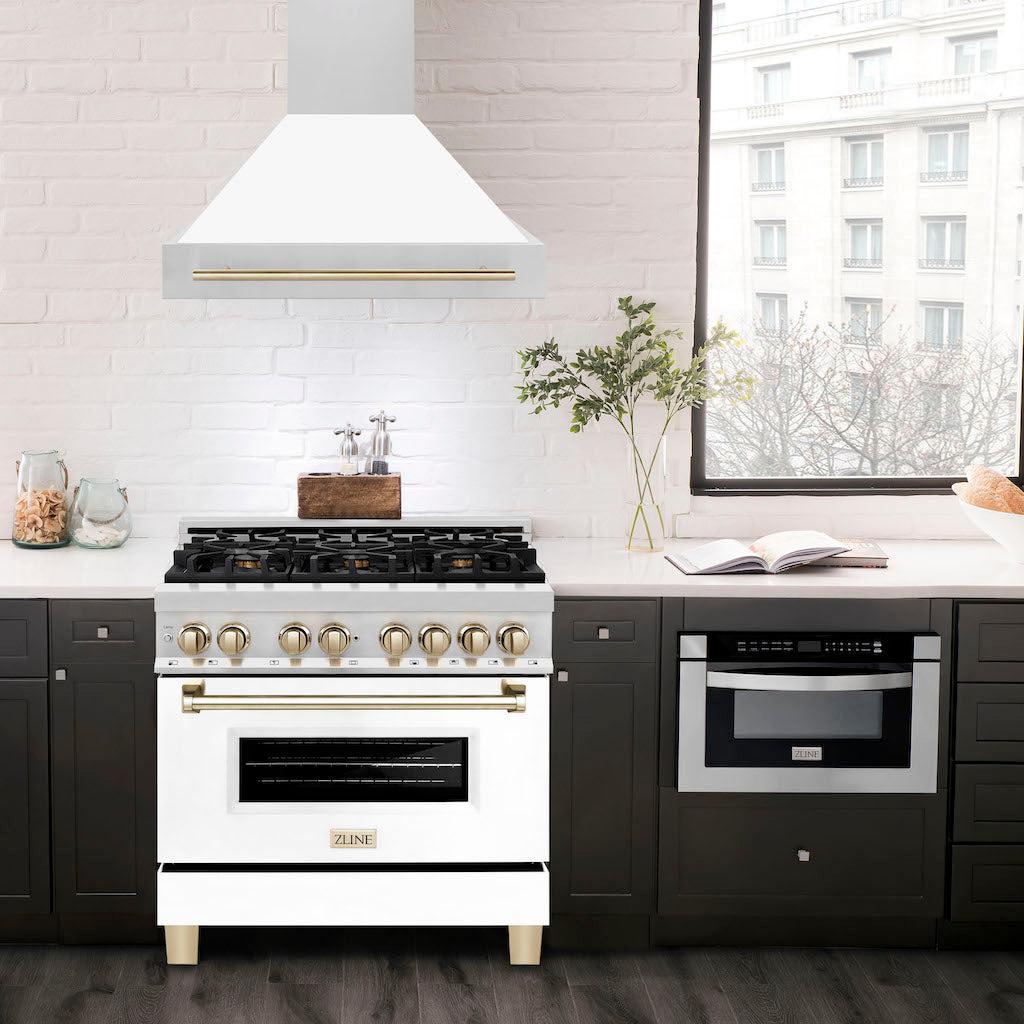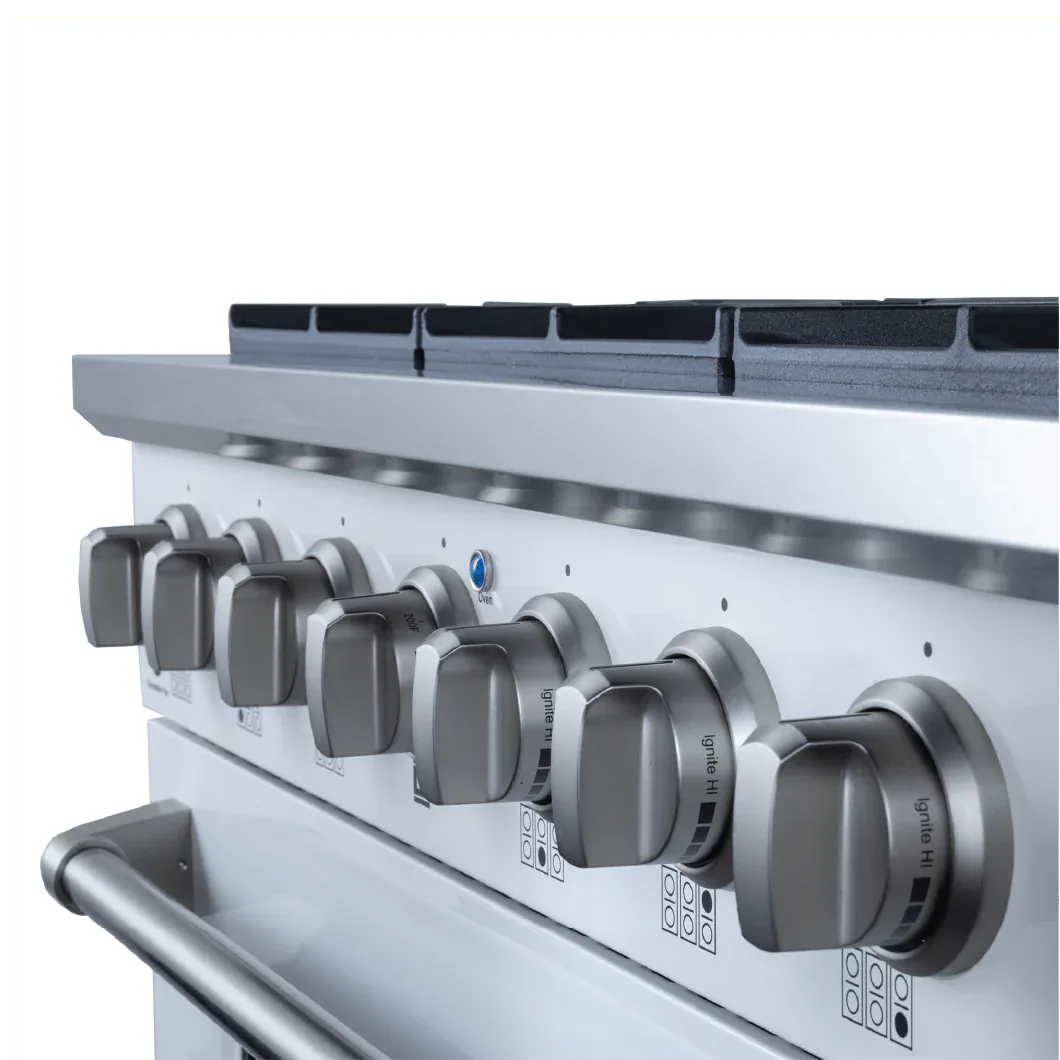
Pick a range, and you're locked into a fuel type for 15+ years. The cooking experience, the energy costs, the installation requirements, and even what cookware you can use all flow downstream from this one decision. So it's worth slowing down on it.
The three options on the table are all gas, dual-fuel, and induction. Each has a real case for it. Each has real trade-offs. And the honest answer to "which is best?" depends almost entirely on how you actually cook.
This guide walks through each fuel type the way an experienced specialist would walk you through it in person — what it does well, what its limits are, what installation looks like, and who it actually fits. Whether you're remodeling in Salt Lake City, Park City, anywhere else in Utah, or shopping from the rest of the country, the framework is the same.
What's in this article
Quick Definitions
Before we go deep, here's what each term actually means:
- All gas: Gas cooktop and gas oven. Both halves of the range run on natural gas or propane.
- Dual-fuel: Gas cooktop and electric oven. The cooktop is gas (with the responsiveness chefs prefer); the oven is electric (typically with true convection).
- Induction: Electric cooktop using magnetic induction (no flames, no glowing coils — the cookware itself heats up) paired with an electric oven.
All three can deliver excellent results. The difference is how they get you there.
All Gas Ranges
Gas ranges have been the residential standard for decades, and for good reason. There's a reason most professional kitchens and most serious home cooks have historically chosen gas.
What All-Gas Does Well
Instant, visible heat control. When you turn the burner down, you see the flame shrink and feel the response immediately. There's no lag, no thermal mass to overcome. For techniques that depend on rapid heat changes — deglazing, sauce reduction, finishing a stir-fry — gas is intuitive in a way that's hard to replicate.
Compatibility with any cookware. Cast iron, stainless, copper, aluminum, carbon steel, ceramic — if it can take heat, it works on gas. There's no restriction on pan material.
Visual flame as feedback. Experienced cooks read flame height the way pilots read instruments. It's a built-in feedback loop you don't get with electric.
Familiarity. Most cooks learned on gas, and the muscle memory transfers directly. There's no learning curve.
What All-Gas Doesn't Do as Well
Oven performance is a step behind dual-fuel. Gas ovens introduce moisture into the oven cavity (a byproduct of combustion), which can make baking certain items — delicate pastries, crispy roasts — slightly less precise than an electric oven. Many home bakers prefer electric ovens for this reason.
Indoor air quality. Gas combustion releases nitrogen dioxide, carbon monoxide, and ultrafine particles. With proper ventilation, this is manageable. Without it, it's a real consideration — particularly for households with kids or anyone with respiratory sensitivity, and especially in places like Salt Lake City where winter inversions already compromise indoor air quality. We cover the ventilation specifics in our Proline range hoods guide and the regional air quality piece in our Salt Lake City climate guide.
Less efficient. A meaningful percentage of a gas burner's energy heats the air around the pan, not the pan itself.
Installation Requirements
A gas range needs an active gas line at the install location, plus a 120V electrical outlet for the controls, igniters, and oven light. If you don't have gas service, retrofitting can run a few hundred to several thousand dollars depending on the route to your meter and local labor rates.
Who All-Gas Fits
- Serious cooks who do a lot of stovetop work and want maximum responsiveness
- Anyone replacing an existing gas range and not interested in changing infrastructure
- Households with strong existing ventilation
- Cooks who use a wide variety of cookware (cast iron in particular shines on gas)

Dual-Fuel Ranges
Dual-fuel takes the parts of gas that work and pairs them with the part of electric that works. It's why dual-fuel has become the dominant choice in serious residential kitchens and professional home setups.
What Dual-Fuel Does Well
Gas cooktop responsiveness on top. You get all the benefits of gas burners — instant control, flame feedback, and cookware flexibility.
Electric oven precision underneath. Electric ovens hold temperature more steadily, recover faster after the door opens, and deliver dry, even heat ideal for baking, roasting, and broiling. Most dual-fuel ranges include true convection systems with a dedicated heating element around the convection fan, which produces dramatically better results for bakery-style baking, multi-rack cooking, and roasting.
The best of both worlds for serious home cooks. If you've ever loved a kitchen but wished the oven baked more evenly, dual-fuel is the answer.
What Dual-Fuel Doesn't Do as Well
Higher cost. Dual-fuel ranges typically cost more than equivalent all-gas ranges due to the dual systems and more complex electrical requirements. That said, brands like ZLINE have made dual-fuel dramatically more affordable than the traditional designer brands — see our ZLINE attainable luxury post for the full breakdown.
More complex installation. Dual-fuel ranges need both a gas line and a 240V electrical circuit. If your kitchen has the gas line for an existing all-gas range but only a 120V outlet, you'll need to add a 240V circuit — which means an electrician.
Installation Requirements
Gas line + 240V electrical circuit (typically 30A or higher, depending on the range). The 240V requirement is what trips up retrofit installs — not every kitchen has it ready.
Who Dual-Fuel Fits
- Home cooks who bake regularly and care about oven performance
- Anyone designing or remodeling a kitchen who's installing electrical anyway
- Cooks who want professional-style performance across both cooking and baking
- Households where the oven gets used as much as the cooktop

Induction Ranges
Induction is the newest of the three categories in residential kitchens, and the fastest-growing. The technology heats cookware directly through magnetic induction — the cooktop surface stays cool until heat transfers back from the pan — which produces results that are genuinely different from gas or conventional electric.
What Induction Does Well
Speed. Induction is faster than gas, often dramatically. Boiling a large pot of water on a high-output induction burner can be 30–50% faster than on a high-BTU gas burner. The energy transfer is direct, with very little lost to ambient air.
Precision and control. Modern induction systems offer extremely fine temperature control, including features like consistent low-heat melting that's nearly impossible to replicate on gas without a flame tamer.
Efficiency. Induction transfers a much higher percentage of its energy into the food. This means lower energy costs over time and a cooler kitchen during heavy cooking sessions. Worth checking whether induction qualifies for any state-level incentives, too — we cover this in our guide to Utah's energy efficiency kitchen rebates.
Easy cleaning. Because the cooktop surface stays cool, food doesn't bake onto it. A spilled sauce wipes off with a damp cloth. There are no grates, no burners, no caps to clean.
Safety. No flame, no glowing element, no burning hazard if a child touches the surface (the surface only warms from residual heat off the pan).
Excellent indoor air quality. No combustion, so no combustion byproducts. Many homeowners are choosing induction specifically for this reason — particularly along the Wasatch Front, where winter air quality is a year-round concern.
What Induction Doesn't Do as Well
Cookware compatibility. Induction requires ferromagnetic cookware — pots and pans with iron content the magnetic field can interact with. Most stainless steel, cast iron, and many enameled pans work fine. Aluminum, copper, and most glass cookware won't work without a converter disk. A simple test: if a magnet sticks to the bottom of the pan, it's induction-compatible.
Learning curve. Induction's response is too fast for cooks used to gas. The first few weeks involve recalibrating — a setting of 7 on induction is much hotter than a 7 on gas. Most people adapt within a month, but it's real.
No flame for certain techniques. Charring tortillas directly over flame, flambéing tableside, blistering peppers over open fire — gas can do these, induction can't.
Higher upfront cost. Induction ranges have generally cost more than equivalent gas, though this gap has been narrowing as the technology matures.
Installation Requirements
240V dedicated electrical circuit (typically 40A or higher for a full-size range). No gas line required — which is a major advantage in homes without existing gas service or in jurisdictions phasing out new gas hookups.
Who Induction Fits
- Cooks prioritizing speed, efficiency, or indoor air quality
- Households with kids (cool cooktop surface is a real safety advantage)
- Anyone in an all-electric home or planning for future electrification
- Cooks willing to use mostly induction-compatible cookware
- Homeowners in regions phasing out residential gas
A Direct Comparison
Here's how the three stack up on the criteria that usually matter most:
| Criteria | All Gas | Dual-Fuel | Induction |
|---|---|---|---|
| Boiling water (large pot) | Fast | Fast (gas cooktop) | Fastest |
| Simmering / low heat | Intuitive but flame can fluctuate | Intuitive but flame can fluctuate | Most precise |
| Searing a steak | Excellent | Excellent | Excellent |
| Baking precision | Good | Excellent | Excellent |
| Kitchen heat while cooking | Warmest | Middle | Coolest |
| Indoor air quality | Combustion byproducts | Combustion byproducts | No combustion |
| Cookware flexibility | Any material | Any material | Magnetic only |
| Upfront cost | Lowest | Higher | Higher |
| Retrofit install | Easiest (if gas exists) | Needs gas + 240V | Needs 240V only |
How to Decide
Here's a rough decision tree that works for most homeowners:
- You bake regularly and want pro-level oven results. → Dual-fuel.
- You have kids and want a safer cooktop with great air quality. → Induction.
- You're a flame purist and love wok cooking, charring, and high-heat technique. → All-gas.
- You're remodeling and have flexibility on infrastructure. → Dual-fuel or induction (both are forward-looking choices).
- You're replacing an existing gas range and don't want to add electrical work. → All-gas.
- Your home doesn't have gas service. → Induction.
- You want the most efficient option for energy cost over time. → Induction.
And keep in mind: whichever fuel you pick, the range is only one piece of the puzzle. Hood sizing, refrigeration, and dishwasher coordination all matter too — which is why we typically recommend thinking about the full kitchen appliance package rather than buying piecemeal.
ZLINE Options Across All Three
Smart Home Luxury carries ZLINE ranges in all three fuel configurations:
- All-gas ranges in 24", 30", 36", 48", and 60" widths
- Dual-fuel ranges in the same size range, with electric convection ovens
- Induction ranges with all-electric induction cooktops and electric convection ovens
This means whatever fuel type fits your cooking style, you can stay in the same brand family for matching finishes, hardware, and design language across your kitchen suite — which is one of the biggest design advantages of building around a single brand.
Still Not Sure Which Fuel Type Is Right?
Talk to one of our Utah-based range specialists. We'll walk through your cooking style, kitchen infrastructure, and design goals to recommend the right configuration. No call centers. No bots. Just real experts helping you choose right.
Shop Gas Ranges Shop Dual-Fuel Shop All Ranges
Talk to a kitchen specialist: (888) 977-8994 | Mon–Fri 9–5 MST
Visit our showroom: 4375 W 1980 S, Salt Lake City, UT 84104
Smart Home Luxury is an authorized ZLINE and Proline dealer based in Salt Lake City, Utah. We serve the entire Wasatch Front — from Ogden to Provo — with nationwide shipping on every order.