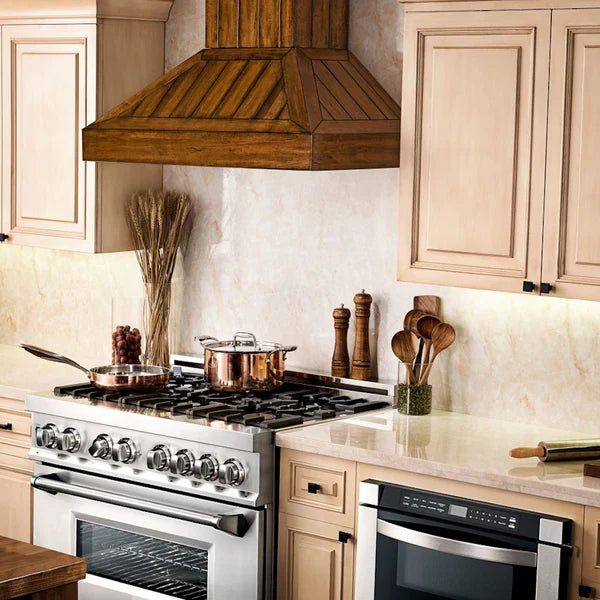
Range size sounds like a simple question of measurement. It isn't. The width you choose determines how many burners you get, how big your oven cavity is, whether you can roast a turkey at Thanksgiving, whether you can run a sauce and a stir-fry and a pasta water at the same time, and how the kitchen reads visually.
It's also the dimension you can't easily change later. The cabinet opening, the gas line, the duct routing for your hood — all of that gets sized around the range. Get this right at the planning stage and the kitchen works for the next 15 years. Get it wrong and you live with a kitchen that always feels slightly off.
This guide walks through the five most common range widths — 24, 30, 36, 48, and 60 inches — and what each actually enables. It's the size-side companion to our guide on gas vs. dual-fuel vs. induction ranges; together they cover the two biggest decisions you'll make when buying a range.
What's in this article
Quick Reality Check on "Standard"
Before we get into specific sizes: there's no universal standard. The most common residential range width in the US is 30 inches, but it's only "standard" because that's what builders default to in tract housing. In serious cooking kitchens, 36" has become the quiet standard. In professional-style kitchens, 48" is increasingly the norm. The right answer depends on your kitchen, not on what came installed in your old house.

24-Inch Ranges
24-inch ranges are the small-format option. Most are designed for compact spaces where a 30" simply won't fit.
What You Get
- 3 to 4 burners (typically smaller-output than full-size burner banks)
- A reduced-capacity oven cavity, usually around 2.0–2.5 cubic feet
- Reduced overall kitchen footprint
What You Give Up
- Cooking surface for multiple pans simultaneously (you'll often run out of room cooking dinner for 4)
- Oven space (a full-size sheet pan generally doesn't fit; certain large roasting pans don't fit)
- High-output burners (most 24" ranges run lower BTU on each burner)
Where 24-Inch Makes Sense
- ADUs (accessory dwelling units) and casitas
- Vacation homes and cabins (think Park City ski condos or Heber getaways)
- Apartments and condos with very small kitchens
- Galley kitchens where space is genuinely tight
- Secondary kitchens (basement bars, garage prep kitchens)
24" should generally be a last resort, not a first choice. If you can fit a 30", fit a 30".

30-Inch Ranges
30 inches is the most common residential range width in North America. It's the default size in most builder-grade kitchens and the entry point for serious cooking ranges.
What You Get
- Typically 4 to 5 burners (commonly four primary burners; some dual-fuel models include a center oval or fifth burner)
- Oven cavity around 4.0–5.5 cubic feet
- Fits standard half-sheet pans (13" x 18")
- Compatible with most kitchen layouts and cabinet runs
What You Give Up
vs. larger sizes:
- Simultaneous cooking capacity — four burners get crowded fast when you're running a multi-course meal
- Oven space for very large roasts and multiple sheet pans on different racks
- The visual presence of a wider professional range
Where 30-Inch Makes Sense
- Most apartments, condos, and standard-sized homes
- Kitchens where 30" is the existing cabinet opening and you're not remodeling cabinetry
- Households cooking for 1–4 people on a typical weeknight
- Buyers prioritizing budget while still wanting professional-style performance
For most American homeowners, 30" is a perfectly reasonable choice. Most great cooks have spent decades cooking on 30" ranges and produced extraordinary food on them.

36-Inch Ranges
36 inches is, in our view, the sweet spot for serious home cooks. You get most of the benefits of going bigger without the dimensional and infrastructure jump that comes with 48"+. It's also the size we install most often in remodels along the Wasatch Front, where established homes often have the cabinet space to accommodate the upgrade from 30".
What You Get
- Typically 6 burners (or 4-5 burners plus a griddle or French top in some configurations)
- Oven cavity often 5.0–6.0 cubic feet
- Genuine room to run multiple pans without crowding
- Better burner output options (more 18,000+ BTU burners)
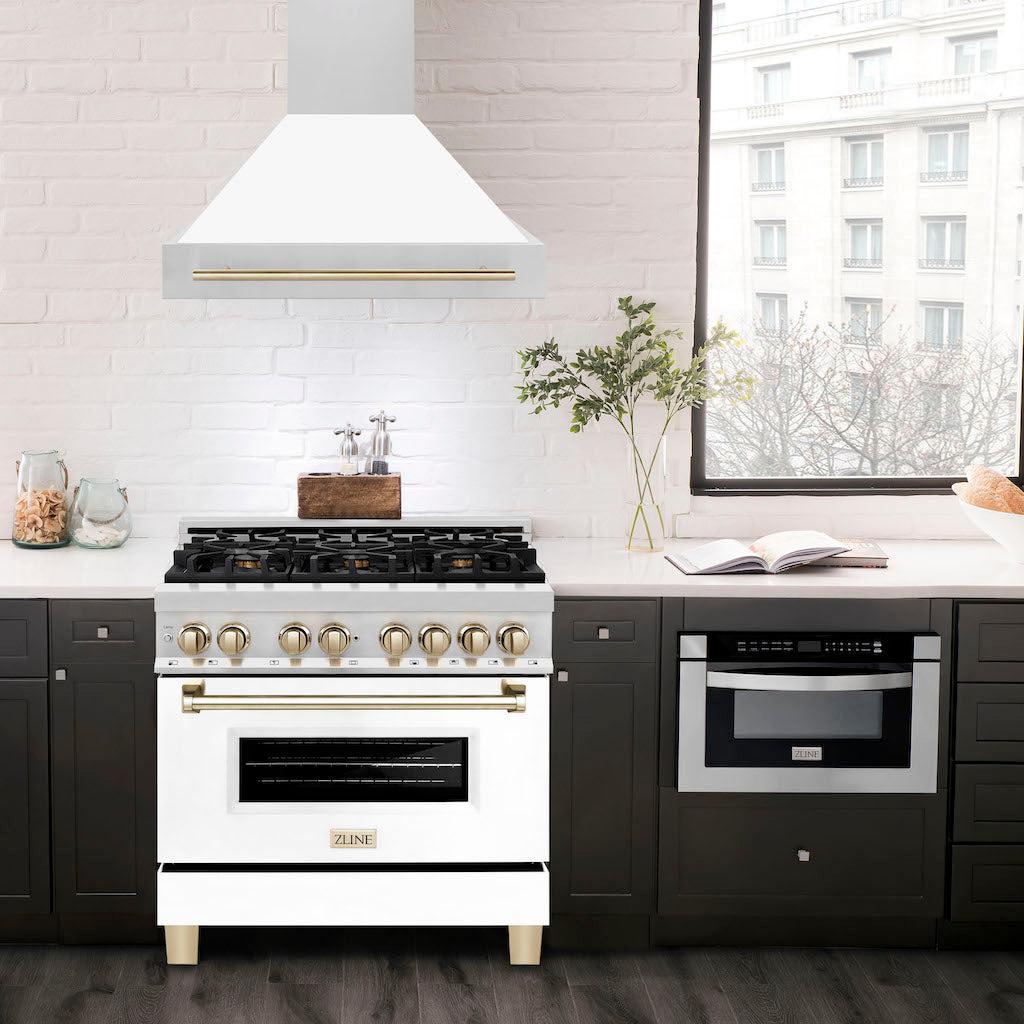
- A visual presence that anchors a kitchen
What You Give Up
vs. larger sizes:
- A second oven (most 36" ranges have a single oven; you can pair with a separate wall oven)
- The widest professional cooking surface
vs. smaller sizes:
- Cabinet space (you give up 6" of base cabinet on either side)
- Higher cost
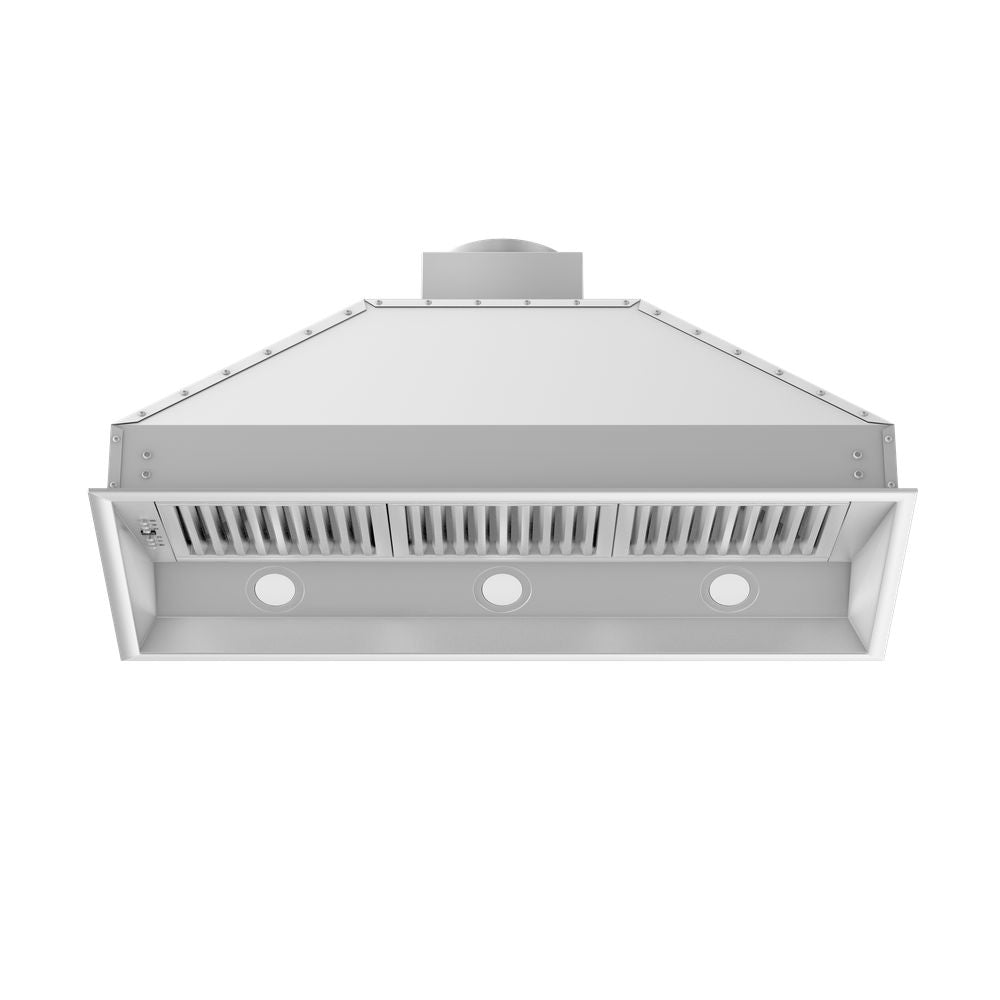
- Larger ventilation requirements (36" minimum hood width, often higher CFM — see our Proline range hoods guide for the CFM math)
Where 36-Inch Makes Sense
- Households that cook 3+ nights a week with multiple components per meal
- Families where two people often cook at the same time
- Anyone who hosts dinner parties or holiday meals regularly
- Kitchens being designed from scratch where the cabinetry is being built around the range
- Buyers who want professional-style cooking without going to 48"+
If you're remodeling and the budget allows, going from 30" to 36" is one of the highest-impact upgrades in the entire kitchen.

48-Inch Ranges
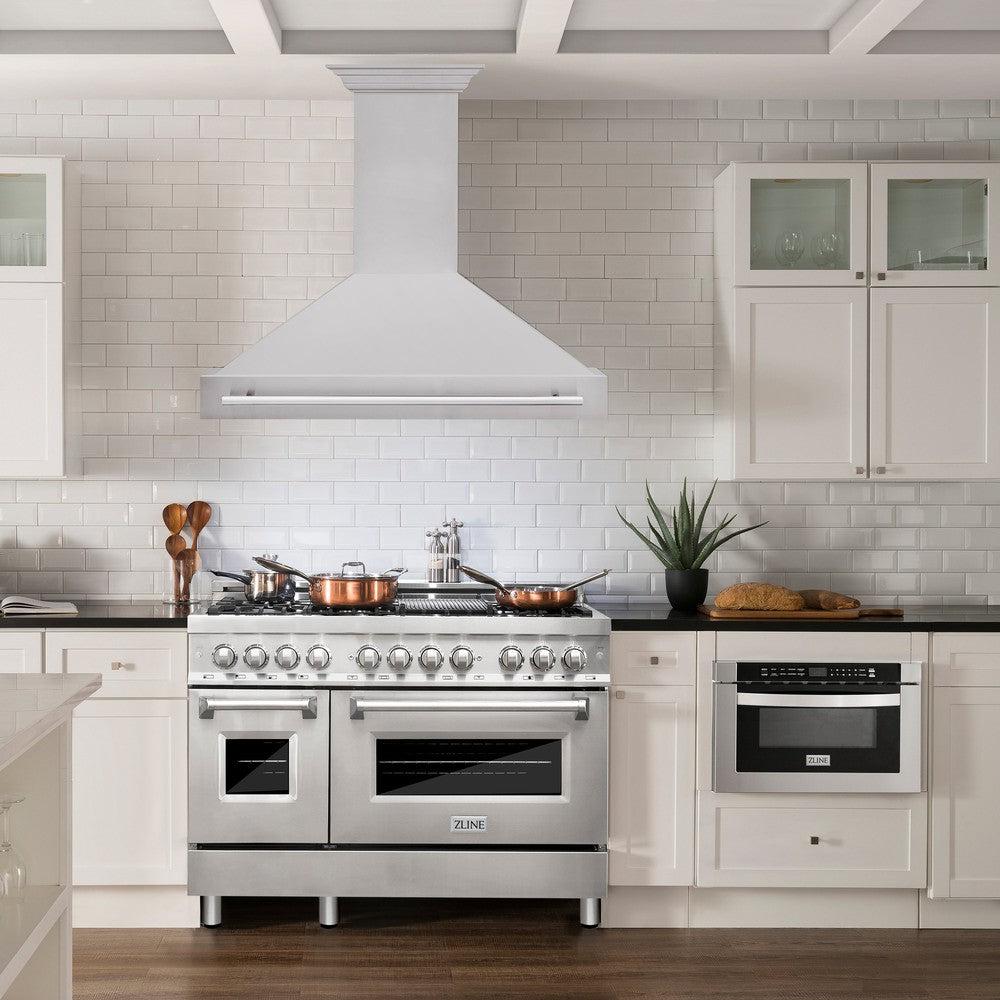
48-inch ranges are where you cross into professional-style territory. These are the ranges that look pulled out of a restaurant kitchen, and the configurations open up dramatically.
What You Get
- Configurations like 6 burners + griddle, 8 burners, or 6 burners + French top
- Often two oven cavities — a primary oven (~4.5 cu ft) and a secondary oven (~2.5 cu ft), which is genuinely game-changing for entertaining
- Multiple high-output burners (often 18,000+ BTU on several burners)
- Griddle or French top options for serious cooking versatility
- Major visual presence as the kitchen's design centerpiece
What You Give Up
- Significant cabinet space (4 feet of wall is now range)
- Higher cost (frequently 50–100% more than equivalent 36")
- Larger ventilation requirements (48"+ hood, frequently 1000+ CFM — often a professional range hood is required)
- More demanding installation (gas line sizing, 240V requirements for dual-fuel)
- A kitchen design that has to accommodate it (you can't squeeze a 48" range into a kitchen that wasn't planned around it)
Where 48-Inch Makes Sense
- Serious entertainers who host frequently
- Households where multiple people cook simultaneously
- Cooks who use a griddle regularly (the integrated griddle option alone can justify the upgrade for some)
- Larger kitchens designed specifically around the range
- Anyone who's done their cooking life on 30" and 36" and is finally building the kitchen they actually want
The dual oven configuration is the under-appreciated benefit. Cooking a turkey in the main oven while baking sides and rolls in the second is a different experience than juggling a single oven all day. For buyers planning a 48" build, we typically recommend bundling the range with matching ventilation and refrigeration — see our guide to kitchen appliance packages for how the savings stack up.

60-Inch Ranges
60-inch ranges are the maximum residential size. These are statement pieces, and they make sense in a specific subset of kitchens.
What You Get
- Configurations like 8 burners + griddle, 6 burners + griddle + French top, or 8 burners + double griddle
- Two large oven cavities (often roughly equal size, ~4.5 cu ft each)
- Maximum cooking surface area
- Visual scale that reads as "this is a serious kitchen"
What You Give Up
- 5 feet of wall, which has cascading effects on the rest of the kitchen layout
- Significantly higher cost
- 60"+ hood requirement with very high CFM
- Installation complexity
- Kitchen design that must be planned around the range from the beginning
Where 60-Inch Makes Sense
- Large custom kitchens designed specifically around the range
- Households that genuinely cook at scale — large families, serious entertaining, multi-generational cooking
- Buyers who want the ultimate residential cooking statement
- Specific design contexts (estates, large open-concept kitchens) where the scale is appropriate
For most homeowners, 60" is more range than you need. For a specific subset, it's exactly right.
Range Sizes At a Glance
Here's how all five sizes compare on the criteria that usually matter most:
| Size | Burners | Oven Capacity | Best For |
|---|---|---|---|
| 24" | 3–4 (smaller output) | 2.0–2.5 cu ft | ADUs, cabins, very tight kitchens |
| 30" | 4–5 | 4.0–5.5 cu ft | Most homes, households of 1–4 |
| 36" | 6 (or 4–5 + griddle) | 5.0–6.0 cu ft | Serious home cooks, families, regular hosts |
| 48" | 6–8 + griddle/French top | ~4.5 + ~2.5 cu ft (dual oven) | Entertainers, multi-cook households |
| 60" | 8 + griddle / double griddle | ~4.5 + ~4.5 cu ft (dual oven) | Estate kitchens, cooking at scale |
How to Pick the Right Size
A few practical filters that help with the decision:
Filter 1: How Often Do You Actually Cook?
If your kitchen sees real use 4+ nights a week, scale up. If it sees occasional use, you don't need a 48" range to feel good about your kitchen.
Filter 2: How Many People Cook at Once?
A single cook on a 30" works fine. Two people cooking at once on a 30" is a constant elbow battle. 36"+ is dramatically better the moment you have a second person in the kitchen.
Filter 3: Do You Entertain?
Hosting Thanksgiving for 12, brunch for 8, or weekly dinners for friends? The oven size and burner count differences between 30", 36", and 48" become very real on hosting days.
Filter 4: What's Your Kitchen Footprint?
A 48" range looks proportionate in an 18-foot kitchen run. It looks crammed in a 10-foot run. Match the range scale to the room.
Filter 5: What's Your Cookware Like?
Cooks with large stockpots, fish poachers, paella pans, and oversized roasting pans benefit disproportionately from larger ranges. The pans simply don't fit comfortably on smaller ones.
A Note on Cabinet Planning
If you're remodeling and considering a range size upgrade, plan the cabinet opening generously relative to the spec. Most 36" ranges call for a 36" cabinet cutout, but allow extra clearance for installation and any future replacement. Same for 48" and 60". The cabinet itself should be sized exactly to spec; the cutout should account for installation tolerance. (This is one of the reasons we strongly recommend working with a real cabinet shop — see our guide to the best kitchen cabinets in Salt Lake City for how we think about that side of the project.)
Also confirm:
- Range cutout depth (typically 24–26", but check your specific model)
- Counter depth on either side (you'll want landing space for hot pans)
- Hood width (must be at least equal to the range width; many specs recommend going wider)
- Gas line sizing (larger ranges may need larger supply lines)
- Electrical requirements (240V circuits for dual-fuel and induction, often 40–50A)
ZLINE Options at Every Size
Smart Home Luxury carries ZLINE ranges in 24", 30", 36", 48", and 60" widths across all fuel types (gas, dual-fuel, and induction where applicable). This means whatever size fits your kitchen and cooking style, you can stay in a single brand family for matching finishes, hardware, and design across your full kitchen suite — one of the biggest reasons to build around a single brand, as we cover in our ZLINE attainable luxury post.
Sizing Your Kitchen for a New Range?
Our specialists work through this conversation every day. Tell us your cabinet opening, your cooking style, and your kitchen layout — we'll help you pick the size that fits both the space and the way you actually cook. No call centers. No bots. Just real experts helping you choose right.
Shop All Ranges Shop Gas Ranges Shop Dual-Fuel
Talk to a kitchen specialist: (888) 977-8994 | Mon–Fri 9–5 MST
Visit our showroom: 4375 W 1980 S, Salt Lake City, UT 84104
Smart Home Luxury is an authorized ZLINE and Proline dealer based in Salt Lake City, Utah. We serve the entire Wasatch Front — from Ogden to Provo — with nationwide shipping on every order.