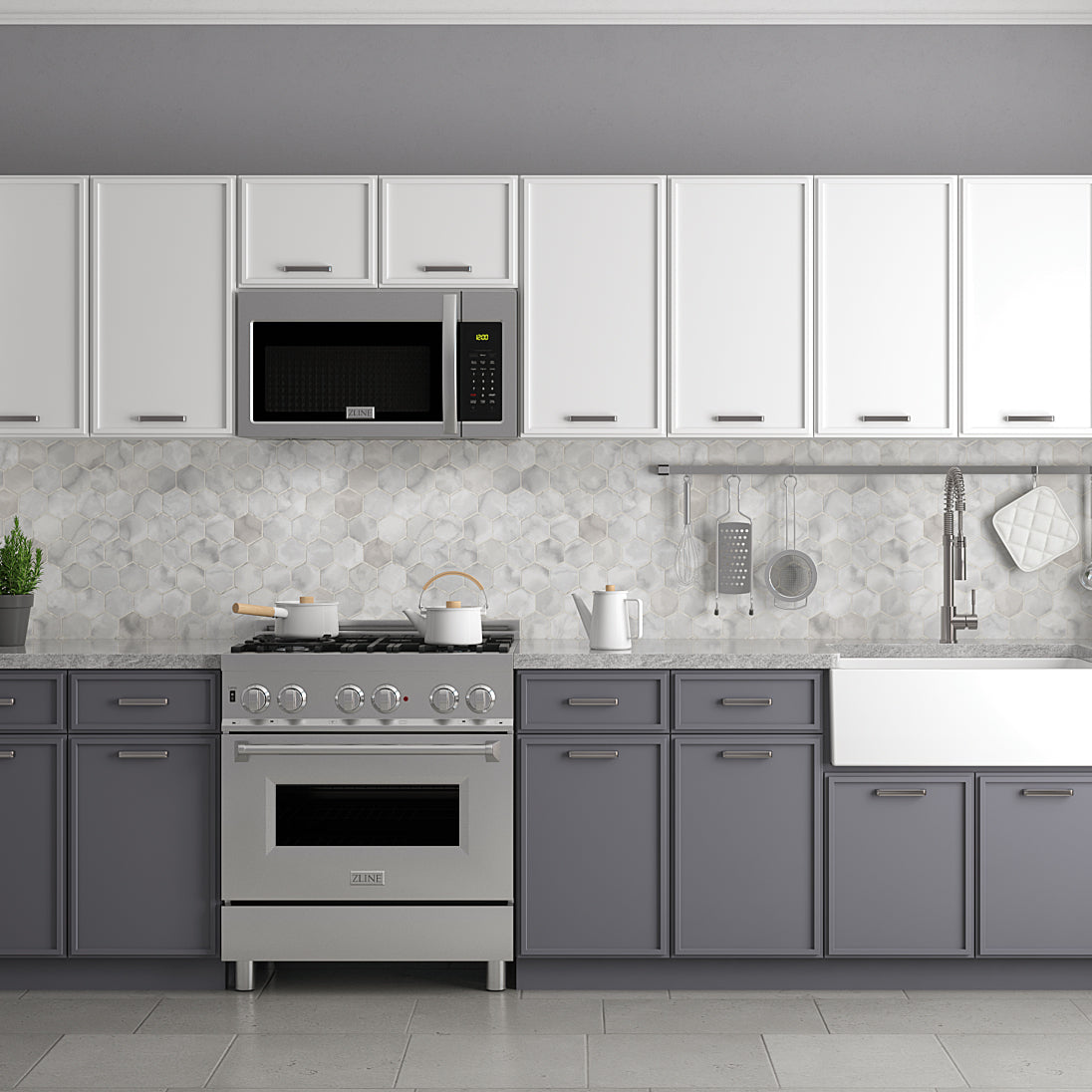
Microwaves are the appliance everyone uses and nobody plans. Most kitchens end up with whatever fit the opening above the range, and that is the end of the conversation. Which is a shame, because the category has quietly split into four meaningfully different configurations, and the choice affects how the kitchen works, how it looks, and whether you can have a real range hood.
This guide covers all four: over-the-range, built-in, drawer, and speed oven. Which one fits depends on your layout, how often you actually use a microwave, and how seriously you cook on the range below it.
What's in this article
The Four Types at a Glance
| Type | Cost | Where It Goes | Vents the Cooktop? | Best For |
|---|---|---|---|---|
| Over-the-range | $ | Above the cooktop | Yes, but weakly (300–400 CFM) | Budget builds, rentals, like-for-like swaps |
| Built-in | $$ | Cabinet column or wall opening | No — needs a separate hood | Most remodels; frees the hood location |
| Drawer | $$$ | Island or peninsula base cabinet | No — needs a separate hood | Islands, design-first kitchens, kids |
| Speed oven | $$$$ | Cabinet column, often above a wall oven | No — needs a separate hood | Second oven capacity in a small footprint |
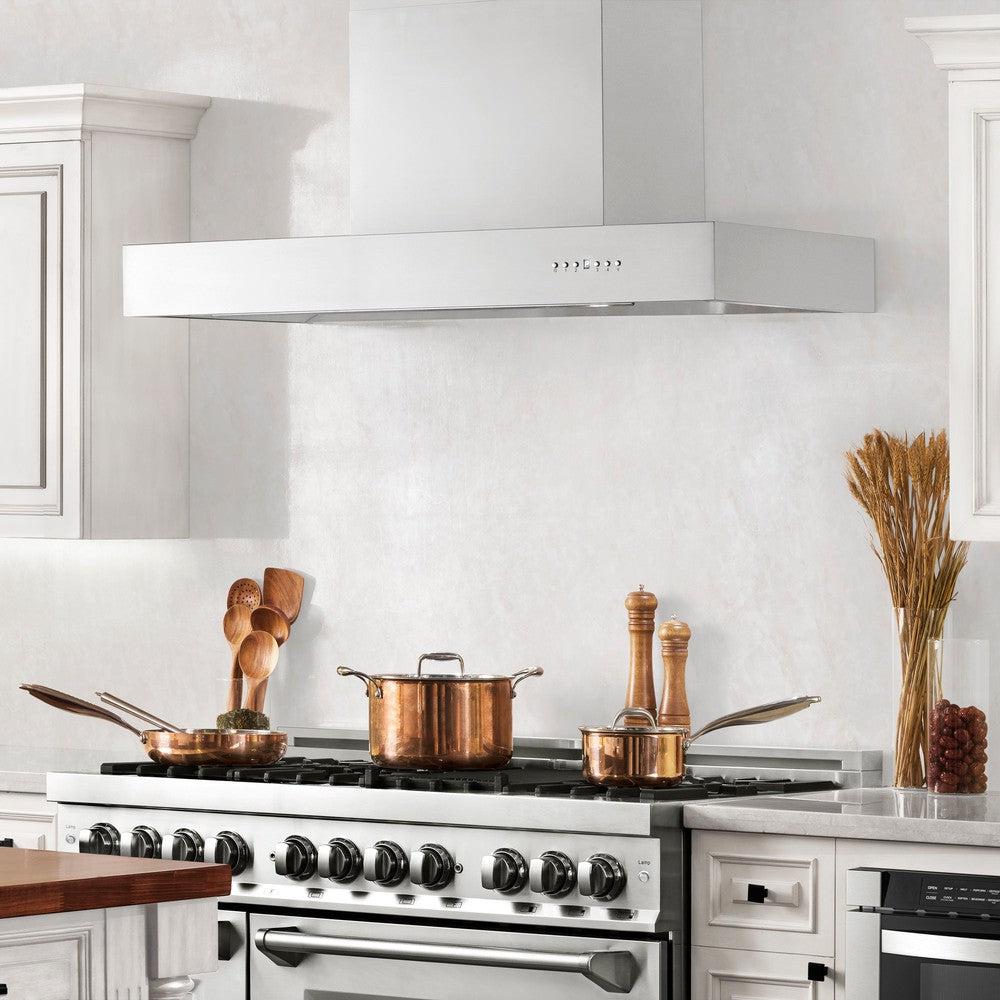
The single most consequential line in that table is the ventilation column. Three of the four configurations assume a real range hood above the cooktop. Only one tries to do both jobs with one appliance, and it does the second one badly.

Over-the-Range Microwaves
The default. Over-the-range units mount above the cooktop with an integrated fan that doubles as range ventilation. This is what most builders install.
What OTR Does Well
- Cheapest configuration by a wide margin.
- Space-efficient — uses otherwise dead space above the range.
- Easy like-for-like replacement — standardized mounting fits most existing kitchens.
- Includes basic ventilation, which is better than nothing.
Where OTR Falls Short
- The ventilation is weak. OTR fans typically top out around 300–400 CFM. A dedicated hood over a serious gas range runs several times that. Smoke, grease, and odor end up in the kitchen instead of outside.
- Awkward height. Reaching over a hot cooktop to lift out a full dish is uncomfortable, and worse for anyone under about 5'4".
- It dates the kitchen. The stacked microwave-over-range look reads builder-grade, and design-led remodels have been moving away from it for years.
- It occupies the hood location. If you later want real ventilation, the microwave has to find a new home — which usually means cabinetry work.
Who It Fits
Budget-conscious kitchens, rentals and secondary homes, and straight replacements in kitchens already configured this way. If you cook mostly on electric or at moderate heat, the ventilation gap matters less.
If you cook hard on a high-BTU gas range, it matters a lot. Our guide to range hoods and CFM sizing covers why, and what a properly sized hood actually costs.

Built-In Microwaves
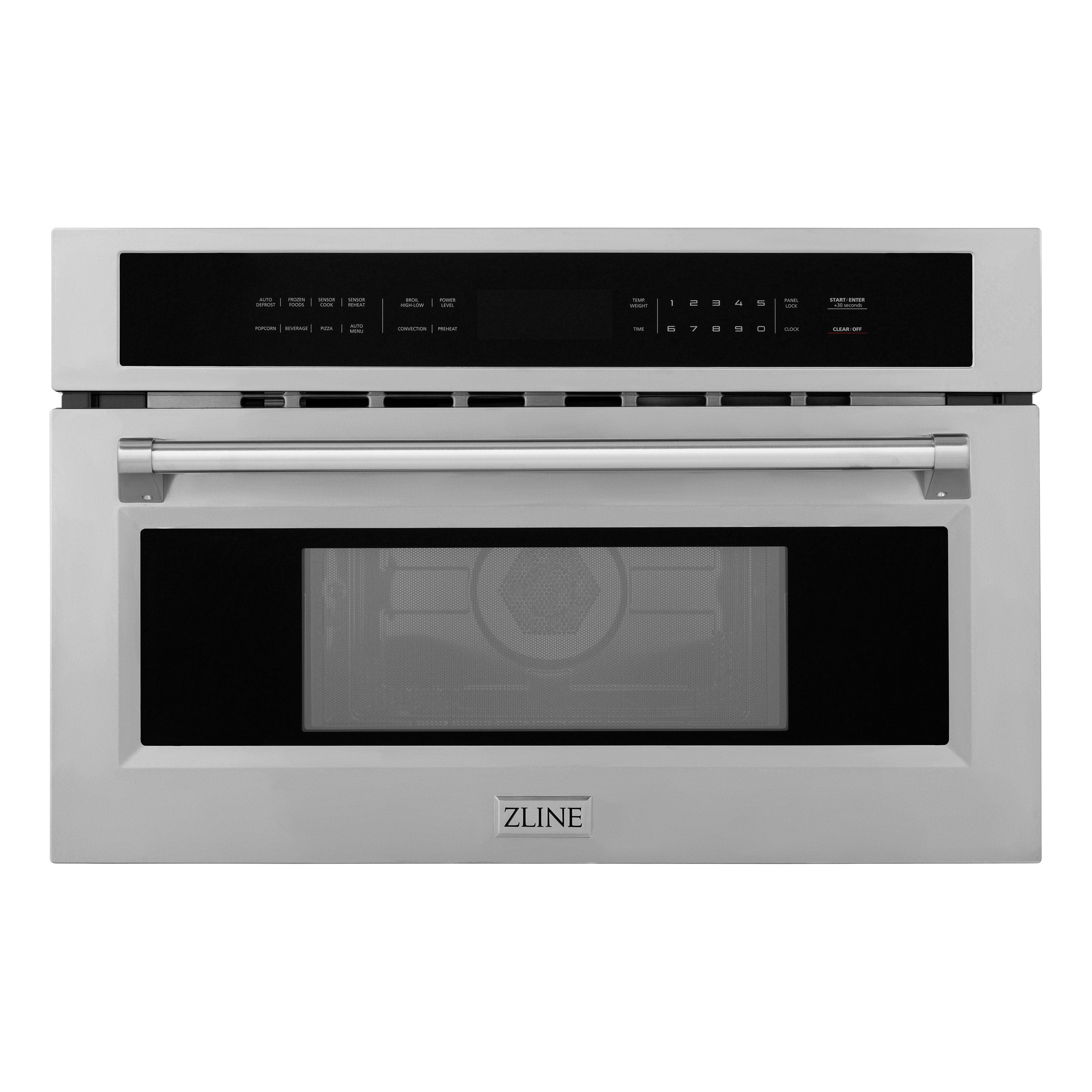
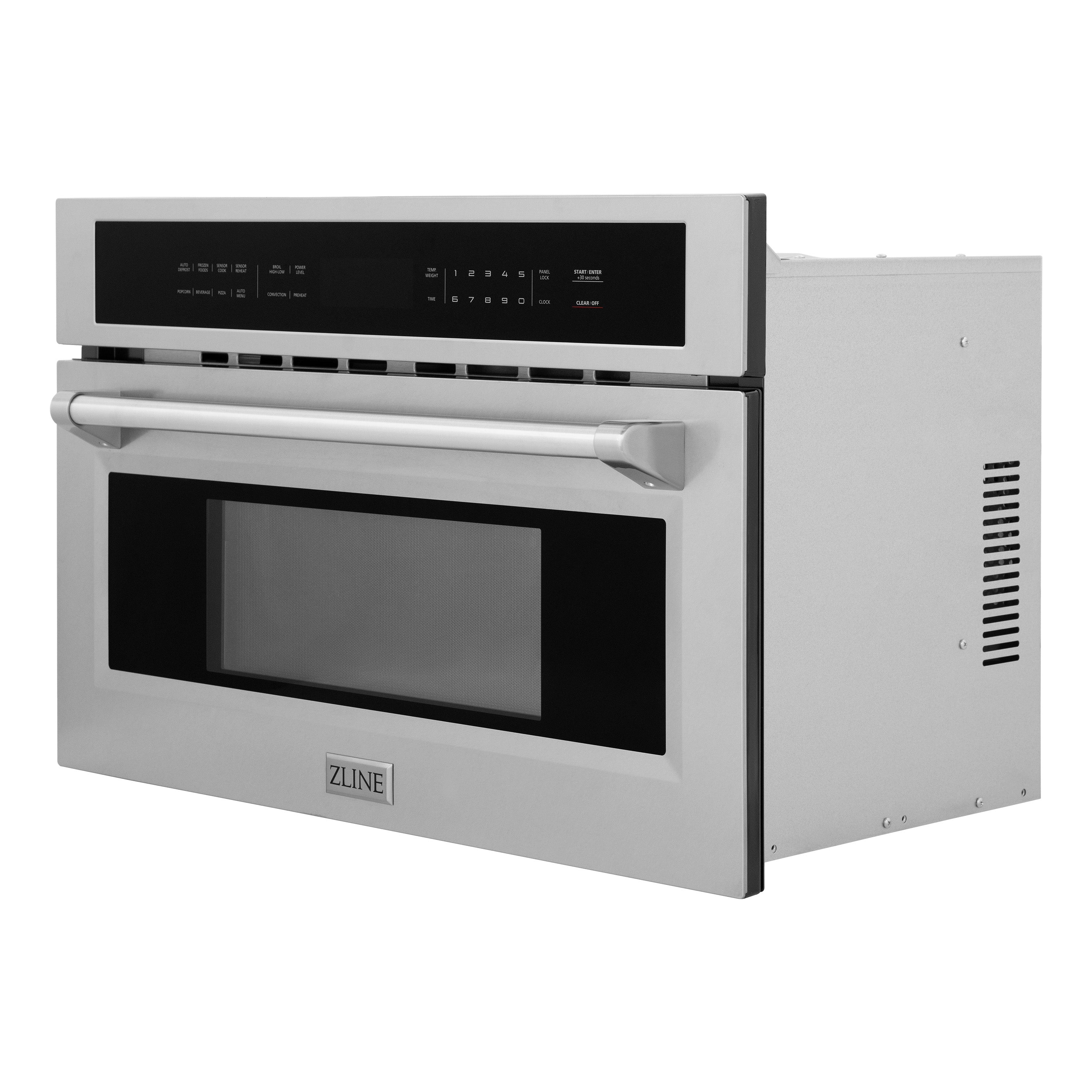
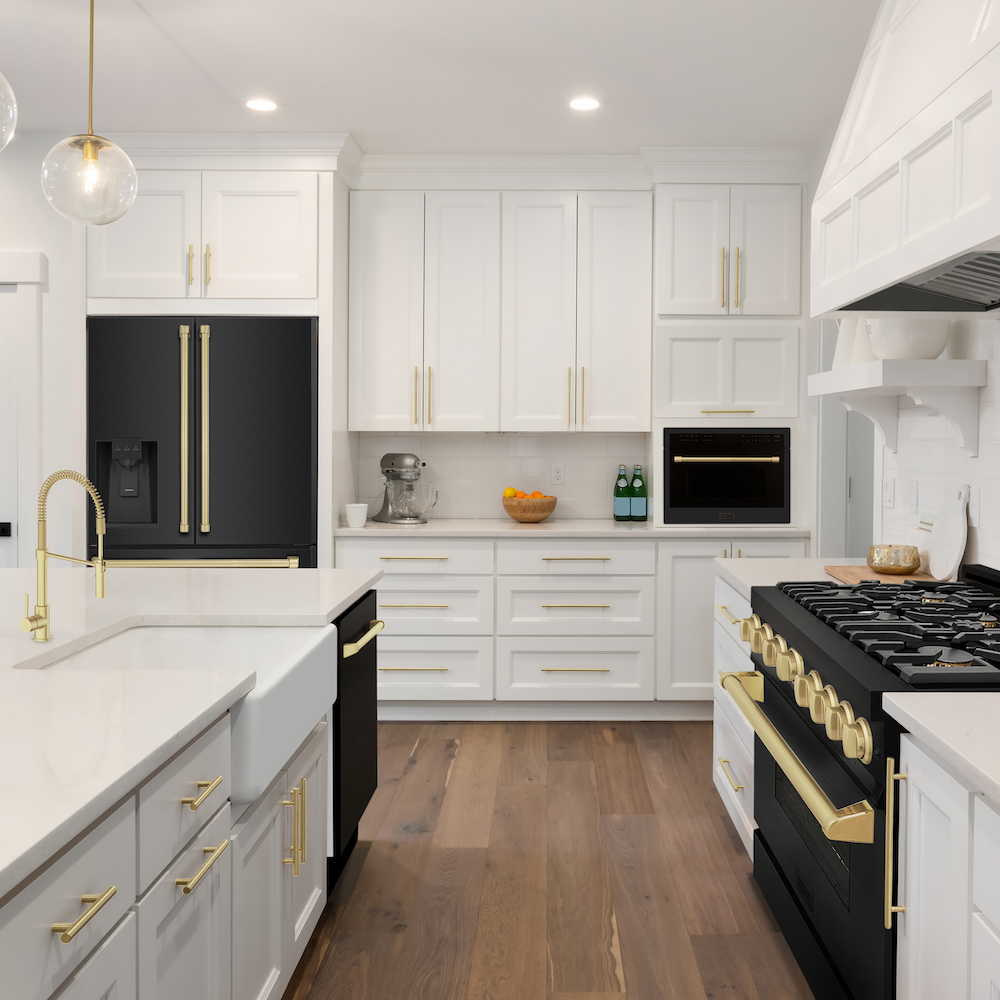
Built-ins install into a cabinet or wall opening with a trim kit that gives them a flush, finished appearance. Common placements: a tall cabinet column, stacked with a wall oven, or in an island cabinet at a comfortable height.
What Built-In Does Well
- Clean, designed look — reads as cabinetry rather than an appliance parked on a shelf.
- Ergonomic height — installed where it suits the primary cook, not locked above the range.
- Frees the hood location — which is what makes a proper high-CFM range hood possible.
- Coordinated finishes across the rest of the appliance suite.
Where Built-In Falls Short
- Costs more than OTR, and the trim kit adds to that.
- Takes dedicated cabinet space that has to come out of the overall plan.
- No ventilation function — you are buying a range hood separately.
Who It Fits
Most mid-range and premium remodels. If you are putting in a real range hood anyway, built-in is usually the natural answer for where the microwave goes.
If the microwave is going into a column with a wall oven, our wall oven buying guide covers how to plan that column.

Microwave Drawers
Drawer microwaves install into base cabinetry, usually in an island or peninsula. The whole cavity slides out like a drawer and you load it from above.
What Drawers Do Well
- They disappear. No visible appliance front — the kitchen reads as uninterrupted cabinetry.
- Best ergonomics of the four. Loading at counter height beats lifting a hot dish down from above, and it is the one configuration children can use safely without reaching over a range.
- Works in an island, putting the microwave in the prep zone without visual intrusion.
- Easy for tall items — you are lowering things in rather than sliding them past a door frame.
Where Drawers Fall Short
- Most expensive of the three standard configurations.
- Costs you a base cabinet in the island or peninsula.
- Interior dimensions are specific — not every oversized container will fit.
- More involved installation — needs the right cabinet depth, clearance, and electrical rough-in.
Who It Fits
Kitchens with a real island, design-first remodels minimizing visible appliances, households with kids, and multi-cook kitchens where the microwave should not sit in the main cooking lane. Drawers have become the default in luxury remodels over the past several years, and homeowners who live with one rarely go back.

Speed Ovens
A speed oven is a hybrid: microwave and convection oven in one appliance. You can microwave, convection bake, convection roast, or run a combined mode that uses microwave energy to accelerate convection cooking. It typically installs as a built-in, often stacked with a traditional wall oven.
What Speed Ovens Do Well
- Two appliances in one footprint — microwave plus a genuine secondary oven.
- Real browning and crisping, which no microwave alone can do.
- Combined modes that cut cooking time meaningfully on the right dishes.
- Adds oven capacity without surrendering the cabinet run a second wall oven would need.
Where Speed Ovens Fall Short
- Most expensive of the four by a clear margin.
- Smaller usable interior than a standard microwave of the same exterior size, because the convection system takes up room.
- Learning curve — the combined modes take some getting used to.
- Easy to over-buy. If you only ever press reheat, you are paying for capability you will not touch.
Who It Fits
Serious cooks who want second-oven capacity without a second wall oven. Compact kitchens where every appliance has to pull double duty. Households built around a single-oven 30" or 36" range that run out of oven space at holidays. If you bake and roast regularly, this is the configuration that earns its price. If you do not, it is the one to skip.
Picking Between the Four
- Cheapest option, and the ventilation gap is acceptable. → Over-the-range.
- You want a real range hood over the cooktop. → Built-in, somewhere other than above the range.
- You have a large island and want the microwave to vanish. → Drawer.
- You need second-oven capacity without a second wall oven. → Speed oven.
- Full renovation and the budget allows. → Drawer in the island, or built-in in a tall cabinet near the prep zone. These are the two that show up most consistently in well-designed modern kitchens.
If you are torn between two of these, call us at (888) 977-8994 with your layout. Where the microwave goes affects the cabinet plan and the electrical rough-in, so it is worth ten minutes before your cabinet maker finalizes anything.
Sizing and Placement
Capacity
- Compact, 0.9–1.2 cu ft — fits a dinner plate. Basic reheating. Common in drawers and small built-ins.
- Mid-size, 1.2–1.6 cu ft — standard family use. Handles most casseroles and large bowls.
- Full-size, 1.6–2.2 cu ft — large platters, serving dishes, oversized containers.
If you regularly cook for a crowd, size up. The step from 1.2 to 1.6 cu ft is noticeable in daily use.
Placement
- Not above the range, if you can avoid it. When you install a built-in, drawer, or speed oven, resist putting it where the old OTR was. That space belongs to ventilation.
- At a reachable height. This appliance gets used daily. It should sit where the primary cook can reach it comfortably, not above eye level.
- Out of the main cooking lane. If two people cook at once, a microwave at a secondary station prevents traffic jams.
- Planned into the electrical. Most microwaves want a dedicated circuit. Sort that during rough-in, not after the cabinets are hung.
Frequently Asked Questions
Is an over-the-range microwave enough ventilation for a gas range?
Usually not. OTR fans top out around 300–400 CFM, which is adequate for electric cooktops and light gas cooking but well short of what a high-BTU gas range needs. If you sear, fry, or wok cook regularly, plan on a dedicated range hood and put the microwave elsewhere.
What is the difference between a built-in microwave and a speed oven?
A built-in is a microwave in a flush-mounted cabinet installation. A speed oven adds a true convection system, so it browns and crisps like a small oven and can combine both modes. The speed oven costs considerably more and has slightly less usable interior space for the same exterior size.
Are microwave drawers worth the extra cost?
If you have an island and use the microwave daily, most households say yes — the ergonomics are the best of the four and it keeps the sightlines clean. If the microwave gets used twice a week, a built-in delivers most of the benefit for less.
Can a microwave drawer go anywhere other than an island?
Yes. Any base cabinet run with sufficient depth and electrical access works — a peninsula, a perimeter run, or a coffee bar. The island is just the most common placement.
Do I need a dedicated circuit for a microwave?
In most cases yes, and it is far cheaper to run during electrical rough-in than to add later. Confirm the requirement for the specific model before your electrician finalizes the panel schedule.
Can I match the microwave to the rest of my appliances?
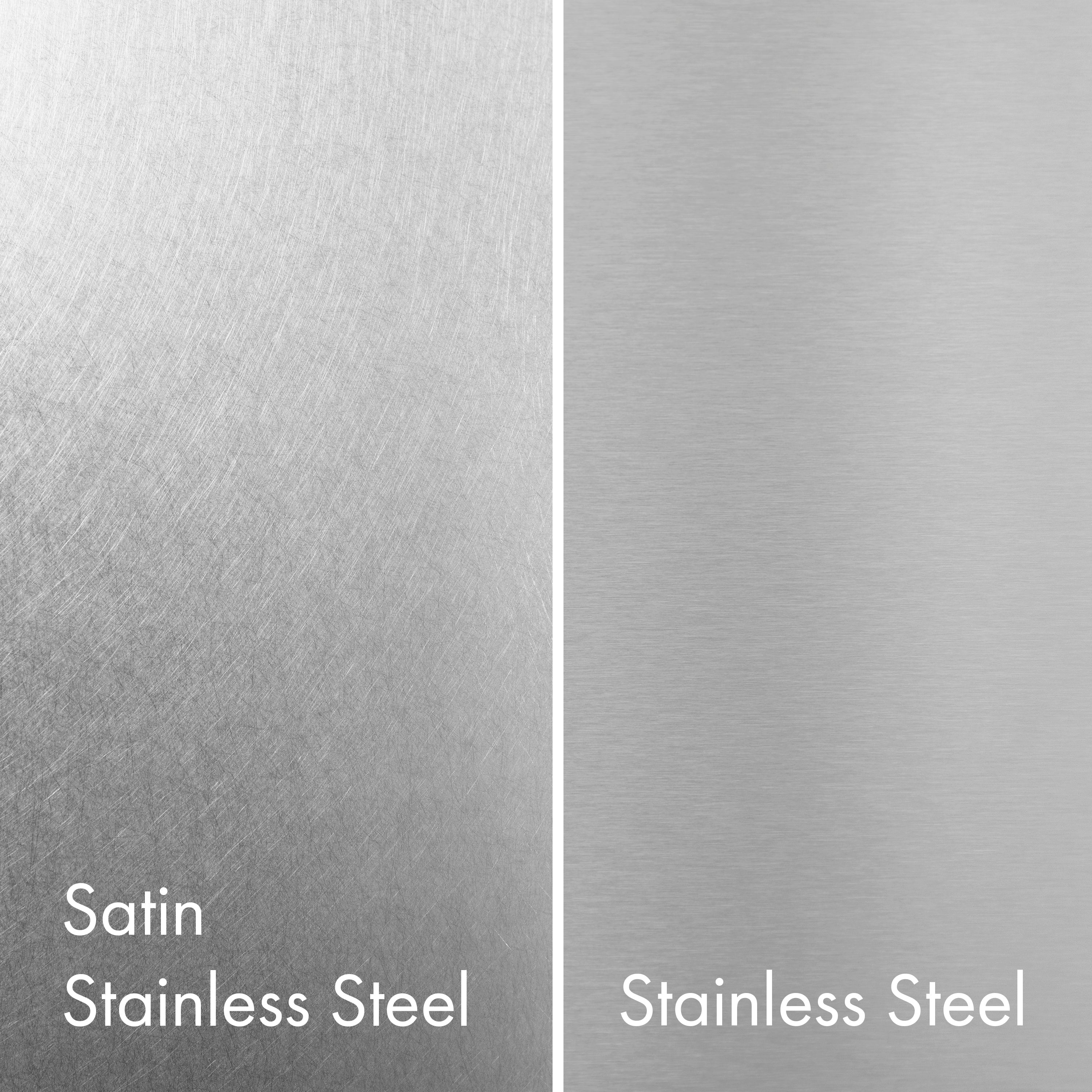
Yes. ZLINE microwaves come in built-in, drawer, and over-the-range configurations in finishes that coordinate across the suite — stainless, Satin Stainless Steel (formerly DuraSnow®), black stainless, with Autograph Edition hardware on select models. If you are building around a ZLINE range and hood, the matching microwave is almost always easier than sourcing a one-off that will not quite match.
Not Sure Which Microwave Fits Your Kitchen?
Send us your layout and how you cook. We'll tell you which configuration makes sense, where it should go relative to your range hood, and which ZLINE model matches the rest of your suite — usually in about 15 minutes. No call centers. No bots. Just real experts helping you choose right.
Call (888) 977-8994 Shop Built-In Microwaves Shop Microwave Drawers
Talk to a kitchen specialist: Mon–Fri 9–5 MST
Visit our showroom: 4375 W 1980 S, Salt Lake City, UT 84104
Smart Home Luxury is an authorized ZLINE and Proline dealer based in Salt Lake City, Utah. We serve the entire Wasatch Front — from Ogden to Provo — with nationwide shipping on every order.