Wall ovens are the "serious cook's" oven configuration. Instead of the oven being part of a freestanding range, it's built into a cabinet or wall run at counter or eye level — no bending, no fighting the cooktop for space, and often paired with a separate cooktop or built-in microwave for a fully coordinated cooking column.
The trade-off is that wall ovens require dedicated planning: cabinet cutouts, electrical circuits, and thoughtful placement relative to the rest of the kitchen. This guide covers the decisions that matter: single vs. double, sizing, matching with cooktops, and what specs are worth paying for.
What's in this article
Why Choose a Wall Oven Over a Range?
A freestanding range gives you a cooktop and oven in one unit — simple, cost-effective, and the default for most kitchens. A wall oven separates the two, giving you a dedicated oven at ergonomic height plus flexibility to place a cooktop wherever your kitchen layout works best.
Wall Oven Advantages
- Ergonomic loading and unloading. No bending over to check a roast or pull a hot dish out of a low oven. Wall ovens install at eye or waist level.
- Design flexibility. Cooktop can go in an island, on a peninsula, or wherever the layout works — you're not locked into having the range under the hood.
- Coordinated cooking column. Wall oven + built-in microwave + warming drawer in one stacked column creates a clean, intentional cooking zone.
- Double oven capacity. If you regularly cook two things at different temperatures (Thanksgiving turkey + rolls), a double wall oven does what a range simply can't.
Wall Oven Trade-Offs
- Higher total cost. Wall oven + cooktop typically costs more than an equivalent freestanding range.
- More cabinet planning. Requires dedicated cabinet cutouts and coordinated cooktop installation.
- Wall/cabinet space. A wall oven column takes up space you could otherwise use for storage.
For a broader comparison of range vs. cooktop-and-wall-oven decisions, see our companion guide on cooktop vs. range setups.
Single vs. Double Wall Oven
Single wall ovens have one oven cavity, typically at eye level. Double wall ovens stack two cavities in a single unit.

Single Wall Oven
Best for:
- Most family kitchens where you rarely cook two things at once at different temperatures
- Kitchens with limited vertical cabinet space
- Buyers wanting to save cost vs. double oven
- Kitchens where the single oven can be paired with a wall oven + built-in microwave column instead of a double oven

Double Wall Oven
Best for:
- Serious entertainers who host Thanksgiving, brunch parties, holiday meals for 8+ regularly
- Families with multiple cooks working simultaneously
- Households that bake seriously — one oven for the roast, one for the sides and dessert
- Cooks who use the oven daily and want the flexibility of two independent temperatures
The honest take: if you cook a full holiday meal more than 2–3 times a year, double wall ovens are worth it. If you don't, single + built-in microwave usually delivers 90% of the value at a fraction of the cost.
Wall Oven Sizing
Wall ovens come in three main widths:
| Width | Typical Capacity | Best For |
|---|---|---|
| 24" | ~2.5–3.0 cu ft | Compact kitchens, apartments, secondary ovens |
| 27" | ~4.0–4.5 cu ft | Mid-size kitchens, less common than 30" |
| 30" | ~4.5–5.0 cu ft (single) / ~8.5–10 cu ft (double total) | Most primary kitchens — the standard size |
For most homes, 30" is the right choice. 24" is a real compromise on capacity — you won't fit a large sheet pan or a full roasting pan comfortably. Only choose 24" if space genuinely doesn't allow 30".
Combination Ovens (Oven + Microwave, Oven + Speed Oven)
Instead of stacking two identical ovens or an oven + built-in microwave separately, some manufacturers offer combination units — one appliance with an oven cavity on top and a microwave or speed oven on the bottom (or vice versa).
Oven + Microwave Combo
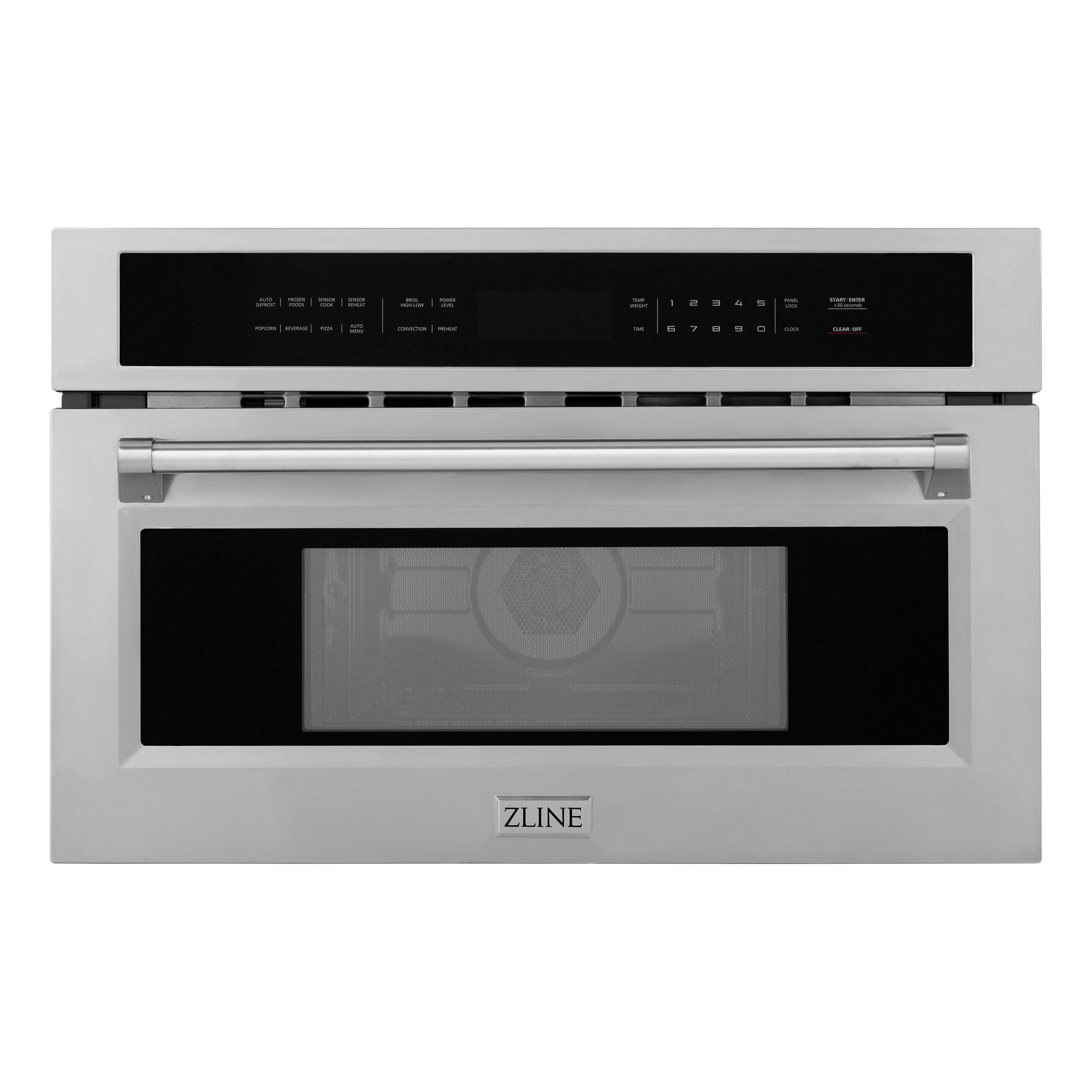
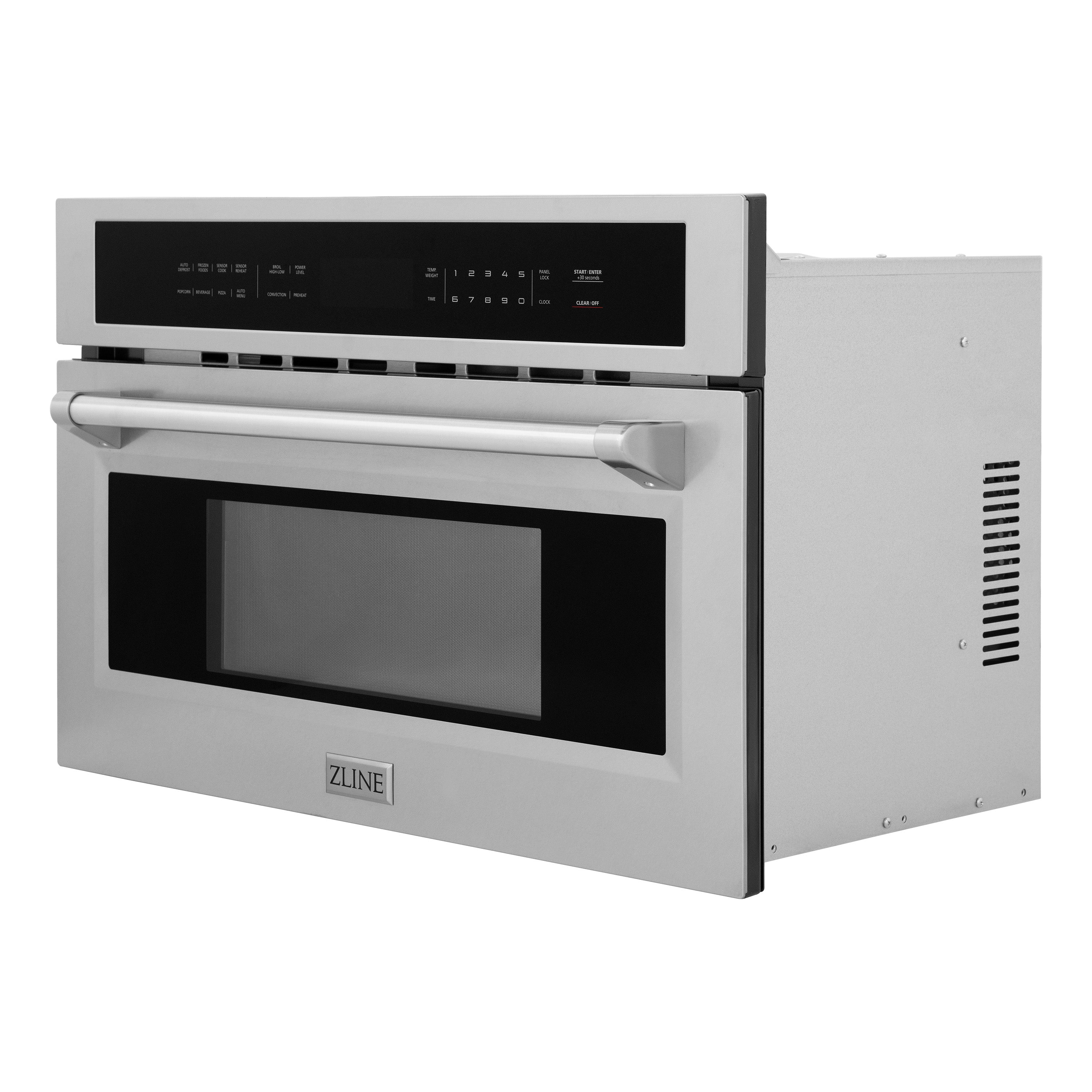
A standard wall oven paired with a built-in microwave in a single unit. Saves cabinet space vs. buying them separately and mounting in a column. Best when you want both appliances but don't have room for a full 60"+ column. For the full breakdown of microwave configurations, see our microwave buying guide.
Oven + Speed Oven Combo
A speed oven is a hybrid microwave + convection oven that cooks faster than a conventional oven while offering better browning than a microwave alone. Combined with a full-size oven, this configuration gives you tremendous flexibility for everything from Thanksgiving to weeknight dinners.
Combination units cost less than buying the components separately but limit you to the manufacturer's specific pairing. If you want a specific oven brand and a specific microwave brand, separate units are the way to go.

Features and Specs That Actually Matter
Convection
The single most important wall oven feature. True convection includes a dedicated heating element around the fan (not just a fan blowing over the regular element), producing dramatically better results for baking, roasting, and multi-rack cooking. Every wall oven at Smart Home Luxury includes convection — but always verify true convection vs. "convection-assisted" on the spec sheet.
Steam Cook Function
Higher-end wall ovens include steam injection, which produces exceptional results for bread baking (crispy crusts, better rise), fish, vegetables, and re-heated leftovers that don't dry out. Not essential, but genuinely useful if you bake bread or care about food texture.
Self-Cleaning Modes
Three main types:
- Pyrolytic self-clean — heats the oven to 900°F+ to burn residue to ash. Most effective, uses a lot of energy, and can smoke if the oven is really dirty.
- Steam self-clean — uses steam and lower heat to loosen residue. Gentler, less effective on baked-on messes.
- Catalytic liners — self-cleaning walls that absorb spatter during normal use.
Pyrolytic is the most common in premium ovens. Steam is a good option if you want a gentler cycle.
Interior Cavity Configuration
Look for:
- Multiple rack positions — at least five, ideally seven
- Telescopic glide racks — smooth pull-out racks for easier access to hot dishes
- Halogen or LED interior lighting — you shouldn't have to open the door to see what's inside
- Meat probe — genuinely useful for roasts, avoids constantly opening the door
Controls
Digital touch controls are now standard on premium wall ovens. Look for large, easy-to-read displays and quick access to preheat, timer, and mode selection. Some models include Wi-Fi and app control — genuinely useful for preheating on your commute home, less useful for daily operation.
Finish Options
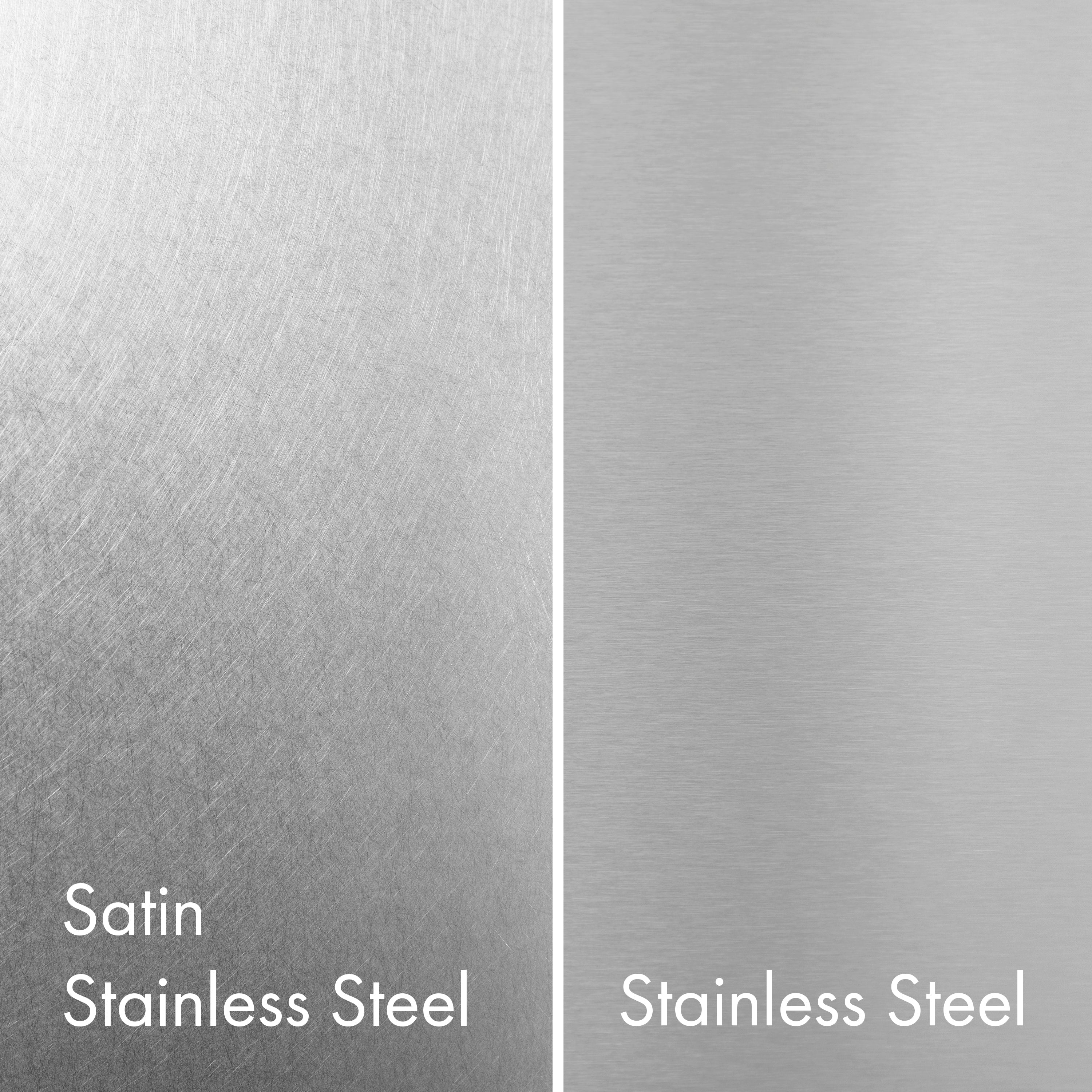
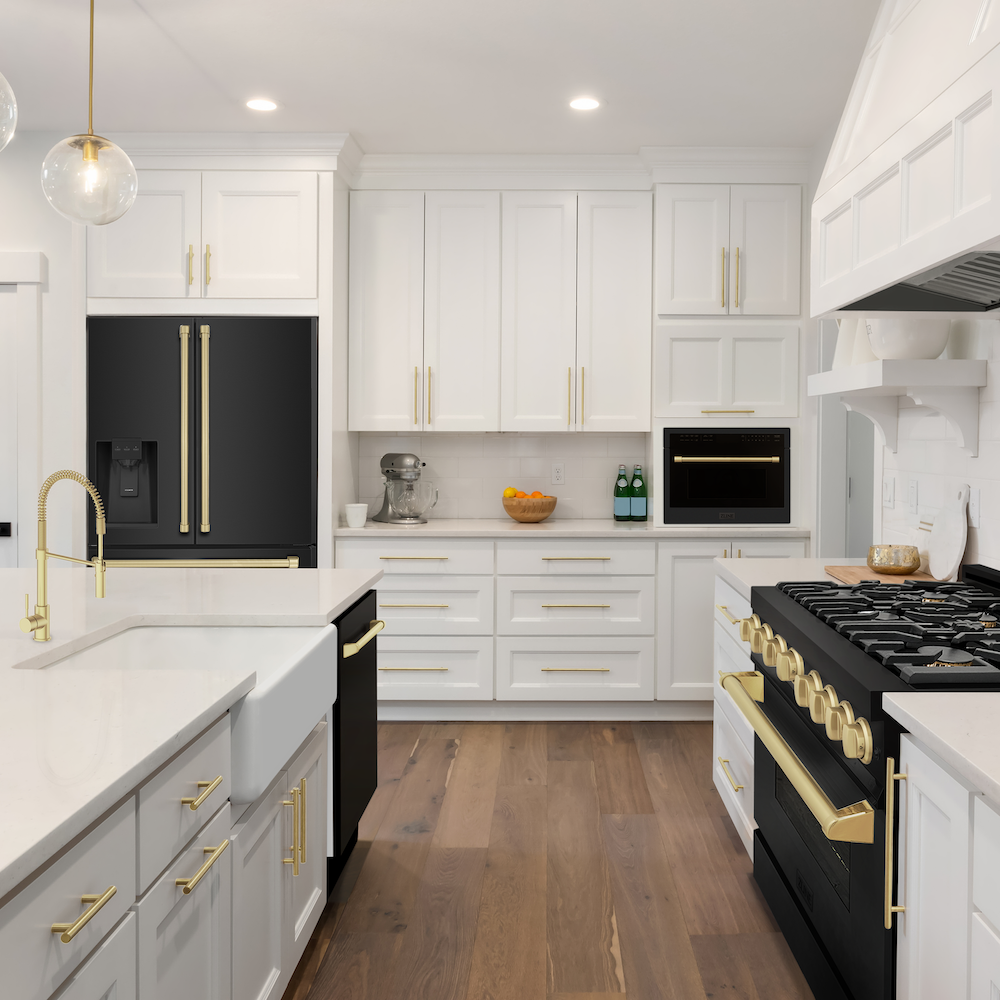
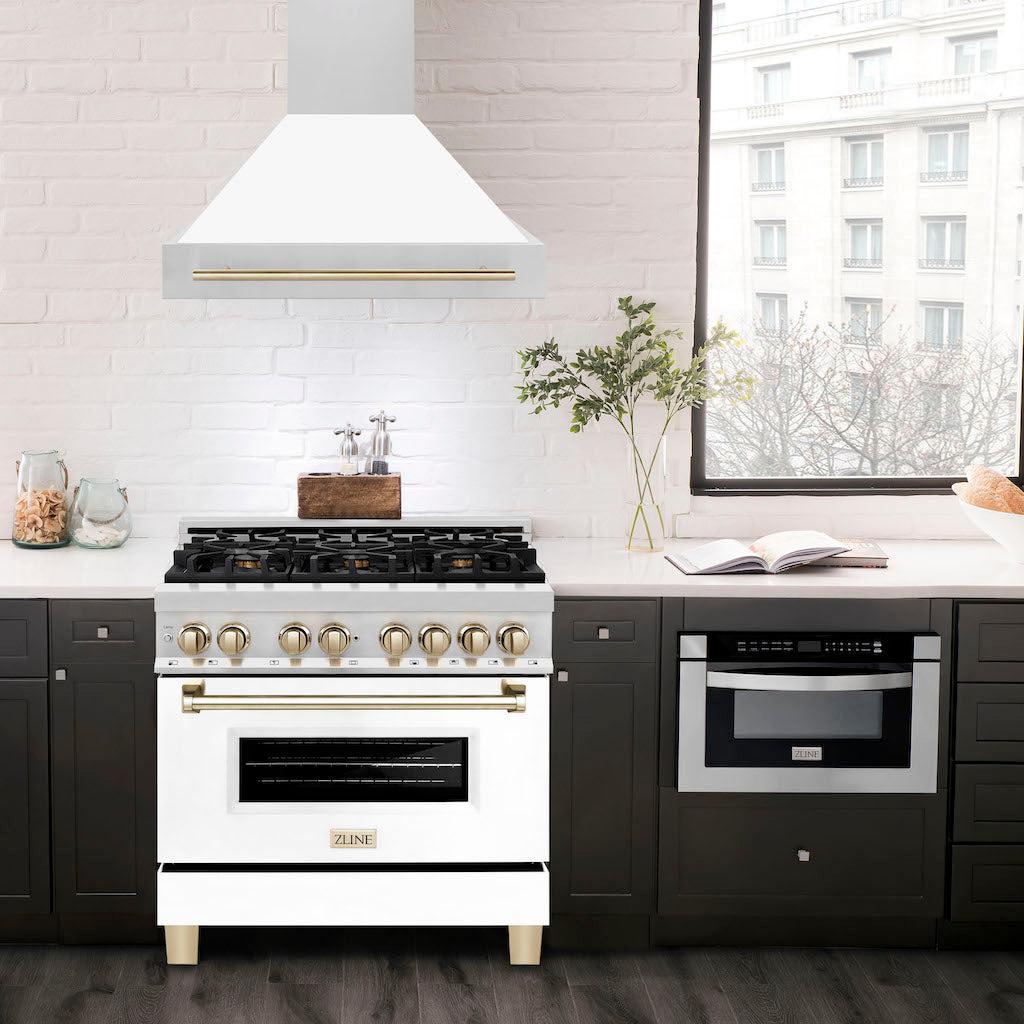
ZLINE wall ovens coordinate with the broader kitchen appliance suite: stainless, Satin Stainless Steel (formerly DuraSnow®), black stainless, with Autograph Edition hardware options on select models. Matching finishes across your range/cooktop, hood, wall oven, and refrigerator is one of the biggest advantages of the ZLINE ecosystem — see our ZLINE attainable luxury post for how this plays out in a designed kitchen.
Installation Considerations
Wall ovens are one of the more install-intensive kitchen appliances. Confirm before you order:
- Cabinet cutout dimensions. Width, height, and depth need to match the specific model's specs exactly. A 30" wall oven typically needs a 28½"–29" cutout width.
- Electrical circuit. Wall ovens require a 240V dedicated circuit, typically 30A or higher for single units and 40A+ for doubles.
- Cabinet trim and support. Wall ovens are heavy (100+ lbs for single, 300+ lbs for double). Cabinets need to support the weight and be trimmed to accept the oven's exterior flange.
- Ventilation clearance. Wall ovens vent heat through vents in the frame — confirm surrounding cabinets can handle the exposure.
- Height placement. Position so the oven's interior racks are at a comfortable height for the primary cook. Most installers place the top of the top rack at approximately shoulder height.
- Delivery path. Double wall ovens are especially heavy — confirm front door width, hallway corners, and stair turns.
Getting these wrong is one of the more expensive install mistakes. If you want a second set of eyes on your cutout dimensions before you order, call us at (888) 977-8994 — this is exactly the kind of spec our specialists check.
Pairing With a Cooktop
A wall oven implies you're also installing a separate cooktop (unless you already have a range and are adding the wall oven as a secondary oven). Your cooktop choices:
- Gas cooktop — Traditional flame control, most flexibility, needs gas line.
- Induction cooktop — Fastest, most efficient, safer, requires magnetic cookware.
- Electric radiant cooktop — Less common in premium kitchens today; replaced by induction.
Matching your cooktop fuel to your wall oven fuel isn't required — it's totally normal to have an induction cooktop paired with an electric wall oven, or a gas cooktop paired with an electric wall oven (this is essentially the wall oven version of a dual fuel setup).
How to Decide
A quick decision framework:
- You want the simplest setup and don't cook enormous meals. → Skip wall ovens entirely. Get a good range instead.
- You want ergonomic oven access and design flexibility. → Single wall oven + separate cooktop.
- You entertain seriously or cook holiday meals often. → Double wall oven + separate cooktop.
- You want maximum function in minimal cabinet space. → Oven + microwave combination unit.
- You bake bread or care about texture. → Wall oven with steam function.
Whatever configuration you choose, wall ovens work best when planned as part of a coordinated kitchen suite rather than added piecemeal. Bundle with a matching cooktop, hood, refrigerator, and dishwasher as a kitchen appliance package for meaningful bundle savings and coherent finishes across every appliance.
Planning a Wall Oven Install?
Send us your cabinet dimensions, cooking habits, and layout. We'll walk through single vs. double, sizing, and cooktop pairing in about 15 minutes — plus flag electrical and cabinet planning details before you order. No call centers. No bots. Just real experts helping you choose right.
Talk to a kitchen specialist: Mon–Fri 9–5 MST
Visit our showroom: 4375 W 1980 S, Salt Lake City, UT 84104
Smart Home Luxury is an authorized ZLINE and Proline dealer based in Salt Lake City, Utah. We serve the entire Wasatch Front — from Ogden to Provo — with nationwide shipping on every order.