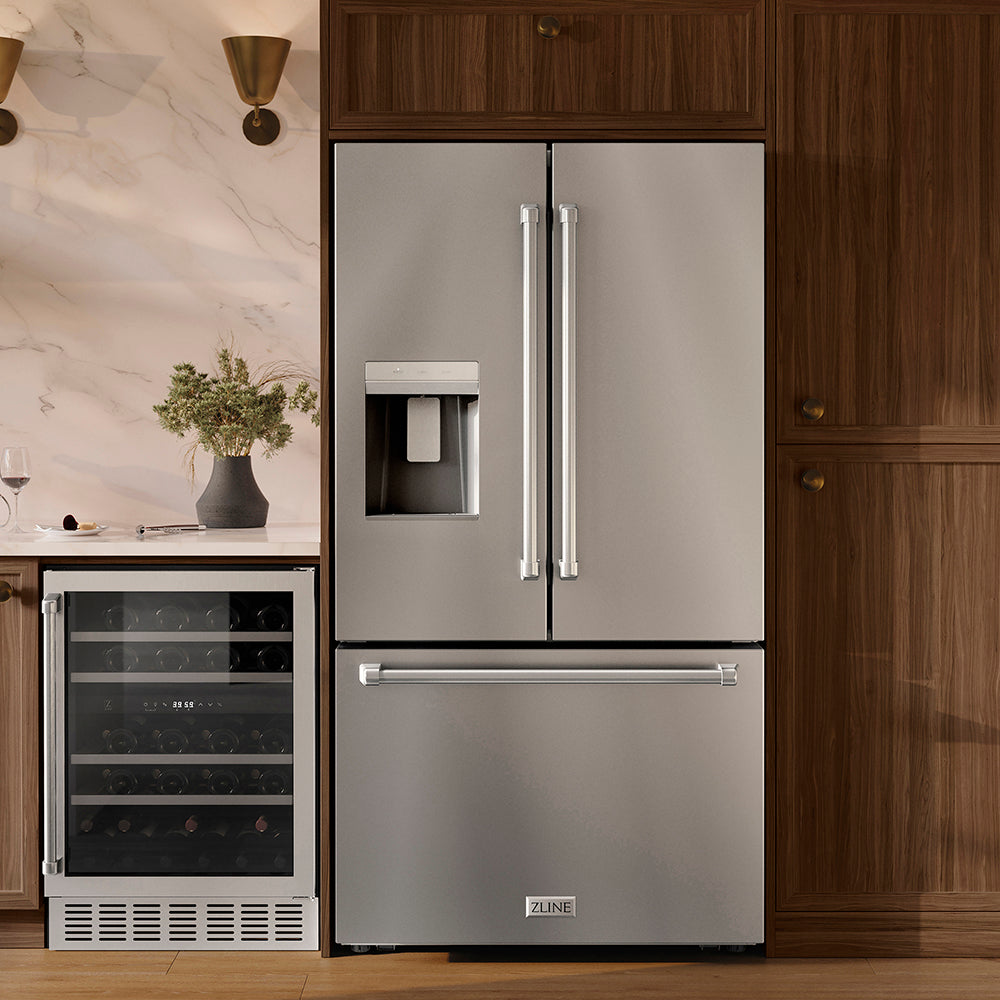
Specialty refrigeration — wine coolers, beverage centers, kegerators, undercounter ice makers — used to be a luxury reserved for built-out home bars. Today, it's increasingly part of mainstream kitchen design. The dedicated wine fridge tucked into the island, the beverage center built into the butler's pantry, the small undercounter refrigerator at the bar end of the kitchen — these have become standard elements in serious residential kitchens.
But the category is confusing. Wine coolers and beverage centers look almost identical from the outside, but they're built for different purposes, and choosing the wrong one means living with an appliance that doesn't quite work for what you're using it for.
This guide walks through the differences, the configuration choices that matter (single vs. dual zone, built-in vs. freestanding, sizing), and where each type fits in a kitchen.
What's in this article
- The Real Difference Between a Wine Cooler and a Beverage Center
- Single Zone vs. Dual Zone
- Built-In vs. Freestanding: This One Actually Matters
- Sizing: How Much Capacity Do You Actually Need?
- Where to Put It in the Kitchen
- Installation Considerations
- ZLINE Wine Coolers and Beverage Centers at Smart Home Luxury
The Real Difference Between a Wine Cooler and a Beverage Center
They look similar — glass front door, undercounter form factor, small footprint — but the engineering inside is meaningfully different.

Wine Coolers (Wine Refrigerators)
A wine cooler is engineered specifically to store wine at proper serving and aging temperatures. The interior is designed around bottle storage, with shelves shaped to hold standard 750ml wine bottles horizontally (so the cork stays in contact with the wine, preventing it from drying out and oxidizing).
Wine coolers also typically:
- Operate in a wine-specific temperature range (roughly 40–65°F)
- Maintain stable temperature with minimal fluctuation
- Manage humidity to keep corks from drying out
- Use vibration-dampened compressors (vibration is bad for aging wine)
- Often feature UV-protected glass to prevent light damage to the wine
If you collect wine at all — even a modest collection of 20–30 bottles you rotate through — a real wine cooler outperforms storing wine in your kitchen refrigerator (which runs colder, drier, and with vibration that's bad for wine over time).

Beverage Centers (Beverage Refrigerators)
A beverage center is engineered for general drink storage — canned beverages, bottled drinks, water, soda, juice, and yes, some wine if you want. The interior is configured for vertical bottle and can storage, often with adjustable shelves.
Beverage centers typically:
- Operate at a colder temperature range than wine coolers (roughly 34–40°F, like a regular fridge)
- Have flat shelves designed for cans and standing bottles
- Don't include wine-specific features like humidity control or vibration dampening
- Are more flexible for general use
If your goal is storing soda, beer, water, sparkling water, juice, and the occasional bottle of wine for your kids, parties, or family use, a beverage center is the right choice. If your goal is properly storing and aging wine specifically, a wine cooler is the right choice.
Wine Cooler vs. Beverage Center: Side-by-Side
| Feature | Wine Cooler | Beverage Center |
|---|---|---|
| Temperature range | ~40–65°F | ~34–40°F |
| Shelf design | Horizontal bottle storage | Flat shelves for cans/bottles |
| Humidity control | Yes — protects corks | No |
| Vibration dampening | Yes — protects aging wine | Not typically |
| UV-protected glass | Usually yes | Sometimes |
| Best for | Wine collections, aging, proper serving | Sodas, beer, sparkling water, mixed drinks |
Why It Matters
Putting wine in a beverage center means your wine is being stored at standard refrigerator temperatures (too cold for serving most reds, fine for whites in the short term, bad for aging anything long-term). Putting cans of soda in a wine cooler means your cans are being stored at 50°F instead of the colder temperature most people prefer for soda.
You can absolutely use either appliance for the "wrong" purpose. It just won't perform the way you'd ideally want.
Single Zone vs. Dual Zone
This is the next configuration decision and matters most for wine coolers.
Single Zone
The entire interior is held at one temperature. Simple, less expensive, and fine if you're storing one type of beverage (e.g., only red wine, or only beverages, or only whites).
Dual Zone
The interior is divided into two independently temperature-controlled compartments. The most common configuration:
- Upper zone at red wine serving temperature (around 55–65°F)
- Lower zone at white wine / champagne serving temperature (around 45–50°F)
Dual zone is genuinely useful if you actually drink both reds and whites at proper temperature. The temperature differential between a properly served red and a properly chilled white is meaningful (15–20°F), and a single-zone wine cooler can't do both.
Dual zone is also useful for households that want to mix wine and beverages: keep wine in one zone, sparkling water and other drinks in the other.
Single Zone vs. Dual Zone: The Honest Take
If you're a casual wine drinker who buys wine and drinks it within a few weeks, single zone at white wine temperature is fine — you'll let reds warm up to room temperature for serving anyway.
If you're someone who actually thinks about serving temperature, has whites you want at one temperature and reds at another, or wants to mix wine with other drinks, dual zone is worth the upgrade.
For most households doing a serious kitchen project, dual zone is the better long-term choice. The cost difference is modest, and the flexibility is meaningful.

Built-In vs. Freestanding: This One Actually Matters
This decision is more important than people realize, and getting it wrong has real consequences.
Freestanding Coolers
Designed to stand alone with airflow on all sides. The compressor and condenser vent through the back and sides, which means they need clearance around the unit.
You cannot install a freestanding wine cooler under a counter or in a built-in cabinet. It will overheat, lose efficiency, and likely fail prematurely. This is one of the most common installation mistakes — homeowners buy a cheaper freestanding unit thinking they'll just slide it under the counter, and either it never reaches temperature properly or the compressor burns out within a few years.
Freestanding coolers are appropriate for:
- Standalone placement in a butler's pantry or bar area where they have airflow
- Replacing an existing standalone cooler in the same configuration
- Budget-conscious shoppers who genuinely have an open placement
Built-In (Front-Vented) Coolers
Engineered with the compressor venting through the front of the unit, allowing flush installation under counters, in cabinet runs, or surrounded by cabinetry on three sides.
Built-in coolers are appropriate for:
- Undercounter installations (the most common configuration in modern kitchens)
- Cabinet integration where the cooler sits flush with surrounding millwork
- Island and peninsula installations
- Any installation where the cooler will be enclosed on multiple sides
For modern kitchen designs, built-in is almost always the right answer. The slight price premium is worth it, and the alternative (cooked compressor) is a much bigger problem.
How to Tell the Difference
Read the spec sheet carefully. Built-in or front-venting models will explicitly say so. If a unit doesn't specify built-in or front-vented, assume it's freestanding and don't install it under a counter. This is exactly the kind of spec-sheet detail our specialists catch before customers order — call us at (888) 977-8994 if you're not sure about a model.
Sizing: How Much Capacity Do You Actually Need?
Capacity is measured differently for wine coolers and beverage centers.
Wine Cooler Capacity
Measured in bottles. Common sizes:
- 18–24 bottle — undercounter or small footprint, good for casual collectors
- 30–50 bottle — medium build, fits in a 24" undercounter slot
- 60–100 bottle — larger build, may require dedicated cabinet space
- 150+ bottle — full-size or freestanding wine refrigerators, walk-in territory
How to size for your actual habits: count the bottles you typically have on hand, then add 50% for hosting and gifts. Most casual wine drinkers are well-served by a 30–50 bottle unit. Serious collectors who buy by the case quickly outgrow anything under 100 bottles.
Beverage Center Capacity
Often measured in cans, sometimes in cubic feet.
- 80–120 cans — small undercounter unit, sufficient for kitchen use
- 150+ cans — larger unit for entertaining or households with kids
- Combination units — some hold a mix of cans on shelves and bottles in a lower drawer
For most family kitchens, a beverage center in the 100–150 can range works well. For serious entertainers or households with multiple drink categories (sparkling water, beer, sodas, juice boxes), size up.
Where to Put It in the Kitchen
A few common placements that work:
In the Kitchen Island
A wine cooler or beverage center built into the island puts drinks at the social center of the kitchen. Especially useful for households that entertain at the island — guests can grab a drink without disrupting the cook.
In the Butler's Pantry
A common placement in homes with butler's pantries. Frees up main kitchen space, separates beverage prep from cooking, and creates a natural drink-service zone for entertaining.
At the Bar / Beverage Station
In kitchens with a dedicated bar area or beverage station, a built-in cooler is essentially required. This is one of the most common installations in luxury kitchen design, and we see it often in Park City and Holladay entertaining kitchens.
In the Pantry / Coffee Bar
Increasingly, dedicated coffee bars include a small beverage center for milk, sparkling water, or specialty drinks. Useful in kitchens where the main beverage center is in the entertainment area but you want easy daily access.
In Outdoor Kitchens
Outdoor-rated beverage centers (specifically engineered for exterior installation, with corrosion-resistant components) are common in high-end outdoor kitchens. Don't use indoor beverage centers outdoors — they're not built for the temperature and humidity range, and Utah's dry climate plus wide temperature swings will destroy an indoor unit quickly.

Installation Considerations
A few practical notes:
- Electrical — Most wine coolers and beverage centers use standard 120V outlets, but verify the requirements for your specific model.
- Ventilation clearance — Even built-in models have minimum clearance specs. Always confirm.
- Door swing direction — Many models offer reversible doors. Plan for whichever direction works with your traffic flow.
- Leveling — Wine coolers especially need to be level for proper compressor operation and bottle stability.
- Glass door considerations — UV protection helps preserve wine; double-pane glass improves energy efficiency. Both are typically standard on quality units.
Adding a wine cooler or beverage center is often one piece of a larger kitchen project. If you're outfitting a full kitchen, bundling the specialty refrigeration with your range, hood, and dishwasher usually delivers meaningful package savings — see our kitchen appliance packages guide for how to think about it.
ZLINE Wine Coolers and Beverage Centers at Smart Home Luxury
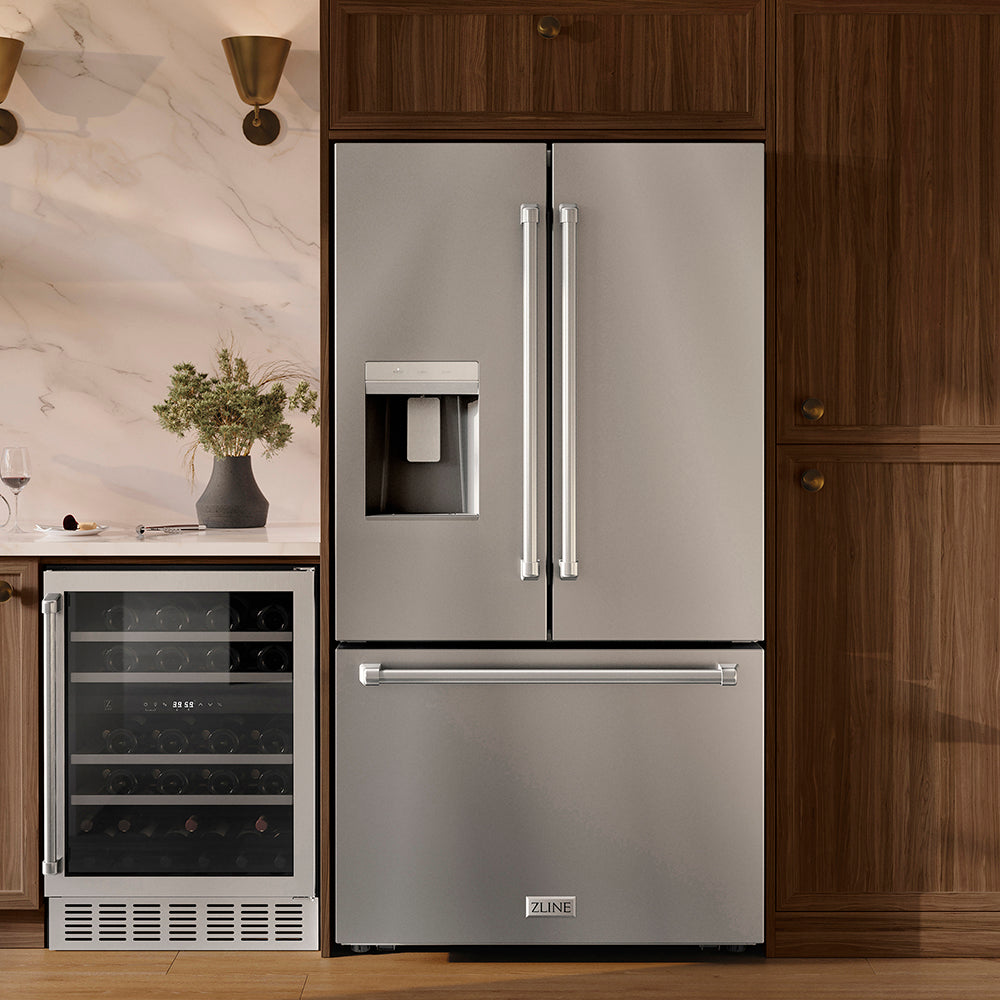
Smart Home Luxury carries ZLINE's full lineup of wine coolers and beverage centers, including:
- Single-zone and dual-zone wine coolers
- Built-in (front-vented) and freestanding configurations
- Capacities ranging from compact undercounter units to larger built-in coolers
- Beverage centers with mixed bottle and can storage
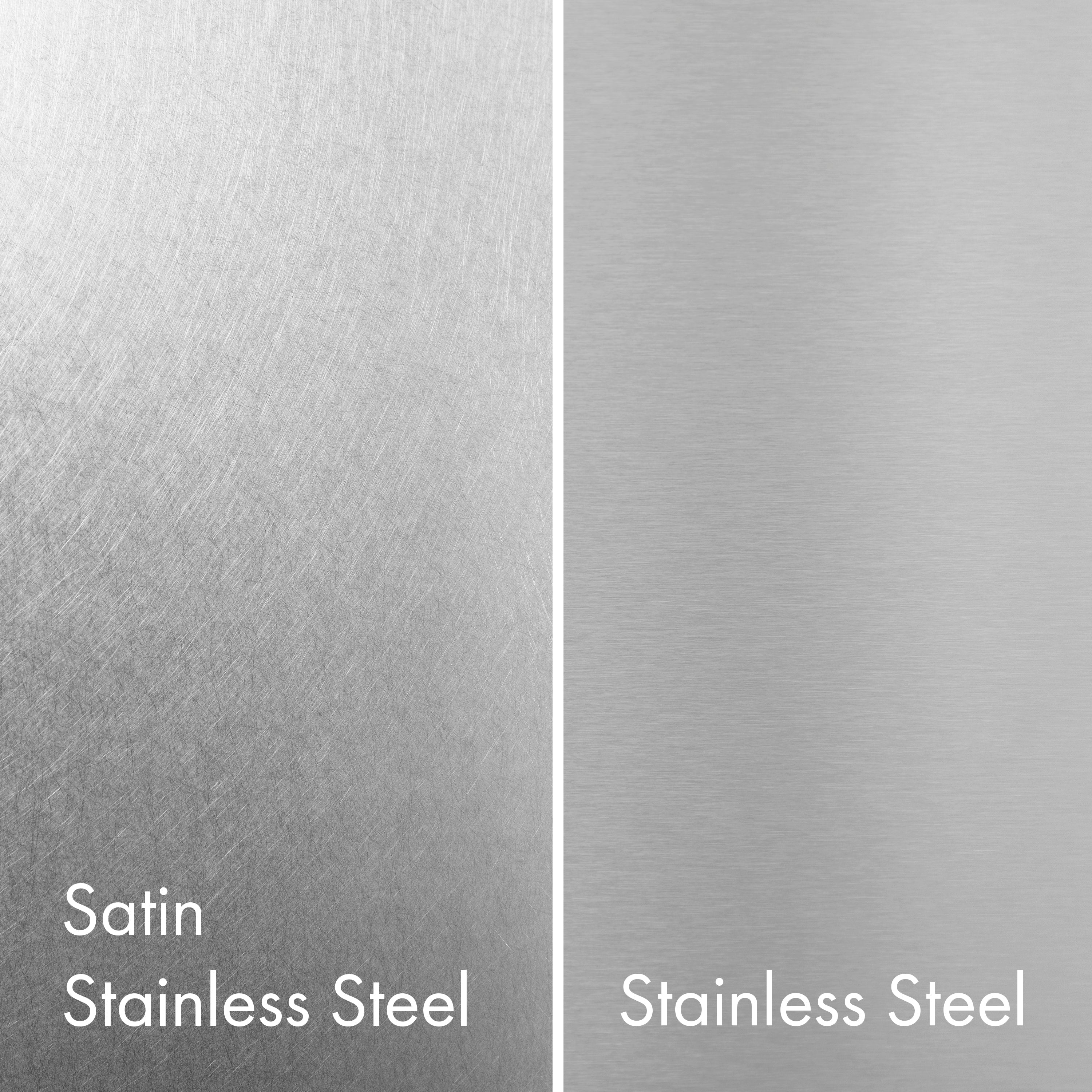
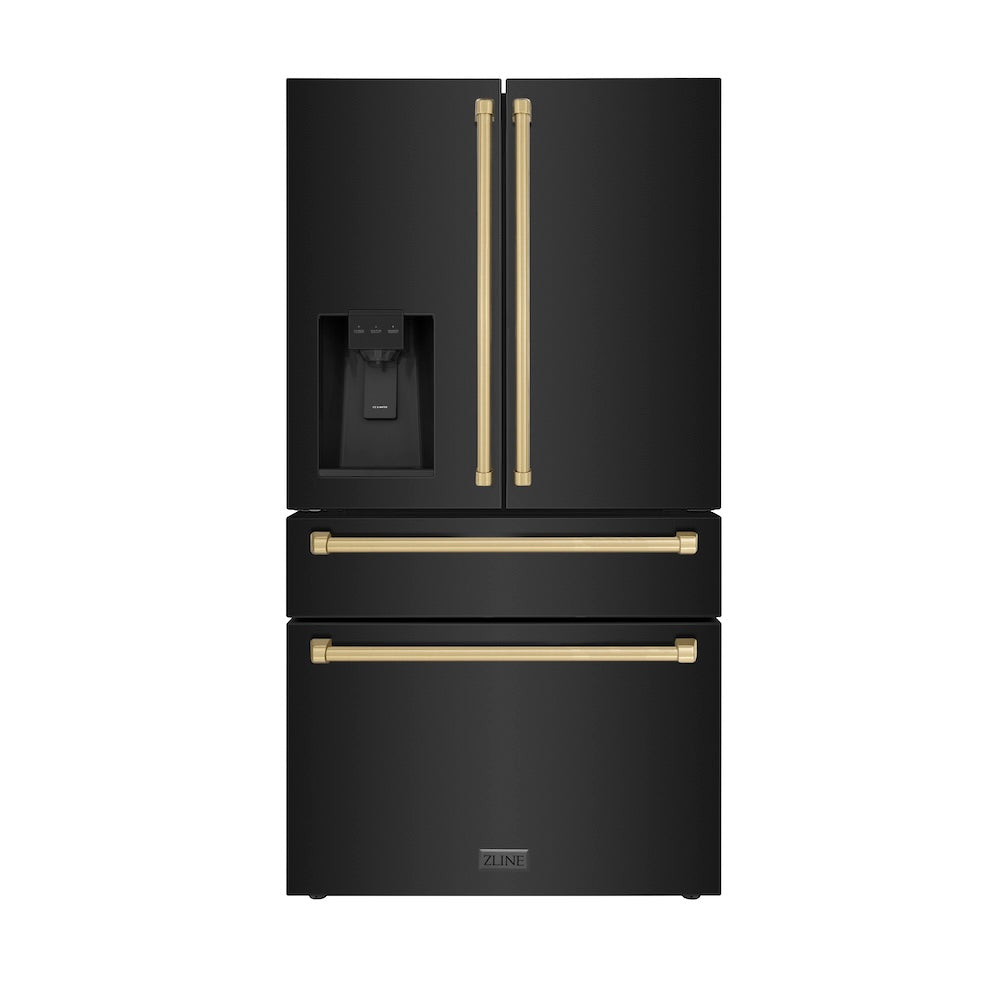
- Matching finishes across the broader ZLINE suite — stainless, Satin Stainless Steel (formerly DuraSnow®), black stainless, with Autograph Edition hardware available on select models
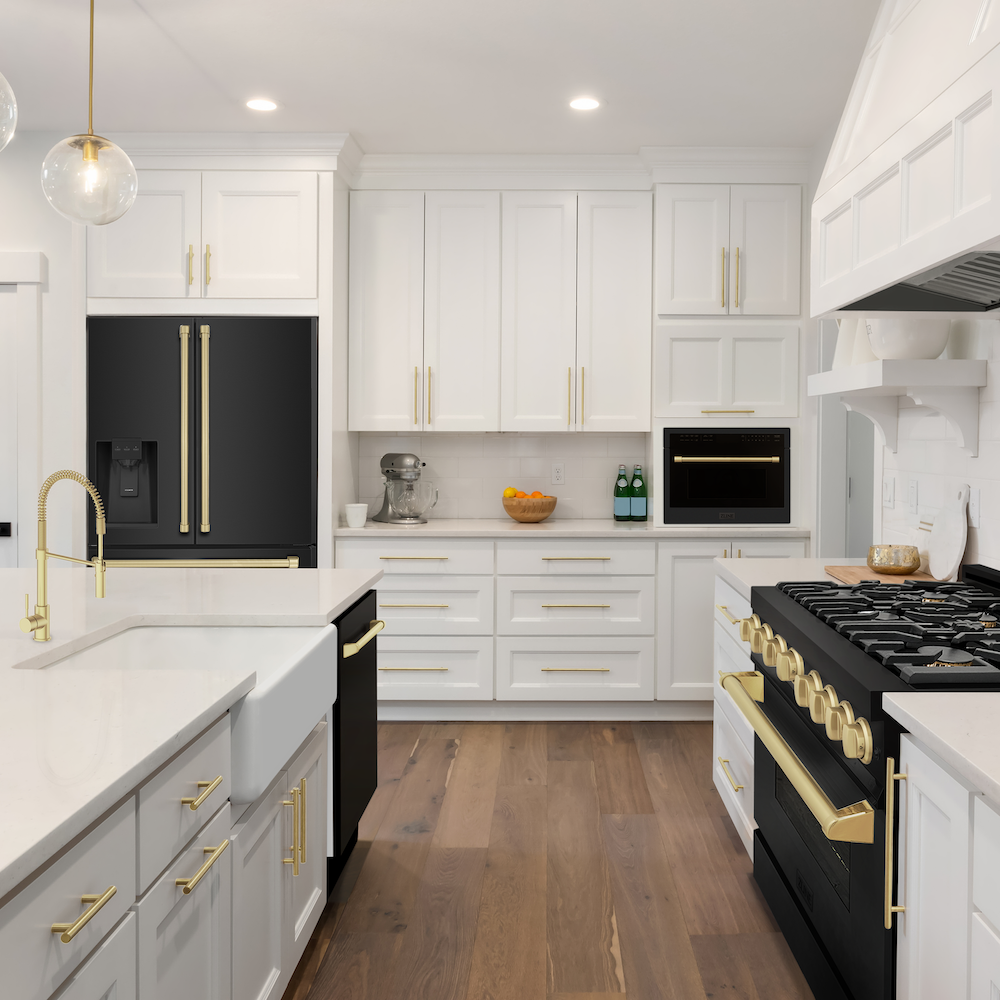
Coordinating these specialty refrigeration pieces with your main kitchen suite means the entire kitchen reads as designed — your wine cooler handle matches your range knobs, your beverage center finish coordinates with your refrigerator, and the whole package adds up to a fully realized kitchen rather than a series of disconnected appliances. This is one of the biggest advantages of building around a single brand, as we cover in our ZLINE attainable luxury post.
Adding a Wine Cooler or Beverage Center?
Our specialists can help you size capacity, pick the right built-in vs. freestanding configuration for your installation, and match the finish to the rest of your suite. Tell us your placement and cabinet dimensions — we'll walk through the options in about 15 minutes. No call centers. No bots. Just real experts helping you choose right.
Call (888) 977-8994 Message a Specialist Build a Kitchen Package
Talk to a kitchen specialist: Mon–Fri 9–5 MST
Visit our showroom: 4375 W 1980 S, Salt Lake City, UT 84104
Smart Home Luxury is an authorized ZLINE and Proline dealer based in Salt Lake City, Utah. We serve the entire Wasatch Front — from Ogden to Provo — with nationwide shipping on every order.