When most homeowners start shopping for a kitchen cooking appliance, they default to a range — a single freestanding unit that combines a cooktop on top with an oven underneath. It's the most common configuration and often the easiest choice. But it's not always the best one.
An alternative that's becoming increasingly common in modern kitchens: separating the cooktop from the oven. A dedicated cooktop installed in your counter, paired with a wall oven mounted separately, gives you flexibility that a range simply can't match — especially in kitchens with islands, unusual layouts, or serious cooks who want ergonomic oven access.
This guide walks through the trade-offs between the two setups, when each makes sense, and what to consider before committing to one.
What's in this article
Quick Definitions
Before we compare, here's what each option actually is:
- Range — A single freestanding unit that combines a cooktop and oven. Slides into a standard cabinet cutout. Available in gas, dual-fuel, or induction configurations, from 24" to 60" wide. See our range sizes guide for the full breakdown.
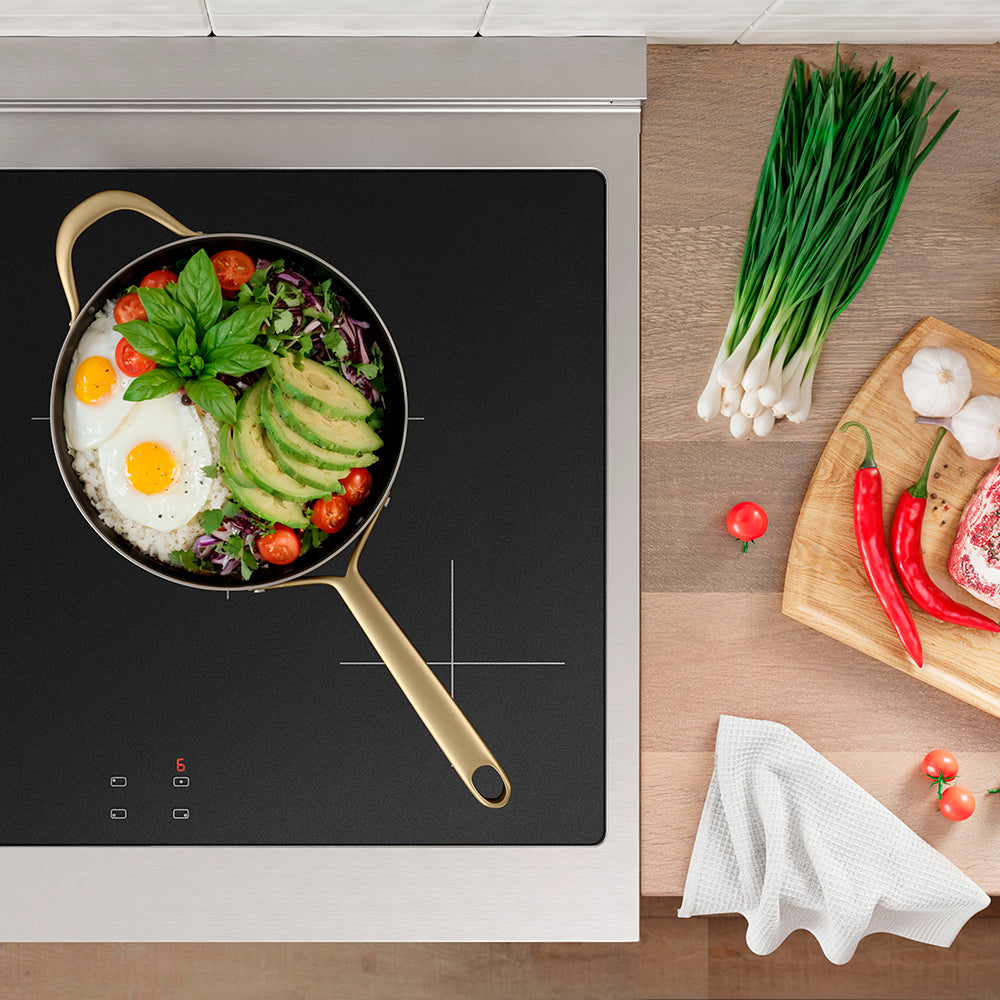
- Cooktop — A stovetop-only unit that installs flush in the counter. No oven attached. Available in gas or induction, typically 30" or 36" wide.
- Wall oven — An oven-only unit that installs in a wall or cabinet run, separate from any cooktop. Available as single or double, typically 30" wide.
A traditional range gives you cooking + baking in one appliance. A cooktop + wall oven setup gives you the same functions but in two separate, independently placed appliances.

Why Choose a Range?
Ranges are the default configuration for a reason. They work in the vast majority of kitchens and offer real advantages.
What Ranges Do Well
- Lower total cost. A high-quality range typically costs less than a comparable cooktop + wall oven combination.
- Simpler installation. One appliance, one cutout, one delivery.
- Cooking + baking together. Boiling water on the cooktop while roasting in the oven — one appliance handles both, right next to each other.
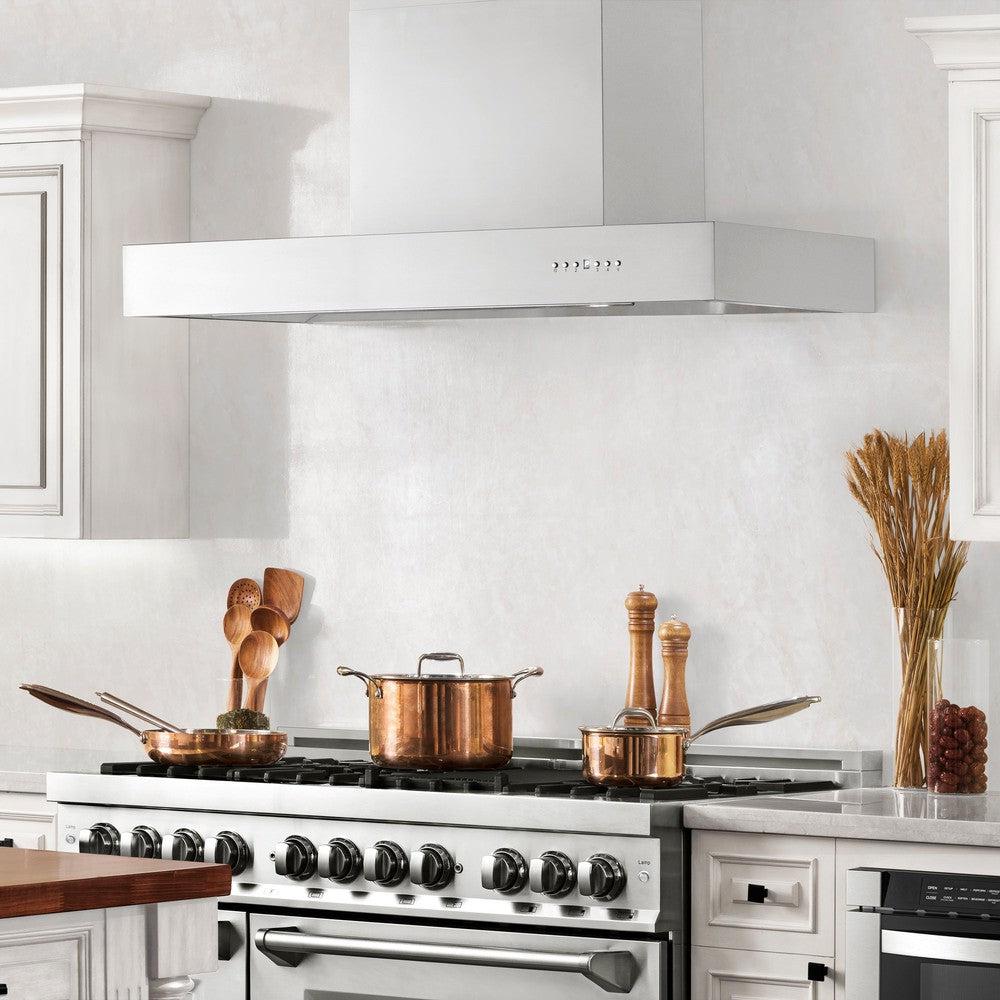
- Ventilation is unified. One range means one hood. Simpler CFM sizing and one duct route.
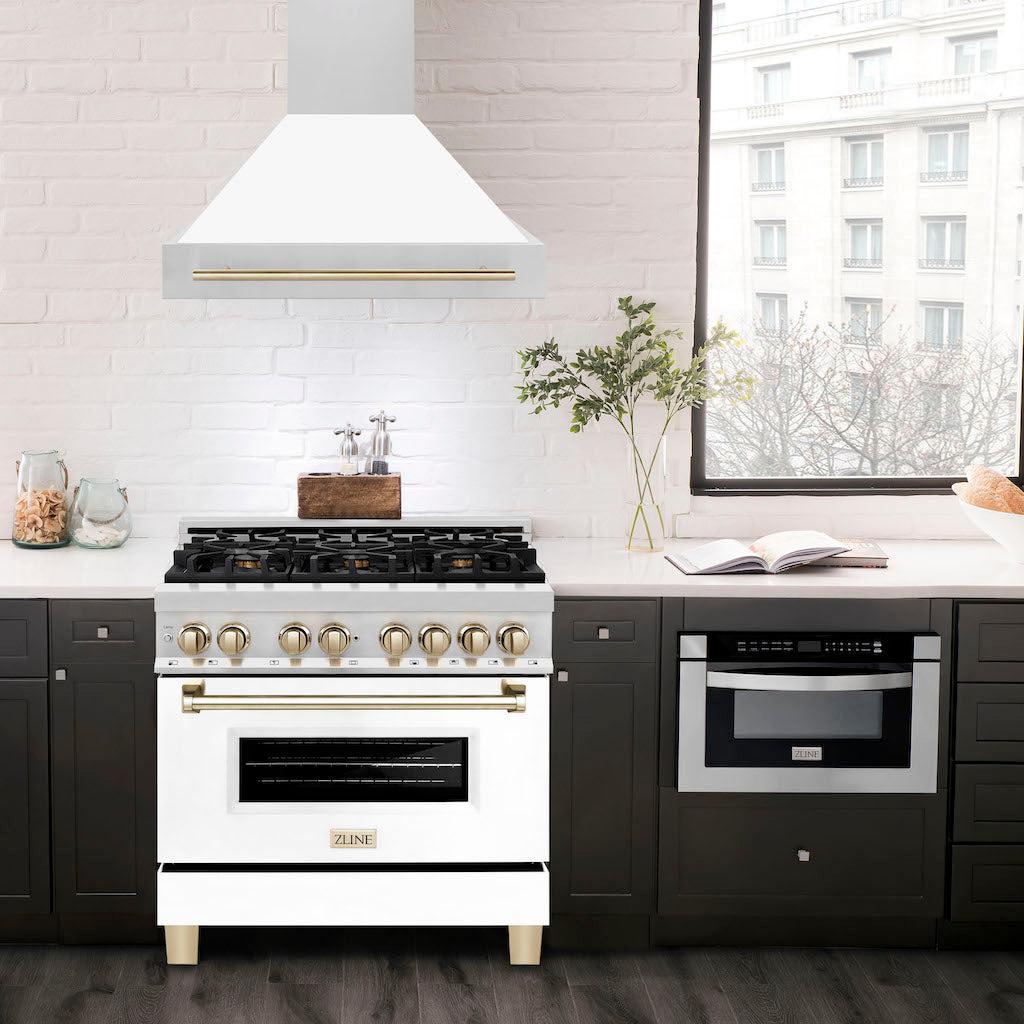
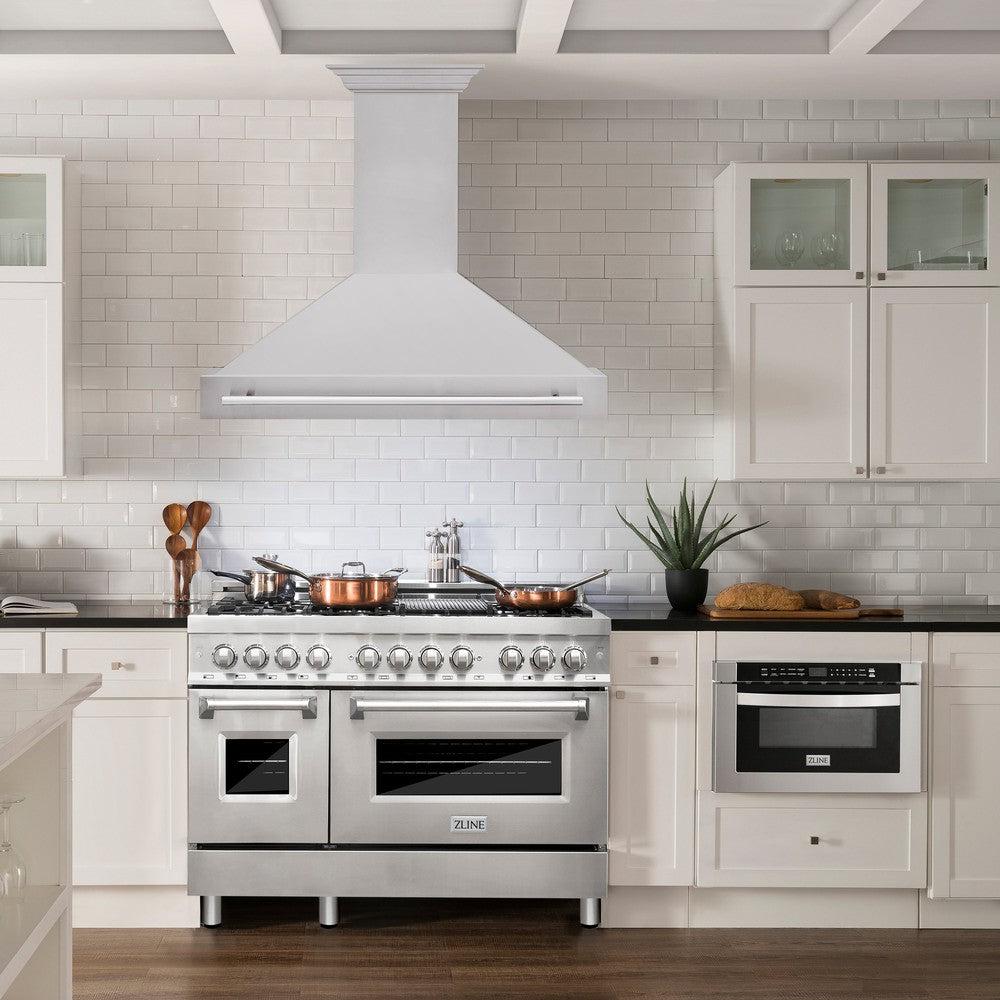
- Visual anchor. A 36" or 48" pro-style range is a design centerpiece. A separated cooktop and wall oven can't create the same singular visual moment.
- Best for retrofit. Replacing an existing range with a new one is straightforward. Converting a range install to a cooktop + wall oven means significant cabinet work.
Where Ranges Fall Short
- Oven at floor level requires bending to load, unload, and check.
- Cooktop is locked in place — you can't move it to the island without moving the whole range.
- Only one oven (except in 48"+ ranges that offer dual ovens).
For most family kitchens where a single main cooking zone works and budget matters, a range is the right choice.

Why Choose a Cooktop + Wall Oven?
Separating the cooktop from the oven creates flexibility that a range can't offer.
What Cooktop + Wall Oven Does Well
- Ergonomic oven access. Wall ovens install at eye or waist level — no bending to check a roast or lift a heavy dish out of the oven.
- Kitchen island cooking. A cooktop can go in an island or peninsula while the wall oven lives on a perimeter wall. Ranges cannot do this cleanly (island ranges exist but require island venting, which is complex).
- Two independent cooking zones. Cooktop in one place, oven in another means multiple cooks can work simultaneously without competing for space.
- Double wall oven capacity. A double wall oven gives you two full-size oven cavities — dramatically more capacity than any range configuration.
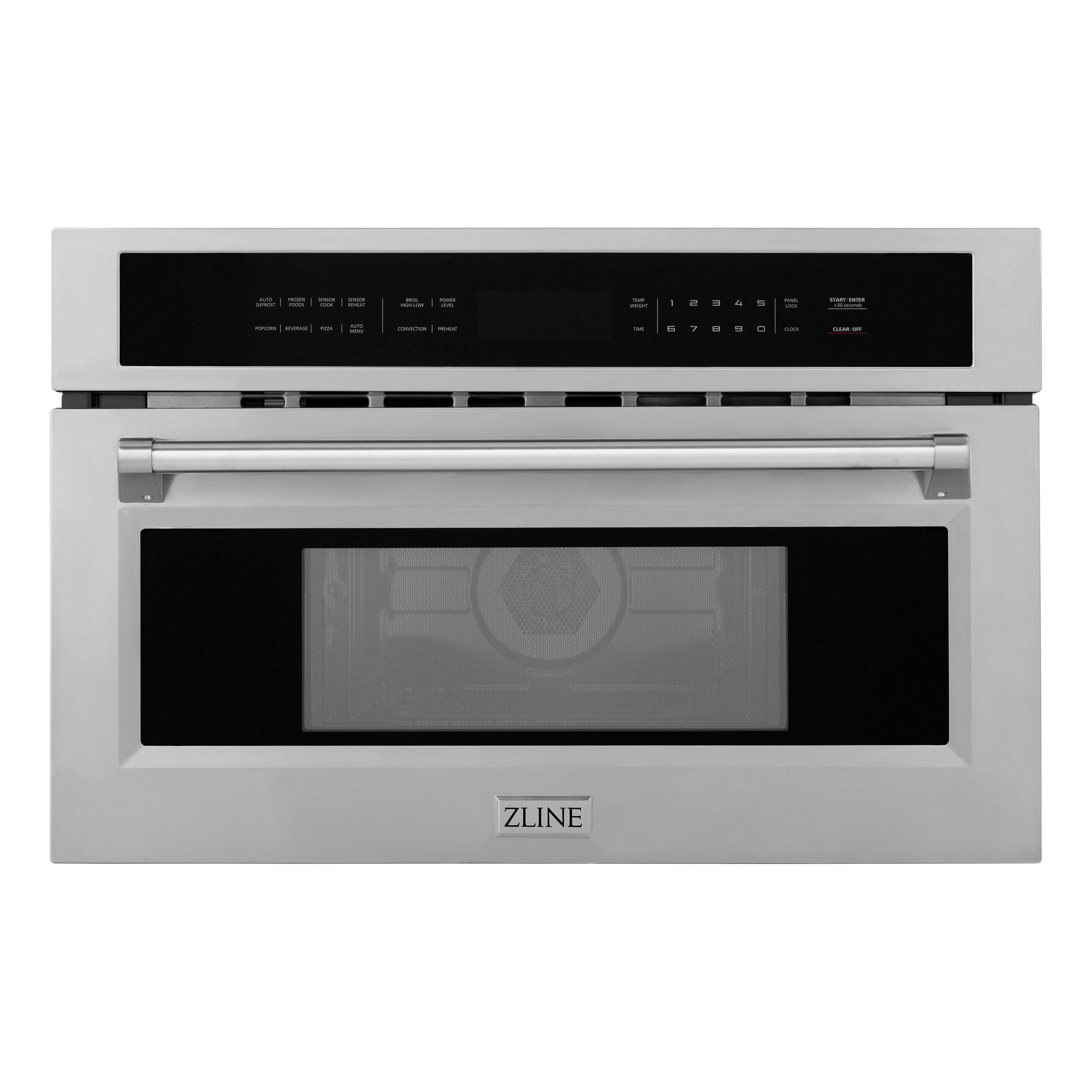
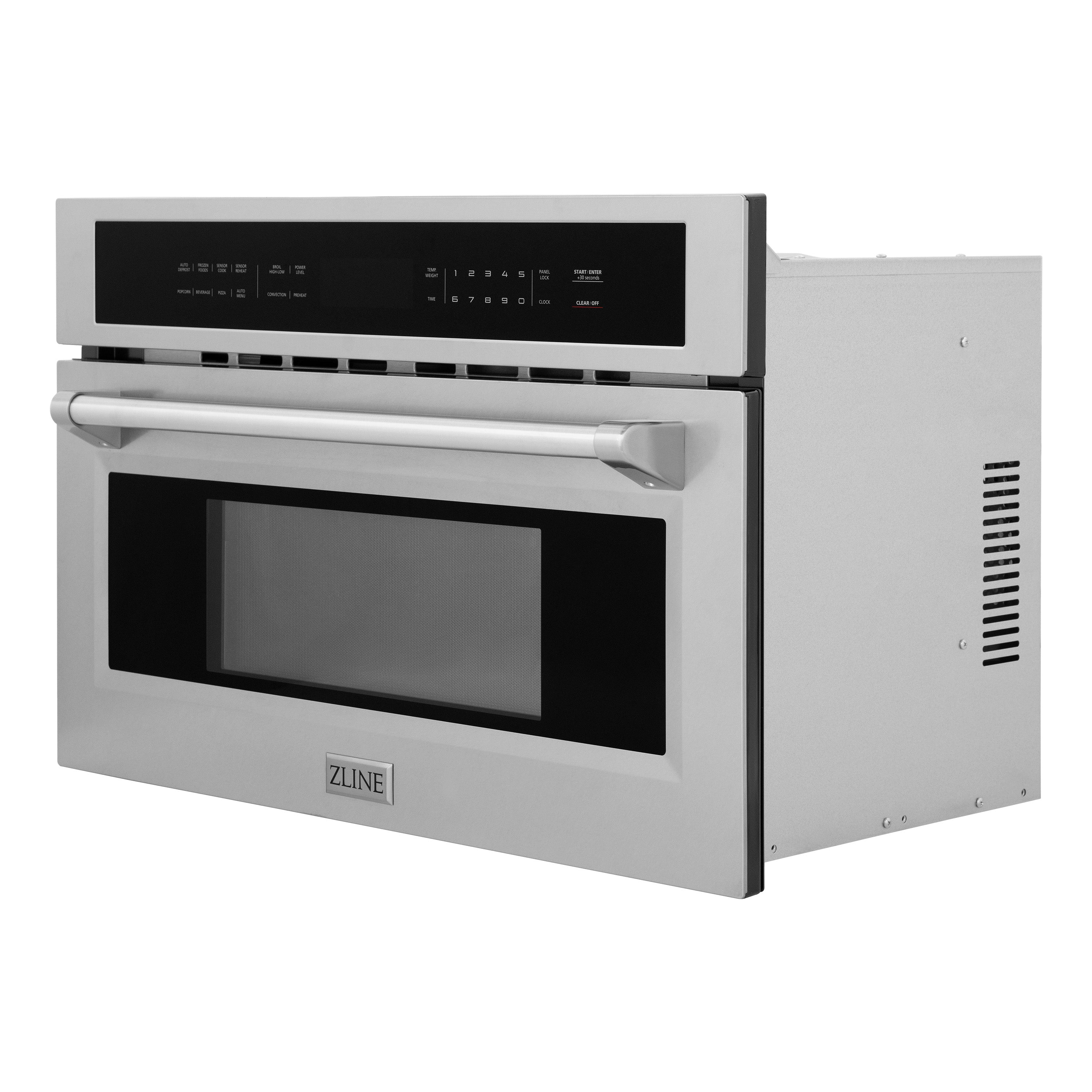
- Coordinated cooking column. Wall oven + built-in microwave + warming drawer stacked in one cabinet column creates a clean, intentional cooking zone.
- Design flexibility. Cabinet layouts, ventilation routing, and traffic flow are all more flexible without a fixed range location.
Where Cooktop + Wall Oven Falls Short
- Higher total cost. Two appliances + trim kits + potentially more electrical work.
- More install complexity. Two cutouts, potentially two circuits, and coordinated cabinet planning.
- Requires more cabinet space. A wall oven column takes up dedicated cabinet real estate you could otherwise use for storage.
- Two visual elements instead of one. Some kitchens read cleaner with a single range as the anchor.
Who This Setup Fits
Custom kitchen builds, larger kitchens with room for a wall oven column, cooks who use the oven daily and hate the bending, families with multiple cooks working simultaneously, and any kitchen with an island where you want the cooktop centrally located.
Side-by-Side Comparison
| Criteria | Range | Cooktop + Wall Oven |
|---|---|---|
| Total cost | Lower | Higher (typically 30–60% more) |
| Install complexity | Simple, one cutout | Complex, two cutouts + planning |
| Oven ergonomics | Poor (floor level) | Excellent (waist/eye level) |
| Island cooktop possible? | Only with island range (complex) | Yes, cleanly |
| Multiple cooks at once | Cramped | Comfortable |
| Oven capacity | One oven (or two in 48"+) | Up to two full ovens (double wall oven) |
| Visual anchor | Strong (single statement piece) | Split (two coordinated elements) |
| Best for | Most family kitchens, budget builds, retrofit | Custom kitchens, islands, serious cooks |
The Real Cost Difference
Here's an honest cost comparison for equivalent-tier equipment in a 36" cooking zone:
- 36" ZLINE dual fuel range: Single appliance, single cutout. Everything you need in one purchase.
- 36" cooktop + 30" single wall oven: Two appliances, two cutouts. Typically 30–50% more expensive than the equivalent range.
- 36" cooktop + 30" double wall oven: Two appliances, larger cabinet requirement. Typically 60–100%+ more than the range.
Additional costs to consider:
- Wall oven trim kits (add to base wall oven price)
- Additional electrical circuit(s) if switching from all-in-one to separated
- Cabinet modifications to accommodate the wall oven column
- Countertop cutout for the cooktop
The cost gap is real. But so are the advantages. Whether the upgrade is worth it depends on how much you'll use it — and how often the ergonomic and layout benefits will actually matter over the 15+ years you'll own the setup. This is exactly the kind of trade-off our specialists walk through before customers order — call us at (888) 977-8994 if you want a second opinion on your specific layout.
Kitchen Layout Considerations
The layout of your kitchen strongly favors one setup or the other.
Layouts That Favor a Range
- Standard perimeter kitchens with a single cooking wall
- Galley kitchens where space is limited
- Kitchens with a single cook who wants everything in reach
- Kitchens without an island suitable for cooking
- Retrofit installs where the existing kitchen was built around a range
Layouts That Favor Cooktop + Wall Oven
- Kitchens with a large island where the cooktop can be centrally placed
- Open-concept kitchens where the cook faces guests while working
- Kitchens with generous perimeter cabinet space for a wall oven column
- Kitchens designed for multiple cooks working simultaneously
- Custom builds where the layout is being designed around the appliances
Ventilation Planning
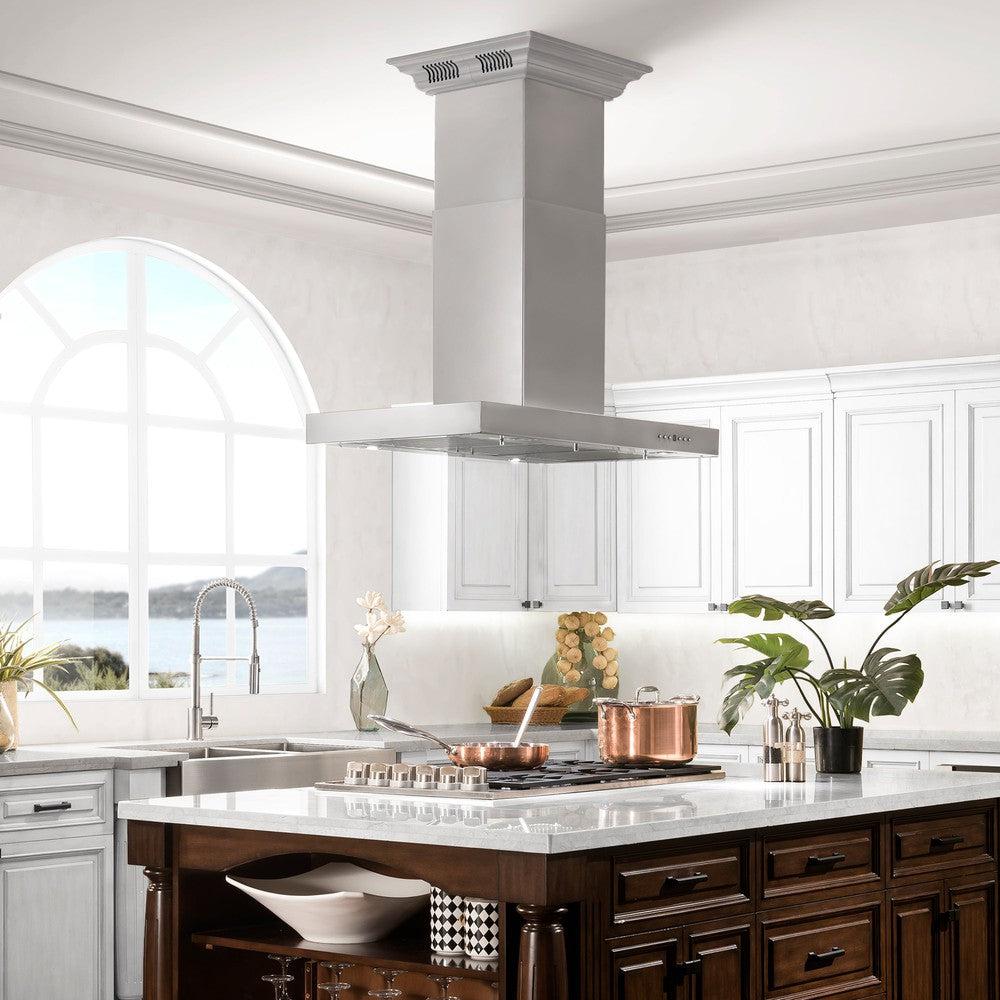
A cooktop in an island needs island ventilation — either a downdraft (built into the cooktop, less effective) or an island hood suspended from the ceiling. Island hoods require ceiling structural planning and are typically more expensive than wall-mounted hoods of equivalent CFM. Factor this into the total cost comparison.
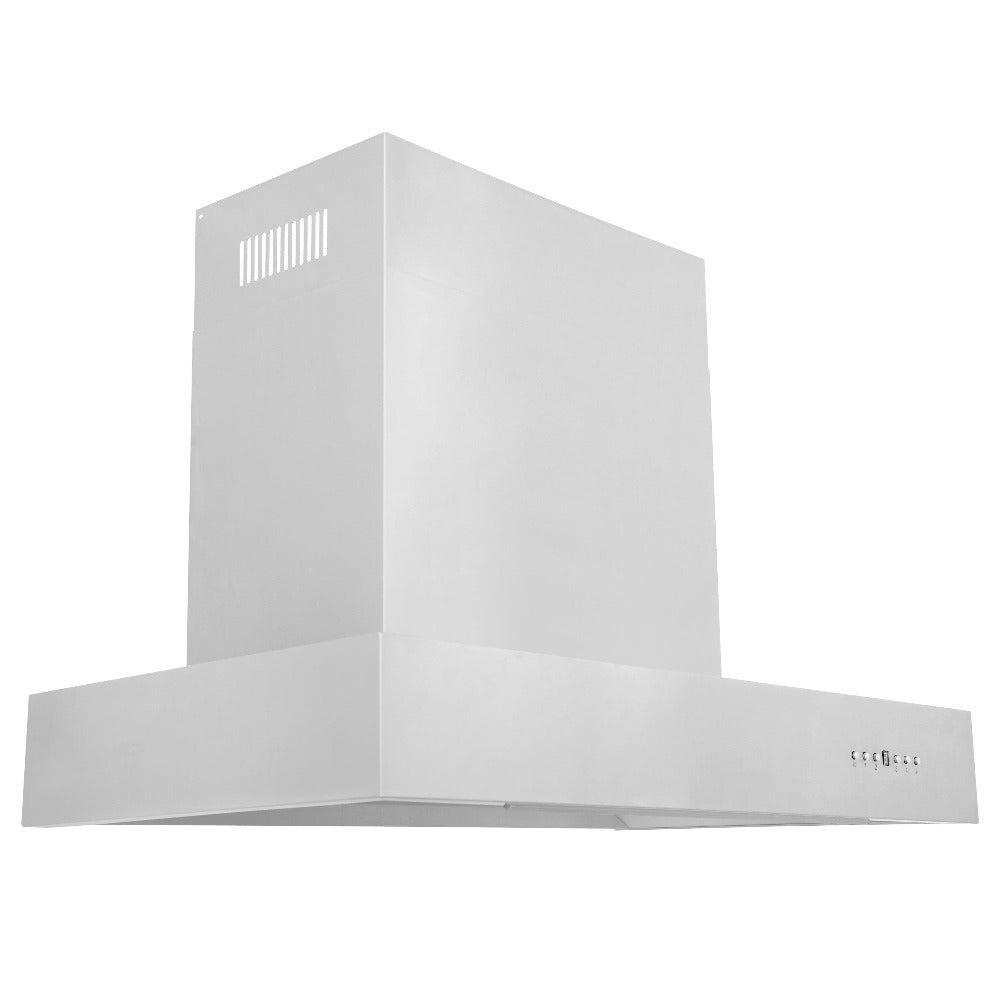
For a full CFM sizing walkthrough, see our Proline range hoods guide.

How to Decide
A quick decision framework:
- You want the simplest, most cost-effective cooking setup. → Range.
- You're replacing an existing range and not remodeling. → Range.
- You want the cooktop in an island. → Cooktop + wall oven.
- You cook seriously and hate bending to check the oven. → Cooktop + wall oven.
- You entertain often and need two full ovens. → Cooktop + double wall oven.
- You're doing a custom kitchen where design flexibility matters. → Cooktop + wall oven, ideally with a coordinated column (wall oven + built-in microwave + warming drawer).
- You have limited cabinet space and can't spare a wall for an oven column. → Range.
For most kitchens, a range is still the right answer — simpler, cheaper, easier to plan around, and perfectly capable for the way most households cook. But for the specific subset of kitchens where the layout, budget, and cooking habits align, separating the cooktop from the oven produces a genuinely better daily experience.
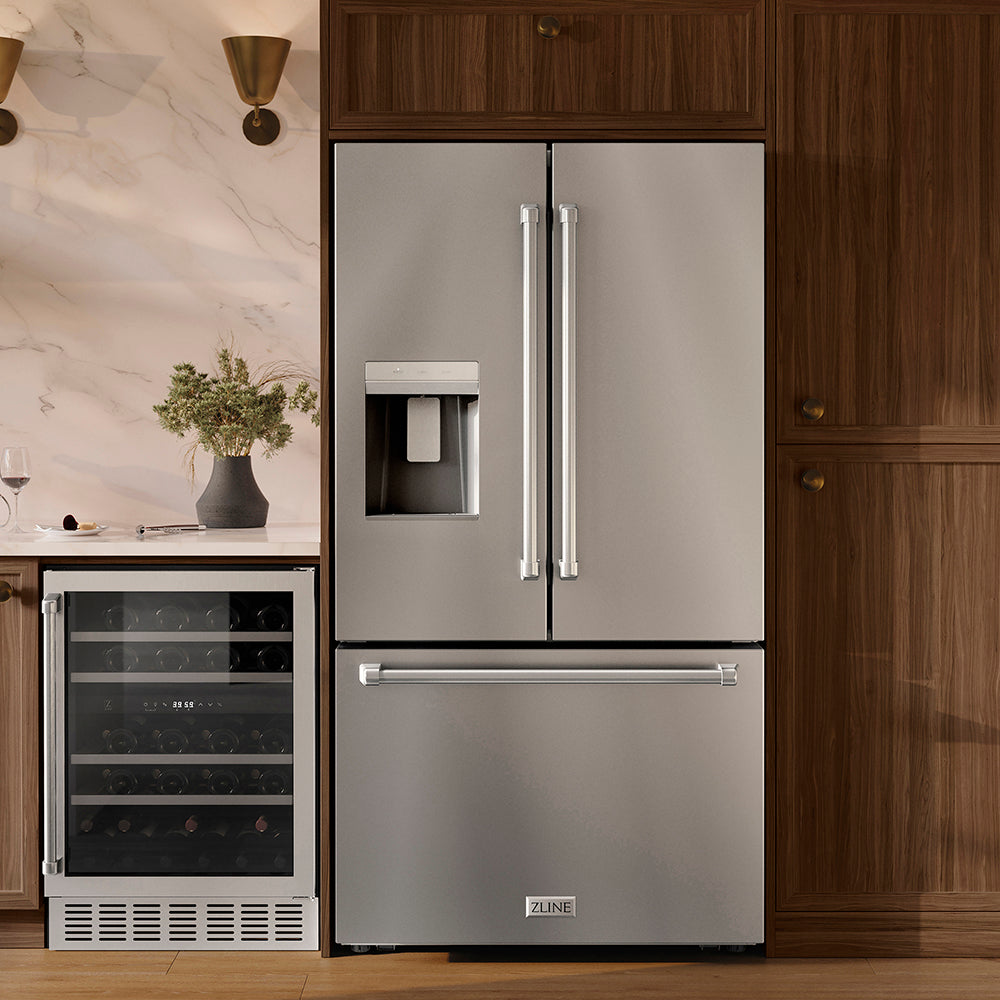
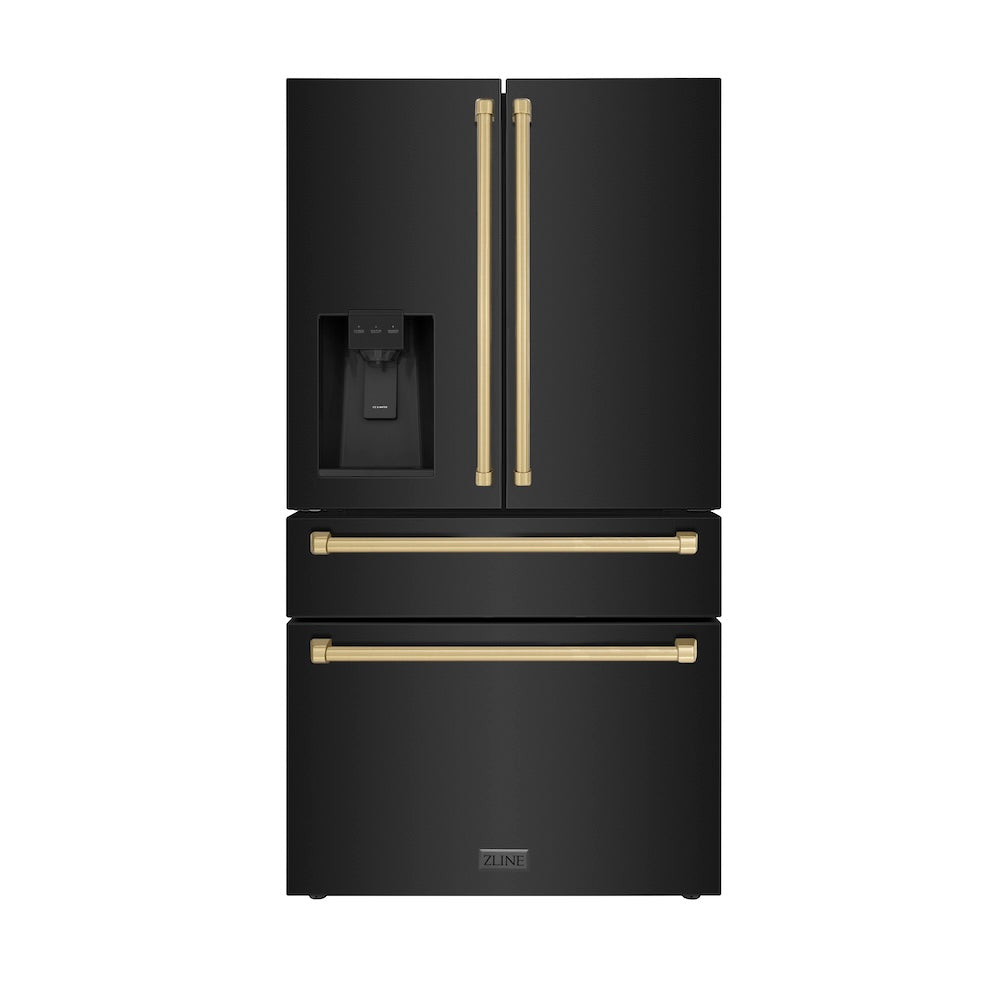
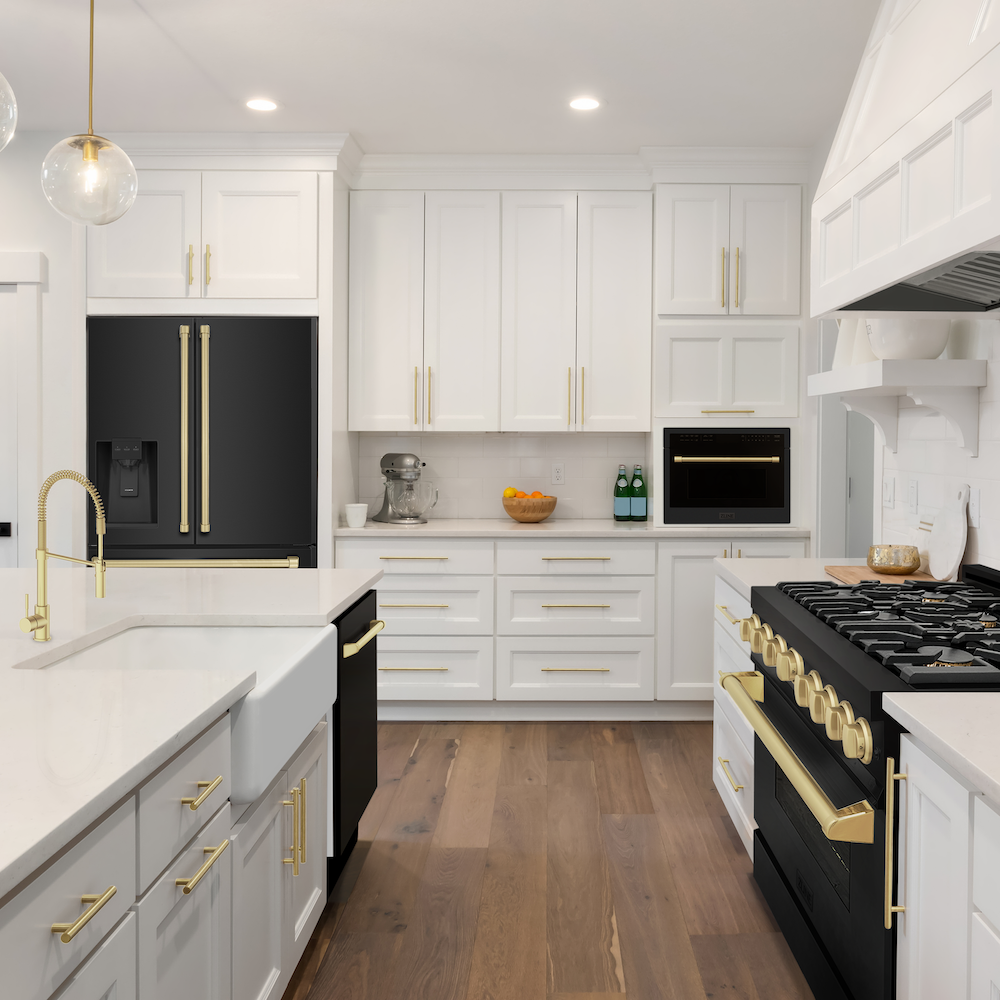
Whichever setup you choose, coordinating the cooking appliances with your hood, refrigerator, and dishwasher as a coordinated kitchen package delivers real bundle savings and ensures every finish matches across the suite.
Weighing Range vs. Cooktop + Wall Oven?
Send us your kitchen layout, cooking habits, and cabinet plans. We'll walk through both options — including cost differences, install requirements, and long-term ergonomics — usually in about 15 minutes. No call centers. No bots. Just real experts helping you choose right.
Shop Ranges Call (888) 977-8994 Shop Cooktops
Talk to a kitchen specialist: Mon–Fri 9–5 MST
Visit our showroom: 4375 W 1980 S, Salt Lake City, UT 84104
Smart Home Luxury is an authorized ZLINE and Proline dealer based in Salt Lake City, Utah. We serve the entire Wasatch Front — from Ogden to Provo — with nationwide shipping on every order.