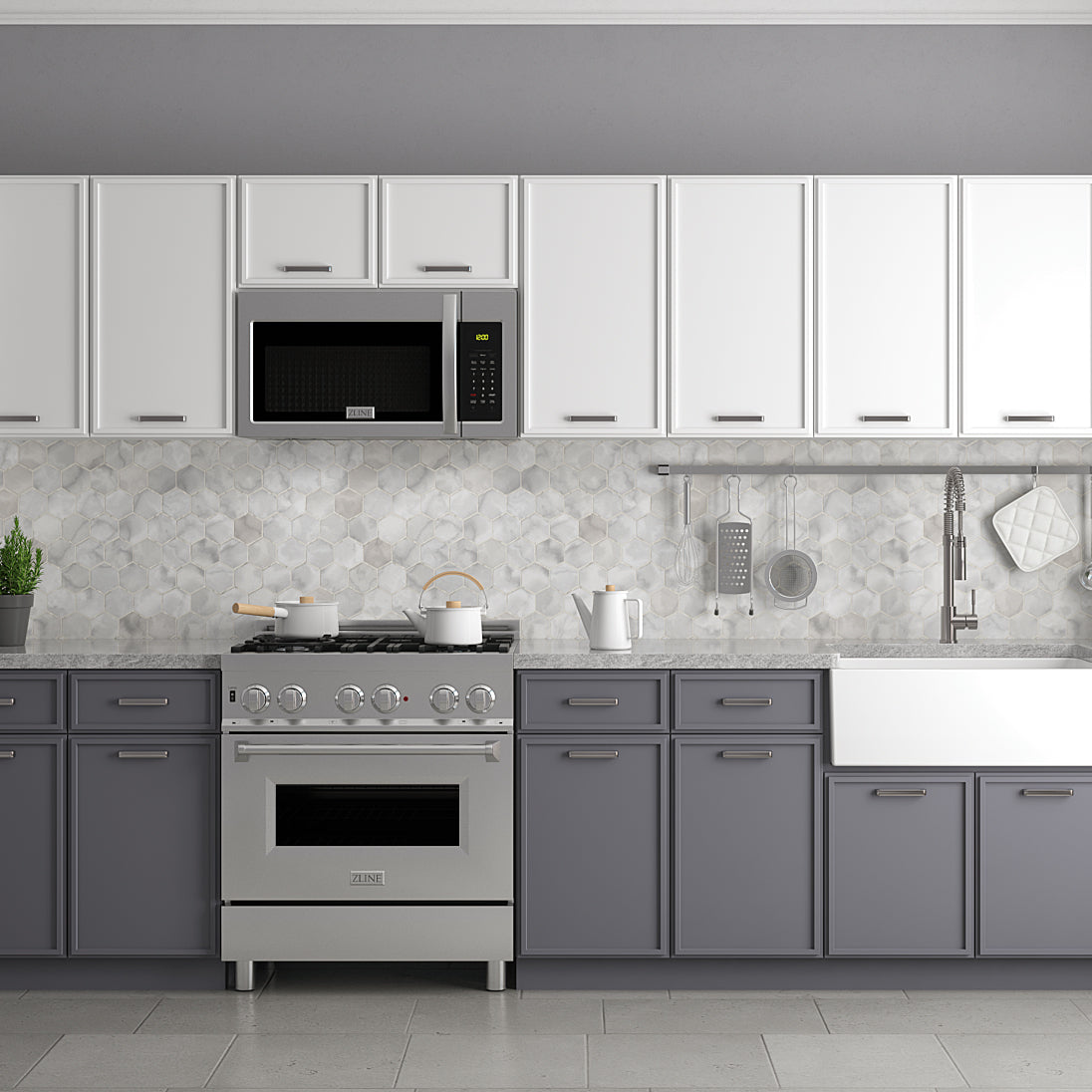
Microwaves are often the last appliance homeowners think about when planning a kitchen — and often the appliance that ends up looking most out of place because of it. A great range and a great refrigerator paired with a builder-grade countertop microwave taking up prep space undermines the whole design.
The good news: microwave configurations have expanded well beyond the countertop option most people default to. Where the microwave lives — over the range, in a drawer, built into cabinetry, or on the counter — has real implications for how the kitchen works and how it looks. This guide walks through each option and helps you choose the right one for your kitchen.
What's in this article
The Four Main Microwave Configurations
Modern kitchens have four viable microwave options, each with a different design and functional profile:
- Over-the-range (OTR) — Mounted above the range, often doubling as the range hood.
- Microwave drawer — Built into base cabinetry or an island, pulling out like a drawer.
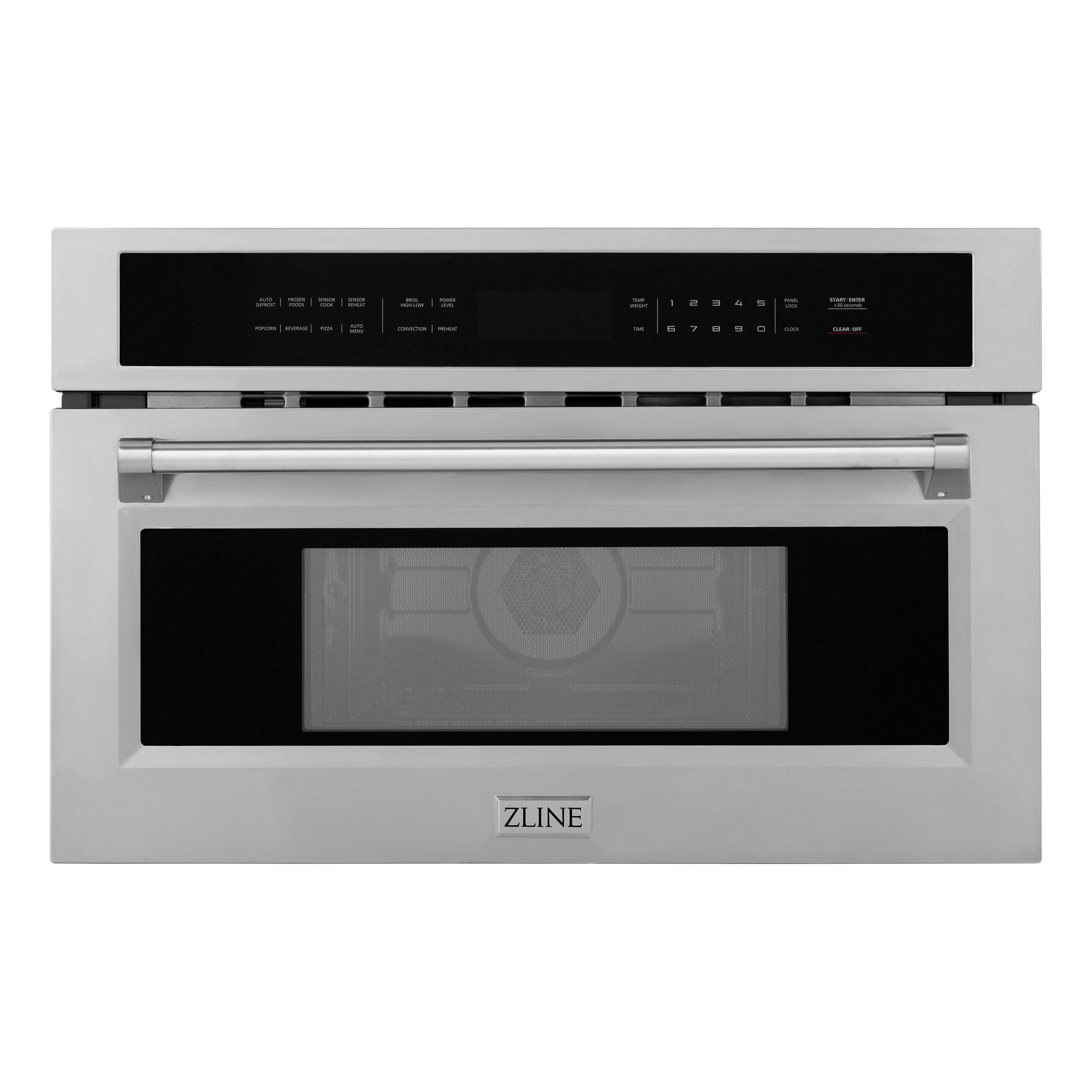
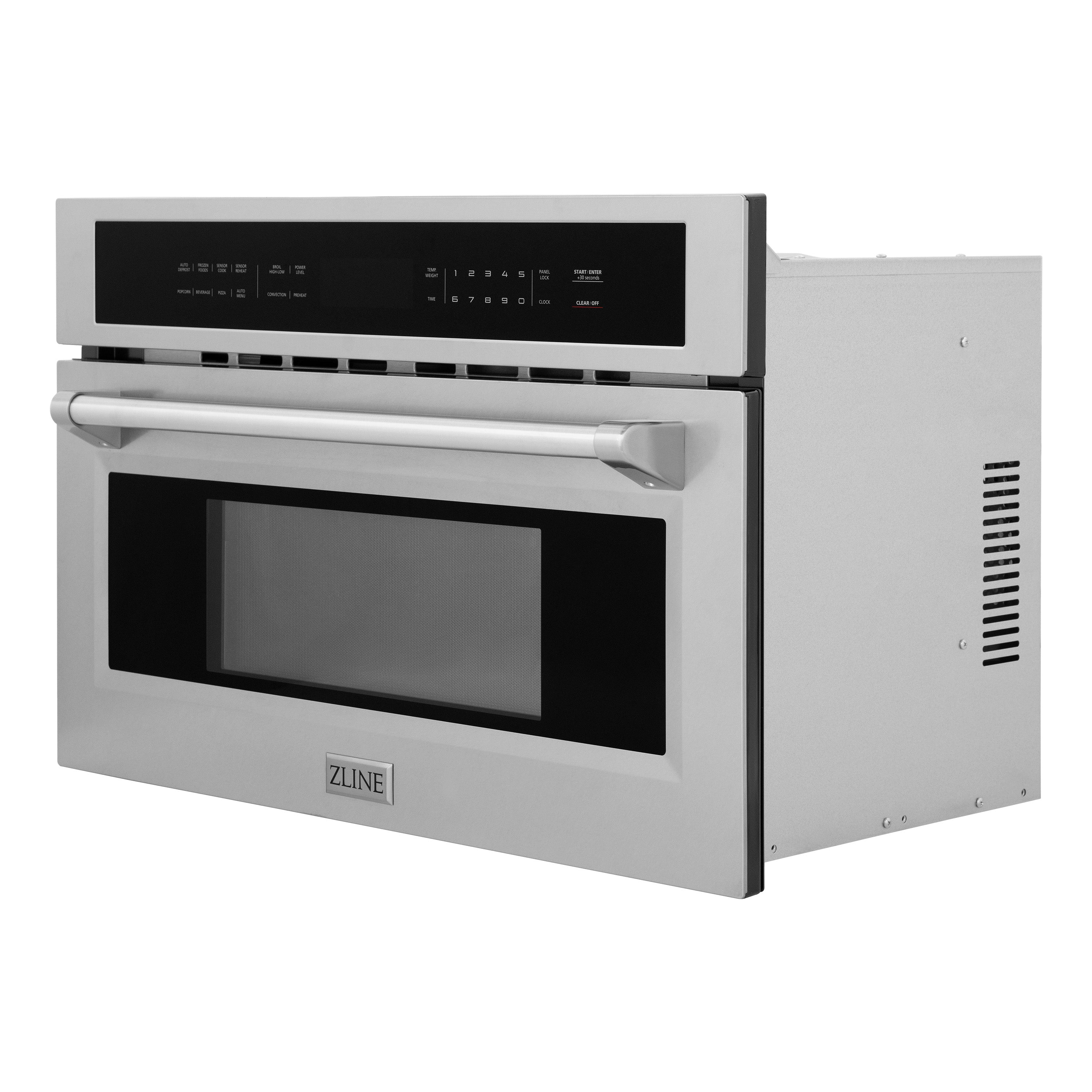
- Built-in — Installed flush in a wall or cabinet run, often paired with a wall oven.
- Countertop — Standalone unit sitting on the counter.
Each has a place. The right choice depends on your kitchen layout, budget, and how heavily you actually use the microwave.

Over-the-Range Microwaves
Over-the-range microwaves mount above your cooktop, typically 30" wide to match a standard range. Most include a built-in ventilation fan that doubles as your range hood.
What Over-the-Range Does Well
- Space-efficient. Uses vertical space that would otherwise be empty above the range.
- Two appliances in one. The built-in fan handles basic ventilation without a separate hood.
- Lower cost than a dedicated hood + built-in microwave. Two functions, one unit.
- Coordinated finish. ZLINE OTR models match the range and other appliances in the same finish family.
What Over-the-Range Doesn't Do as Well
- Weaker ventilation than a dedicated hood. OTR fans typically top out at 300–400 CFM — fine for electric cooktops and light gas cooking, insufficient for serious gas ranges with high-BTU burners. If you cook heavily on a gas range, a dedicated range hood is a better choice.
- Awkward height for shorter users. Loading and unloading a microwave 20" above the range surface is a stretch for anyone under 5'4".
- Design compromise. A stacked microwave-over-range look reads more traditional/utility than modern.
Where OTR Fits
Standard family kitchens, apartments, condos, and any kitchen where you want to save space and cost by combining ventilation with microwave. Best paired with electric or lower-BTU gas cooktops. Not the right choice for serious cooking kitchens with high-output ranges — the ventilation just isn't there. This is the single most common mismatch we catch before customers order — call us at (888) 977-8994 if you're not sure whether your range needs a dedicated hood.

Microwave Drawers
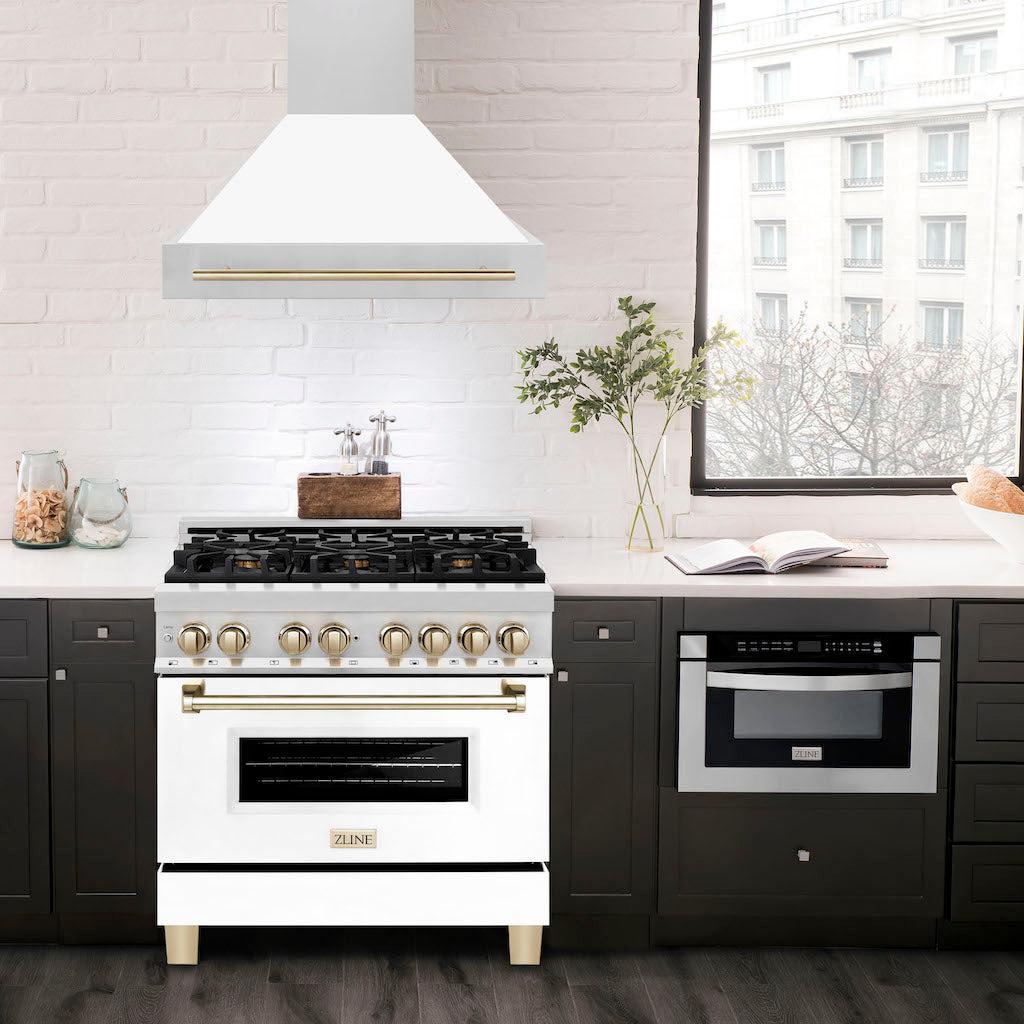
Microwave drawers install in base cabinetry or an island, pulling out horizontally like a drawer. This is the fastest-growing microwave category in luxury kitchens.
What Drawer Microwaves Do Well
- Ergonomic. Loading and unloading a microwave at counter height is dramatically more comfortable than lifting a hot dish up to an OTR unit.
- Kid-friendly. Older children can safely use the microwave without reaching over a hot range.
- Frees up wall and counter space. No cabinet real estate wasted; no counter clutter.
- Design-forward. A microwave drawer disappears into cabinetry, keeping the kitchen aesthetic clean.
- Works in islands. The only microwave configuration that fits cleanly in a kitchen island.
What Drawer Microwaves Don't Do as Well
- Higher cost. Typically the most expensive microwave configuration.
- Requires cabinet planning. The base cabinet needs to be built around the drawer's dimensions and electrical rough-in.
- Slightly smaller interior capacity than OTR or countertop models of comparable footprint.
Where Drawer Microwaves Fit
Luxury kitchens, custom builds, families with kids, entertainer's kitchens with island prep zones, and any kitchen where design and ergonomics matter more than saving a few hundred dollars. Increasingly the default choice in our Wasatch Front remodels.

Built-In Microwaves
Built-in microwaves install flush in a wall or cabinet run, typically paired with a wall oven in a vertical column. Comes in trim kits to fit various cabinet openings.
What Built-In Microwaves Do Well
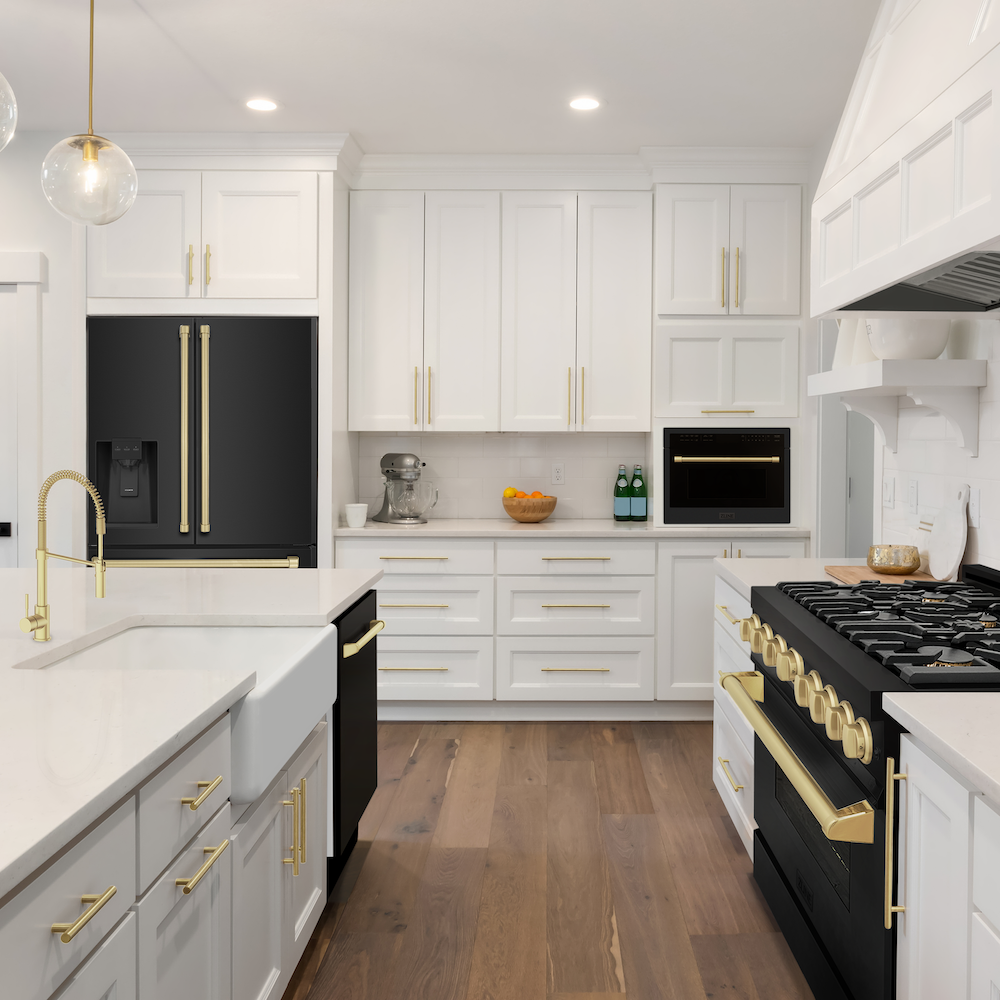
- Design integration. Flush installation with matching wall oven creates a coordinated cooking column that looks intentional.
- Comfortable height. Typically installed at eye level rather than above a range.
- Full-size capacity. Interior capacity comparable to OTR and countertop models.
- Doesn't compromise ventilation. Range hood handles ventilation separately; microwave handles microwaving.
What Built-In Microwaves Don't Do as Well
- Requires dedicated cabinet space. A microwave column takes up cabinet real estate you could otherwise use for storage.
- Higher cost than OTR. Trim kits add to the total price.
- Fixed location. Once installed, the microwave is where it is — you can't move it.
Where Built-In Fits
Kitchens with separate wall ovens where you want everything in a coordinated cooking column. Also common in butler's pantries and coffee bars where the microwave is separated from the main cooking zone.
Countertop Microwaves
The default option most people start with. Standalone unit, plugs into any outlet, sits on the counter.
What Countertop Microwaves Do Well
- Lowest cost by a wide margin.
- No installation. Plug it in and use it.
- Portable. Move it, replace it, remove it — no cabinet or wall commitment.
- Widest selection of sizes and features.
What Countertop Microwaves Don't Do as Well
- Takes up counter space. A large microwave can eat 3+ square feet of prep area.
- Reads as utility. Rarely fits into a designed kitchen aesthetic.
- Cord management. Even the best-organized kitchen has a visible power cord.
Where Countertop Fits
Rentals, temporary living situations, secondary kitchens, and buyers who genuinely want the lowest-cost option. For a permanent primary kitchen, one of the other three configurations is almost always a better long-term choice.
Side-by-Side Comparison
| Configuration | Space Impact | Cost | Best For |
|---|---|---|---|
| Over-the-Range | Space-efficient | $$ | Standard family kitchens, budget builds |
| Microwave Drawer | Uses base cabinet | $$$$ | Luxury kitchens, islands, families with kids |
| Built-In | Uses wall cabinet | $$$ | Wall oven pairings, coordinated columns |
| Countertop | Takes counter space | $ | Rentals, temporary, secondary kitchens |
Specs That Actually Matter
Wattage
Higher wattage = faster cooking. What matters:
- 600–800 watts: Compact / budget units. Slow, best avoided for a primary kitchen.
- 900–1,000 watts: Standard for most residential microwaves. Adequate for typical use.
- 1,200+ watts: Premium performance. Reheats and cooks noticeably faster.
Interior Capacity
Measured in cubic feet:
- Under 1.0 cu ft: Compact / countertop units. Too small for most families.
- 1.0–1.5 cu ft: Mid-range. Fits most dinner plates.
- 1.5–2.0+ cu ft: Large capacity. Fits large casserole dishes and party platters.
Convection Feature
Some higher-end microwaves include a convection cooking mode, effectively giving you a small secondary oven. Useful in kitchens where the main oven is often occupied (like Thanksgiving) or for households that use "speed cook" functions.
Sensor Cooking
Automatically adjusts time and power based on humidity/steam detection. Genuinely useful for reheating leftovers, popcorn, and other common items. Now standard on mid-range and premium models.
Ventilation CFM (Over-the-Range Only)
OTR microwaves double as range hoods — but their ventilation is much weaker than a dedicated hood. If you cook seriously, this is why we recommend a dedicated hood over an OTR. For the full explanation of CFM sizing, see our Proline range hoods guide.
Finish Options
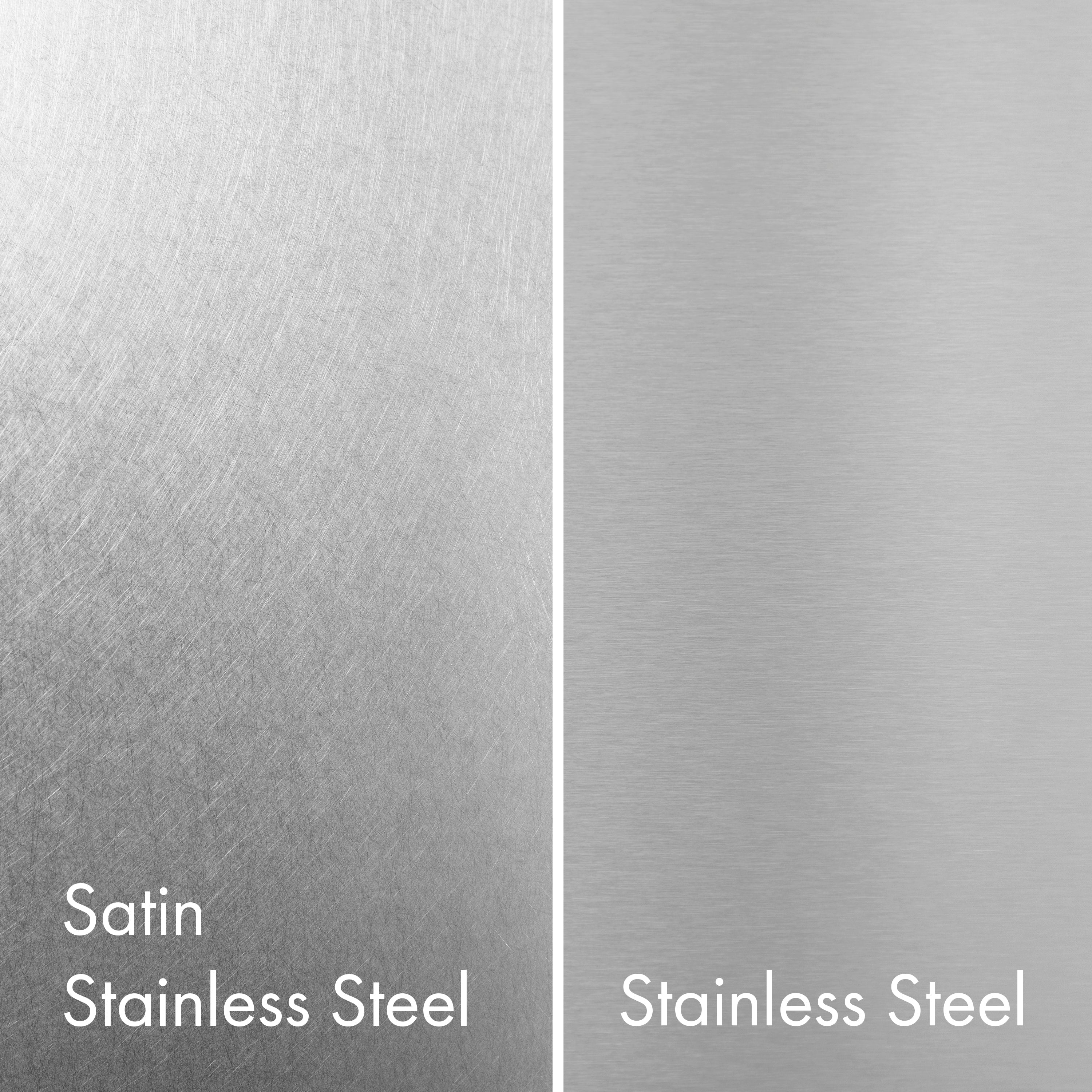
ZLINE microwaves coordinate with the broader appliance suite: stainless, Satin Stainless Steel (formerly DuraSnow®), black stainless, and Autograph Edition hardware accents on select models. For how finish coordination affects the kitchen's overall design, see our ZLINE attainable luxury post.

How to Decide
A quick decision framework:
- You have a standard family kitchen with electric or moderate-BTU gas cooking. → Over-the-range.
- You cook seriously on a high-BTU gas range and need real ventilation. → Dedicated range hood + separate drawer or built-in microwave.
- You're doing a luxury remodel or want islands. → Microwave drawer.
- You're pairing with a wall oven. → Built-in microwave in a coordinated column.
- You're outfitting a rental or temporary space. → Countertop.
Whatever configuration you pick, coordinating the microwave finish with the rest of your appliance suite is one of the easiest ways to make a kitchen feel designed rather than assembled. Bundle everything as a coordinated kitchen package for real bundle savings.
Picking a Microwave for Your Kitchen?
Send us your kitchen layout and cooking habits. We'll match you to the right ZLINE microwave configuration — over-the-range, drawer, built-in, or coordinated with a wall oven — in about 15 minutes. Bundle with your range, hood, and refrigerator for package pricing. No call centers. No bots. Just real experts helping you choose right.
Shop All Microwaves Shop Drawer Microwaves Build a Package
Talk to a kitchen specialist: (888) 977-8994 | Mon–Fri 9–5 MST
Visit our showroom: 4375 W 1980 S, Salt Lake City, UT 84104
Smart Home Luxury is an authorized ZLINE and Proline dealer based in Salt Lake City, Utah. We serve the entire Wasatch Front — from Ogden to Provo — with nationwide shipping on every order.